
Article Contents
Modular DIN-Rail Circuit Breakers — Selection Guide for Home


Key Takeaways
Modular DIN-rail circuit breakers form the backbone of any apartment or house electrical protection. They safeguard cables from overloads and short circuits.
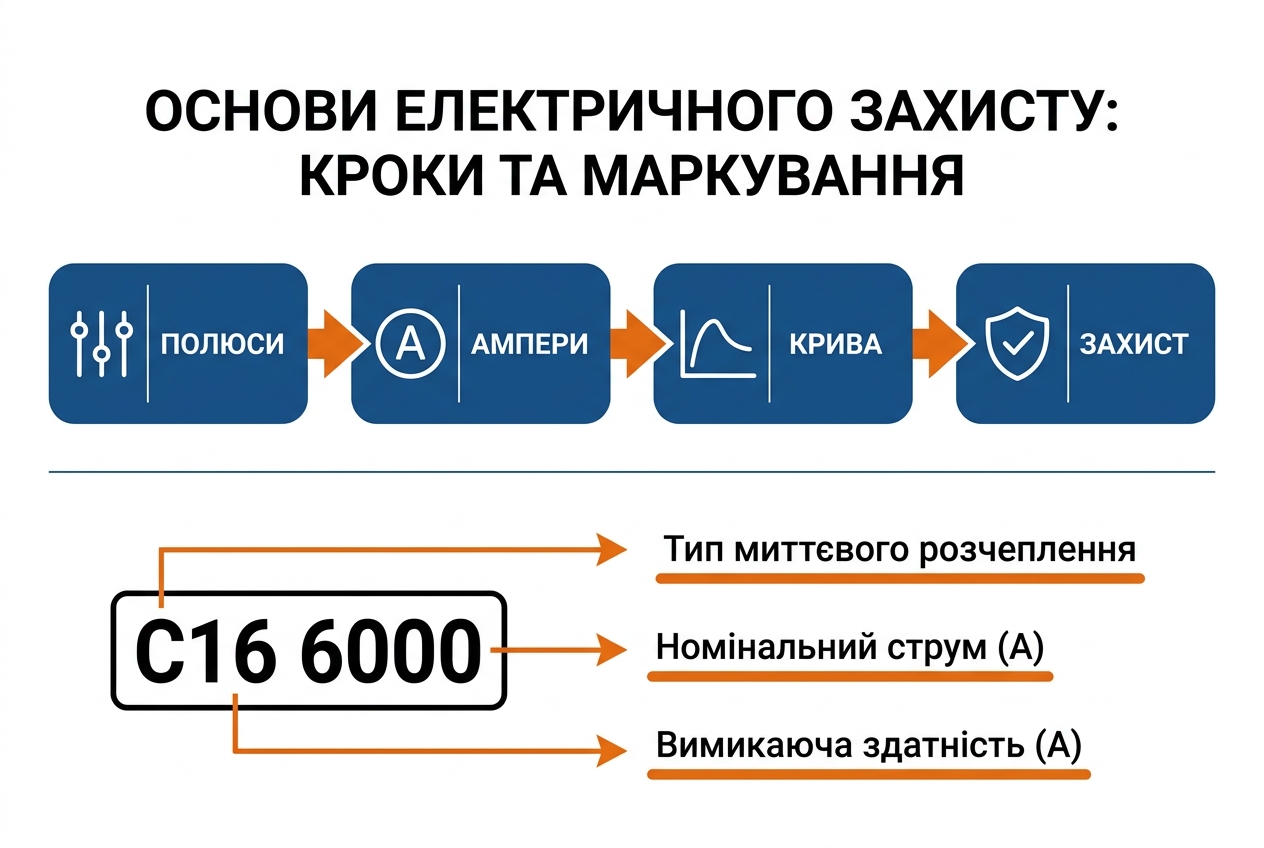
Key selection parameters: number of poles (1P–4P), rated current (A), trip characteristic (B, C, D), and breaking capacity (kA).
Golden rule: the circuit breaker protects the cable, not the appliance. The rating is chosen based on cable cross-section, not appliance power.
Hello, I am an engineer with over 12 years of experience in electrical engineering at UEC. Every day, I help clients select the right modular protection for residential and commercial installations.
In this article, I will show you how to choose a modular DIN-rail circuit breaker for an apartment or house: we will review the characteristics, compare brands, provide practical scenarios and a price table.
What Are Modular DIN-Rail Circuit Breakers?
As an engineer with over 12 years of experience, I often explain to UEC clients: modular circuit breakers are compact switching devices designed specifically for quick installation. Their main feature is a standardized mounting on a 35 mm profile known as a DIN rail. They have become the de facto standard for modern electrical panels in both apartments and offices.
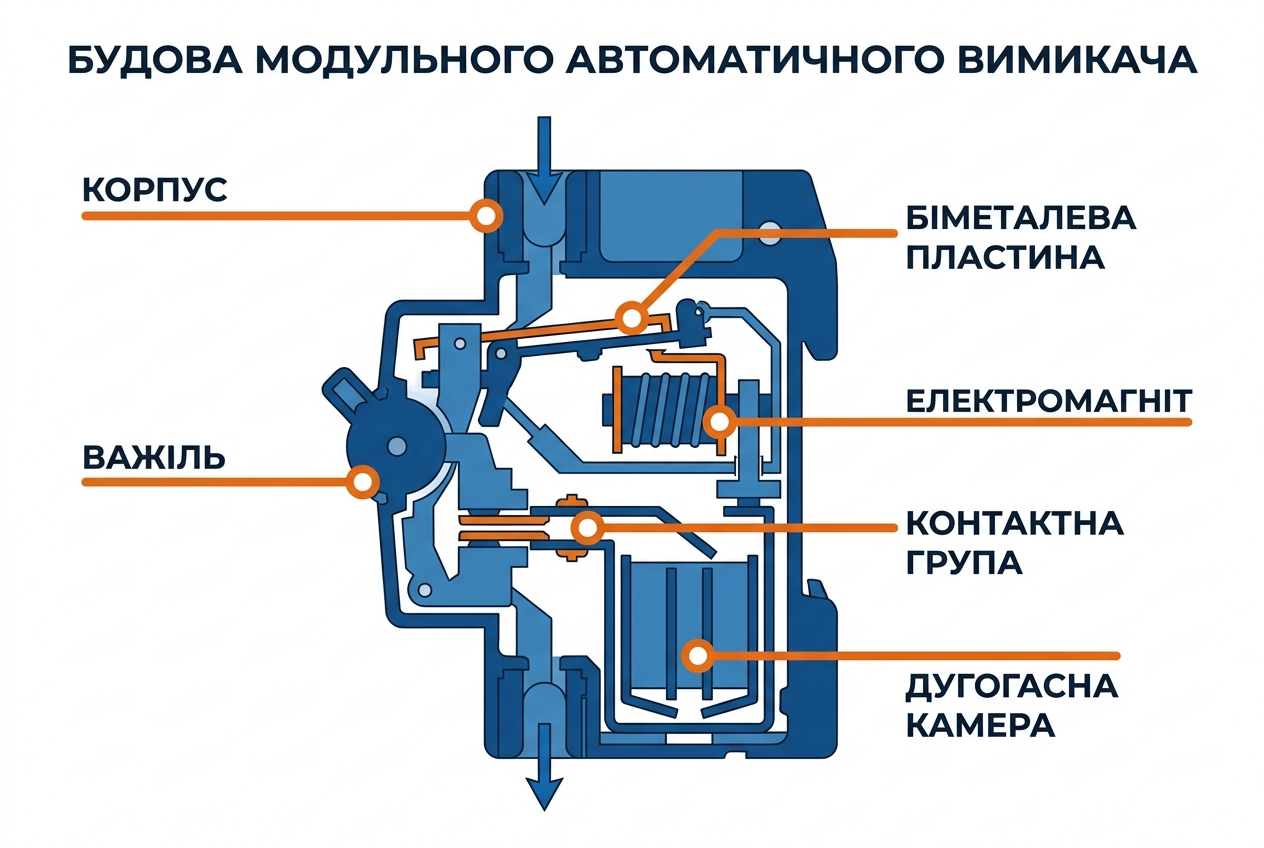
Their primary task is to protect the network from two fault conditions: overload (when you turn on too many appliances) and short circuit. According to industry research, modular circuit breakers (MCBs) use a thermomagnetic operating principle: a thermal release responds to overloads, while an electromagnetic release instantly interrupts short-circuit currents [3]. Thanks to this design, DIN-rail circuit breakers are easy to combine, replace, and service without completely dismantling the panel.
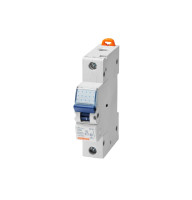
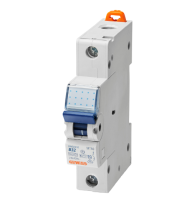
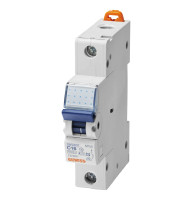
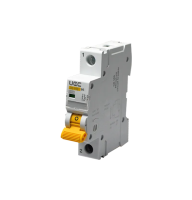
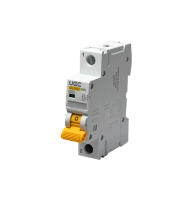
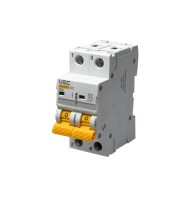
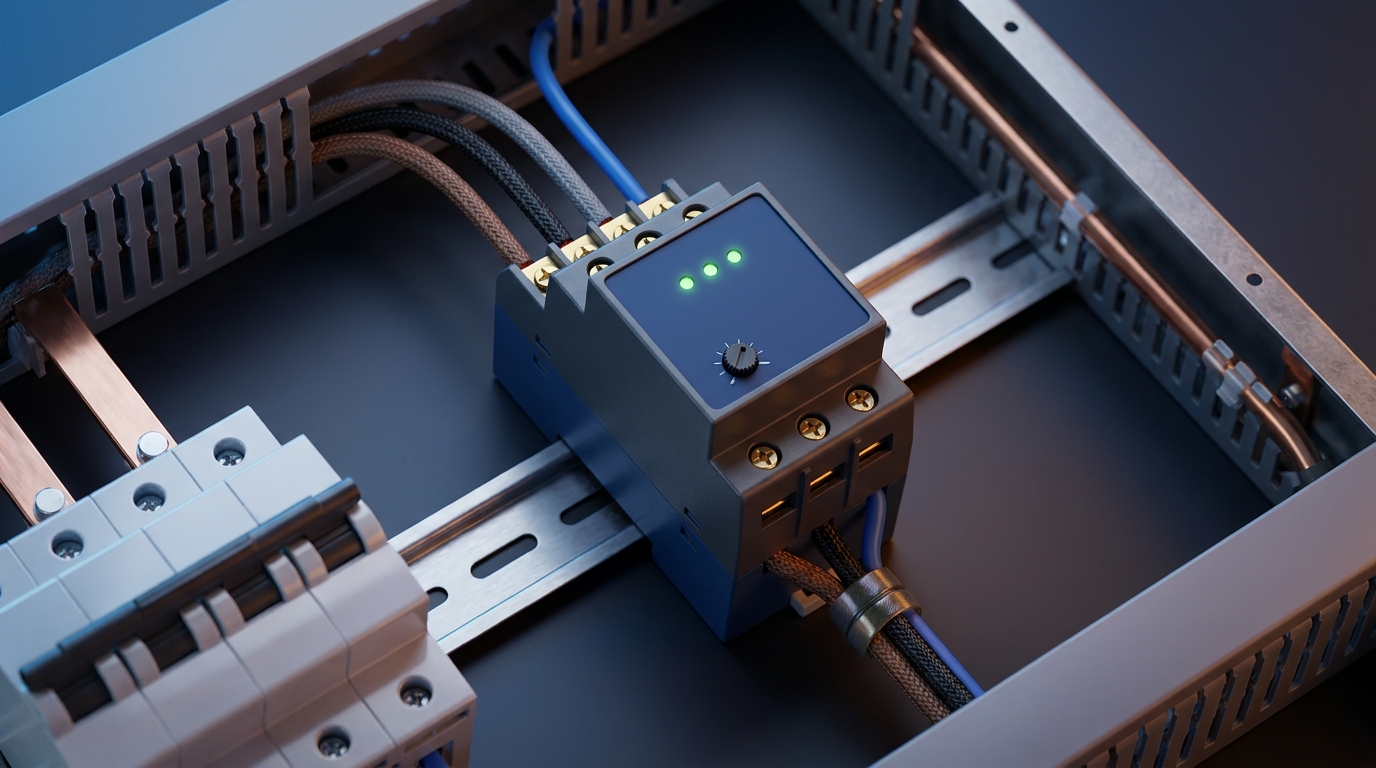
The design of a modern modular circuit breaker ensures quick DIN-rail mounting.
⚠ Engineer's note: Before purchasing, always verify that the equipment complies with standards such as IEC/EN 60898-1 (for household use) to ensure correct operation in residential networks.
How It Differs from an RCD and RCBO (Short and Clear)
There is often confusion between these devices. Here is a simple rule:
- Circuit breaker (MCB) — protects cables (and your property) from fire.
- RCD — protects people from electric shock due to leakage current.
- RCBO — a "two-in-one" device (MCB + RCD).
Here is a visual comparison to help you avoid mistakes when assembling your panel:
| Device | Protects Against | Where Installed | Typical Marking | UEC Comment |
|---|---|---|---|---|
| Circuit breaker (MCB) | Overload + Short circuit | Branch circuits (lighting, outlets) | C16, B10 | Basic element of any panel |
| RCD | Leakage current only! | Main feed or groups (bathroom, kitchen) | 40A 30mA | Requires upstream MCB protection |
| RCBO | Overload + Short circuit + Leakage | Dedicated circuits (water heater, washer) | C16 30mA | Saves space on the DIN rail |
How to Choose a Modular Circuit Breaker: Key Characteristics
To choose the right protection, it is not enough to simply buy the "most powerful" one. On the contrary, an oversized breaker will burn your wiring but will not trip. The key characteristics and parameters to pay attention to are the number of poles, rated current (in amps), trip curve, and short-circuit withstand capability.
Here is the algorithm I use in my work:
- Determine the number of poles based on the phase configuration.
- Select the rated current based on the cable cross-section (not appliance power!).
- Choose the trip characteristic (class B, C, or D) for the load type.
- Check the breaking capacity (kA) for reliability during short circuits.
Number of Poles (1P/2P/3P/4P)
For Apartments (Single Phase)
In 99% of apartments, the network is single-phase. Here you can use single-pole (1P) circuit breakers that disconnect only the live conductor. However, my experience and European standard practice suggest: it is better to install double-pole (2P or 1P+N) breakers. They disconnect both live and neutral. This is critically important when troubleshooting or if a "utility electrician" accidentally swaps live and neutral in the building panel. Read more about this nuance in our article on single-pole vs double-pole breakers.
For Houses/Workshops (Three Phase)
If you have a private house with a three-phase supply, you will need a three-pole or four-pole circuit breaker.
- 3P — used for three-phase motors or boilers where the neutral does not participate in switching or is connected to a direct busbar.
- 4P — mandatory at the house main input and for generator changeover. It completely isolates the property from the external network.
Rated Current (A): How Not to "Over-Fuse" the Cable
Below are approximate values for typical household circuits. Remember: the circuit breaker primarily protects the cable, not the kettle or television.
| Consumer Group | Power (approx.) | Typical Cable (copper) | Recommended Breaker | Comment |
|---|---|---|---|---|
| Lighting (LED) | up to 1-1.5 kW | 1.5 mm² | B10 or C10 (10A) | Do not put 16A on lighting! |
| Room outlets | up to 3.5 kW | 2.5 mm² | C16 (16A) | Gold standard for residential |
| Electric cooktop | 5-7 kW | 4.0 - 6.0 mm² | C25 or C32 | Check connection terminals |
| Water heater | 1.5 - 2.5 kW | 2.5 mm² | C16 (16A) | Preferably with RCD protection |
Note: A detailed breaker rating calculation should account for line length and installation method.
Selection by Cable Cross-Section (Critical for Fire Safety)
The most dangerous mistake is replacing a breaker with a "more powerful" one when the old one keeps tripping. If you install a 32A breaker on a 2.5 mm² cable (which can handle ~25-27A continuously), during an overload the cable will start melting before the protection trips. This is a direct path to fire. Always follow the rule: breaker rating ≤ permissible cable current.
Trip Characteristic (Curve) B, C, D — What to Choose
This letter before the amperage number (e.g., C16) indicates how the breaker responds to short-term current surges when equipment starts up.
Type B (3-5 In)
Application: Lighting, resistive loads
The most sensitive. Ideal for older networks, lighting, and heating appliances (water heaters, space heaters) where there are no inrush currents. According to technical data, they trip at 3-5 times the rated current [3].
Type C (5-10 In)
Application: Outlets, household appliances
The universal workhorse. The most common choice for outlet circuits. It withstands moderate inrush currents from vacuum cleaners or drills while reliably protecting residential wiring.
Type D (10-20 In)
Application: Electric motors, workshop equipment
The "heavy artillery." Only needed for powerful electric motors, pump stations, or workshop machines that consume 7-8 times more energy at startup.
Breaking Capacity (kA): When 4.5, 6, or 10 kA
This parameter shows the maximum short-circuit current the breaker can safely interrupt without breaking apart.
- 4.5 kA: Acceptable for older networks, country cottages far from the transformer.
- 6 kA: The modern standard for apartments in new buildings, offices, and private houses. At UEC, we recommend 6 kA as the golden mean of price and safety. Read more about choosing between 4.5 and 6 kA here.
- 10 kA and above: Required if your house is located "next door" to a transformer substation. There, short-circuit currents can reach enormous values.
- Older buildings / Rural areas: 4.5 kA is sufficient
- New builds / Urban apartment: 6 kA recommended
- Cottage near a substation / Industrial zone: 10 kA mandatory (calculation advisable)
Selectivity and Protection Coordination (So the Right Breaker Trips)
Good electrical practice requires that when a short circuit occurs in an iron, only the room outlet breaker trips — not the main switch for the entire house (or even the street). For this, ratings and characteristics should decrease from the main input to the consumer (e.g.: Main C40 → Group C25 → Circuit B16).
"A common beginner's mistake is to install C-curve breakers everywhere, even where B is more appropriate. This reduces protection response speed and disrupts selectivity. For lighting and long runs, B is the better choice."
— Andriy Kovalchuk, certified electrician, UEC partner

Warning! Working with electrical equipment is life-threatening!
All work in the electrical panel must be performed only by qualified electricians with the power disconnected. Before starting work, be sure to de-energize the line and verify the absence of voltage with a measuring device.
Advantages of Using Modular Circuit Breakers
Why the modular series specifically? First and foremost, it is about space savings and compactness. A module just 18 mm wide can switch currents that previously required bulky fuses or knife switches. Standardized DIN-rail mounting allows you to assemble a neat panel in minutes. Ease of replacement, clear marking, and unified design make them the undisputed choice for modern housing. High safety is guaranteed by enclosed live parts — accidental contact with energized terminals in a modern breaker is practically impossible.
- ✓ DIN Standard: Compatible across all brands.
- ✓ Compactness: Only 17.5-18 mm per module.
- ✓ Quick replacement: Without reworking the entire panel.
- ✓ Marking: Clear diagrams right on the housing.
- ✓ Modularity: Easy addition of auxiliary contacts.
- ✓ Safety: IP20 protection for terminals.
Which Modular Circuit Breakers Are Needed for Apartments and Houses (Practical Scenarios)
Recommended Group Layout for an Apartment (Example)
Here is a time-tested template for apartment panel configuration. This setup covers the needs of 90% of users.
| Group | Breaker | Poles | Note |
|---|---|---|---|
| Main input | C32 - C50 | 2P | Depends on utility agreement |
| Kitchen appliances | C16 - C20 | 1P+N | Separate circuits for oven and worktop |
| Water heater / Washer | C16 | 1P+N | Must be via RCD / RCBO! |
| Air conditioner | C10 - C16 | 1P | As specified in the unit's datasheet |
| Room outlets | C16 | 1P | 2.5 mm² cable |
| Lighting | B10 | 1P | 1.5 mm² cable |
Recommended Approach for a Private House (Example)
In a private house, cable runs are significantly longer, and consumers are outdoors and in utility rooms.
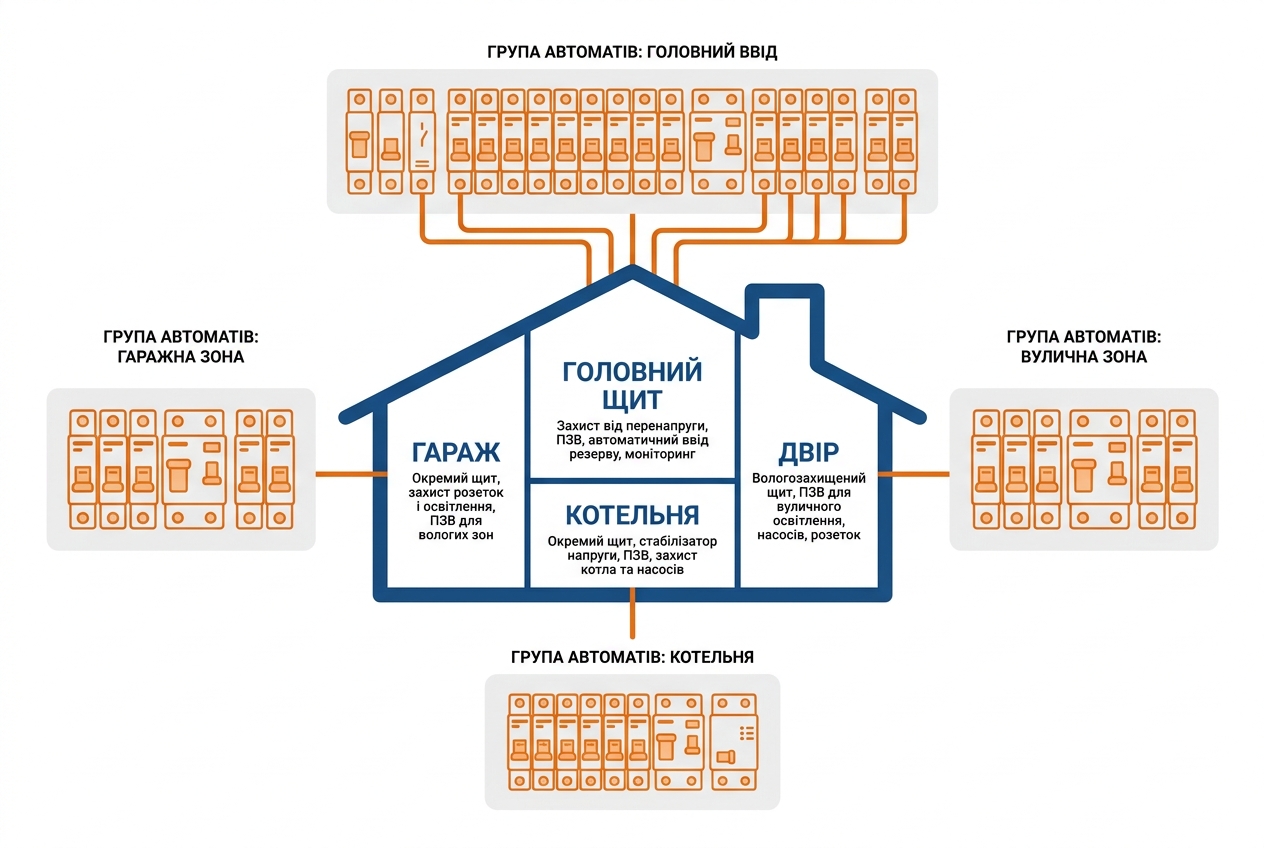
- House: Protection similar to an apartment (RCD + circuit breakers).
- Outdoors: Separate circuit via RCBO (so rain in the gazebo outlet does not switch off the refrigerator inside).
- Utility building/Garage: If there are power tools — D or C curve.
- Boiler room/Pump house: Often requires three-phase connection.
Bathroom, Kitchen, Children's Room — Enhanced Safety (RCD/RCBO Pairing)
Remember: a standard circuit breaker (MCB) will not save a life if a child sticks a hairpin into an outlet or a hairdryer falls into water. For "wet zones" and children's rooms, international standards (e.g., NEC in the USA and European IEC) require the use of residual current devices (RCD) or arc fault circuit interrupters (AFCI, for bedrooms) [1], [5]. In practice, for bathrooms an RCD with leakage current no more than 30 mA (preferably 10 mA) is mandatory.
| Zone | Risk | Solution |
|---|---|---|
| Bathroom | Moisture, direct contact | RCBO 10/16A 10mA or 30mA |
| Outdoor outlets | Rain, insulation damage | RCBO C16 30mA |
| Children's room | Mechanical damage | Breaker + RCD + Shuttered outlets |
If you have a three-phase supply, electric boiler, or plan to install a solar system/generator — standard solutions may not be sufficient. We recommend commissioning a professional engineering design to account for phase balancing and inverter specifics.
Circuit Breaker Manufacturer Ratings (How to Choose a Brand Without Overpaying)
There are dozens of brands on the market. As a UEC expert, I group them as follows:
Schneider Electric, Hager, Eaton, Legrand, ETI, Gewiss — Which for Whom
- GEWISS (Italy): Premium segment, which we at UEC officially represent. This is the choice for those who want to "install and forget" for 20 years. Excellent mechanics, reliable contacts.
- Schneider Electric / Hager: Market leaders ("gold standard"). Huge accessory range, but many counterfeits.
- Eaton (Moeller): Very reliable, frequently used in industry.
- UEC (Ukraine): Our own brand. We created it as a "workhorse" — honest specifications at an affordable price. The optimal choice for budget renovations without quality compromises.
- ETI: A solid Slovenian mid-range option.
| Brand | Key Strength | Positioning | Price Level |
|---|---|---|---|
| GEWISS | Innovation, lifespan, design | Premium / Professional | High |
| Hager | Installation convenience (QuickConnect) | Residential sector | Medium+ |
| UEC | Fair pricing, quality control | Optimal choice | Affordable |
How to Tell an Original from a Counterfeit (Quick Checklist)
The market is flooded with counterfeits of well-known brands. Here is how to avoid paying brand prices for cheap internals:
- Weight: An original breaker is heavier (more copper and quality arc-quenching metal).
- Marking: Letters should be clear and not rub off with a finger.
- Rivets: Originals typically have neat hollow rivets; counterfeits use solid aluminium ones.
- QR codes: Most top brands have unique codes for verification on their website.
- Place of purchase: Buy only from official distributors. For example, purchasing GEWISS from us guarantees an official warranty.
For more information about warranty terms and certificates of conformity, visit the Warranty & Service page.
Price Table for Popular Models (Quick Comparison)
To help you estimate your budget, we have compiled current prices for the most popular items (1P, C16, 6kA).
| Model / Brand | Specifications | kA | Price (approx.) | Availability |
|---|---|---|---|---|
| GEWISS MTC 45 | 1P, C16 | 4.5 | 250 UAH | ✓ In stock |
| Hager MC116A | 1P, C16 | 6 | 210 UAH | ✓ In stock |
| UEC | 1P, C16 | 4.5 | 120 UAH | ✓ In stock |
Prices include VAT and are subject to change. Check the current price in the catalogue.
Step-by-Step DIN-Rail Circuit Breaker Installation
If you have the appropriate qualifications, installing a modular device takes just minutes.
- Safety: Before starting, completely turn off the power at the main breaker. Verify the absence of voltage with an indicator.
- Mounting: Use a flat screwdriver to release the lower latch (clip). Place the breaker's upper groove onto the DIN rail, press the bottom in, and snap the latch into place.
- Preparation: Strip 10-12 mm of insulation from the wire. Do not damage the conductor!
- Connection: Insert the wire into the terminal. Tighten the screw. Important: Use the torque specified in the datasheet (typically 2-2.5 Nm). A loose connection is a fire hazard.
- Verification: Try pulling the wire — it should not move. Close the panel cover, switch on the power, and test the circuit.
Video guide: proper circuit breaker mounting and terminal tightening.
Wiring Diagram (Basic Principle)
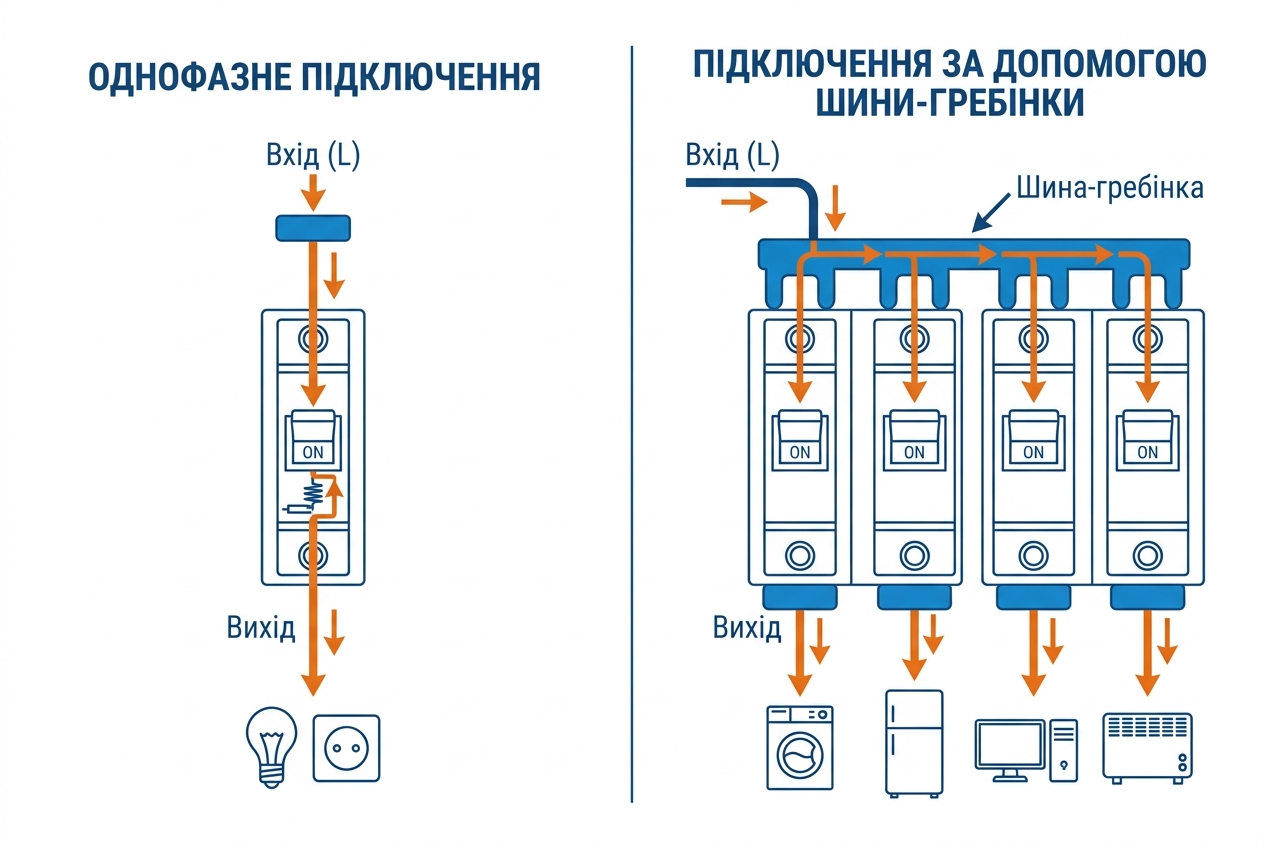
Typically, the supply (input) is connected to the fixed contacts (top), and the load (output to outlets) goes on the bottom. Although most modern brands (like GEWISS) allow connection from either end, "best practice" is input from the top. For connecting multiple breakers in a row, use dedicated busbar combs — they are more reliable than cable jumpers.
Common Mistakes in Selection and Operation (And How to Avoid Them)
Oversizing/Undersizing the Rating (A)
This is a classic scenario. "The breaker keeps tripping? I'll install a bigger one!" This is flawed logic.
| Mistake | Consequence | Correct Approach |
|---|---|---|
| 32A on outlets (2.5 mm² cable) | Melting outlet and cable, fire | Only 16A (maximum!) |
| 16A on lighting (1.5 mm² cable) | Overheated light fixtures, burnt switches | Only 10A (or 6A for LED) |
| Replacement without investigating cause | Recurrence with worse outcomes | Find the faulty appliance/circuit |
Wrong Curve B/C/D (Trips "On Startup")
Did you install a B16 breaker on a borehole pump? It will trip every time the pump starts, even though there is no actual overload. The pump's inrush current briefly spikes to 100A, which the "B" curve interprets as an instant overload signal.
- Risk appliances: Compressors, pumps, powerful vacuum cleaners, older refrigerators, welding machines. These often require a C curve, and sometimes D.
Ignoring Breaking Capacity (kA) and Selectivity
If you live near a transformer substation, a cheap 4.5 kA breaker during a short circuit may simply weld shut internally without breaking the circuit. The result — a burned-out panel. In such locations, the impact of breaking capacity is not just theory.
⚠ When is special protection needed? If short-circuit currents at your connection point exceed 6000A, using 10 kA breakers is mandatory to prevent housing explosion during a fault.
Useful resources: * GEWISS Solutions Catalogue (PDF) * UEC Technical Specifications
FAQ: Modular Circuit Breakers (Quick Answers)
❓ Can I replace an old breaker with a new one myself?
Only if you have the skills and understanding of electrical regulations. This is work with dangerous voltage. Always de-energize the panel and verify the absence of voltage before touching anything. If in doubt — call a professional.
❓ Which breaker is better: expensive or budget?
The most important thing is compliance with standards and authenticity. A premium brand provides better housing materials and more reliable terminals, which is important for longevity. At UEC, we advise not to skimp on the main input breaker, while for branch circuits you can choose a proven mid-range option.
❓ What should I do if the breaker trips frequently?
Don't rush to replace it! First, disconnect some appliances. If the tripping stops — the circuit is overloaded. If it trips instantly even with no load — there is a short circuit in the cable or appliance. "Fixing" this by replacing the breaker with a higher rating is strictly prohibited.
❓ How can I test if a breaker is working properly?
A full test of the thermal and magnetic releases is only possible in a laboratory with special equipment ("injection testing"). At home, you can only check the mechanical function (on/off) and the reliability of terminal connections.
❓ Can I install a 2P breaker instead of 1P?
Yes, and it is actually better. A double-pole breaker disconnects both live and neutral, which improves safety during maintenance and fault-finding. The only downside — it takes up twice the space in the panel.
❓ Do I need a separate breaker for each circuit?
Preferably. This ensures selectivity (during a fault, only one room goes dark instead of the entire apartment) and allows you to more precisely match protection to each circuit's cable.