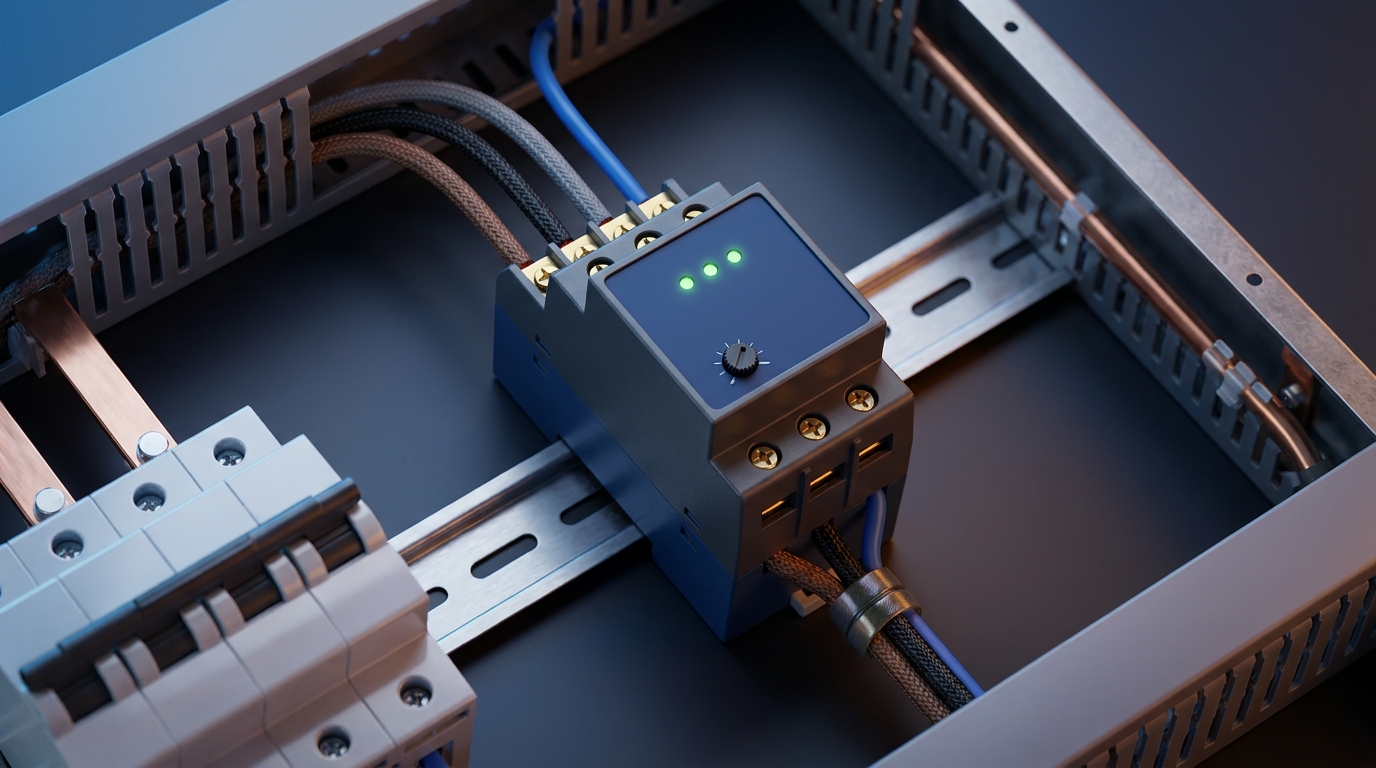

Article Contents
10 kA Circuit Breakers — Breaking Capacity & Selection Guide | UEC


Key takeaways
10 kA is the maximum short-circuit current that a circuit breaker can safely interrupt without being destroyed. This parameter is critical for main distribution panels, facilities near transformer substations, and industrial networks.
Key point: breaking capacity is not related to rated current (A) or trip characteristic B/C/D — it is a separate safety parameter that determines the breaker's survival during a fault.
Hello, I'm Oleh Lukianchuk, an electrical engineer and technical consultant at UEC. I have over 10 years of experience in designing switchgear equipment for residential and industrial facilities.
In this article, I will explain what 10 kA breaking capacity means, how it differs from 6 kA and 4.5 kA, when it is truly needed, and how to avoid common mistakes when selecting a circuit breaker.
What does 10 kA breaking capacity mean and why is it needed?
Why do you need 10 kA and what does this characteristic hide? It is a breaking capacity parameter, measured in kiloamperes (1 kA = 1,000 Amps). It indicates the maximum short-circuit (SC) current that a circuit breaker can reliably interrupt without being mechanically destroyed or becoming a conductor through an electric arc.
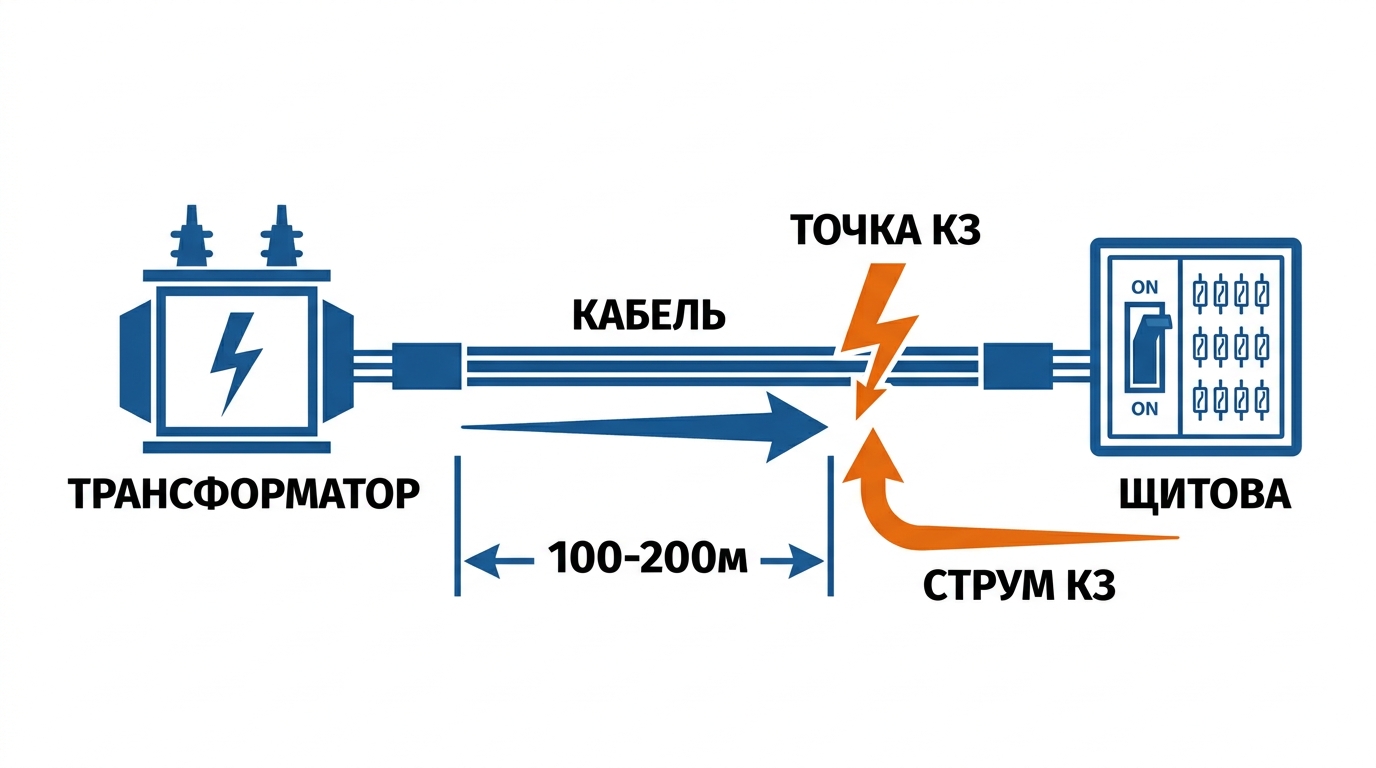
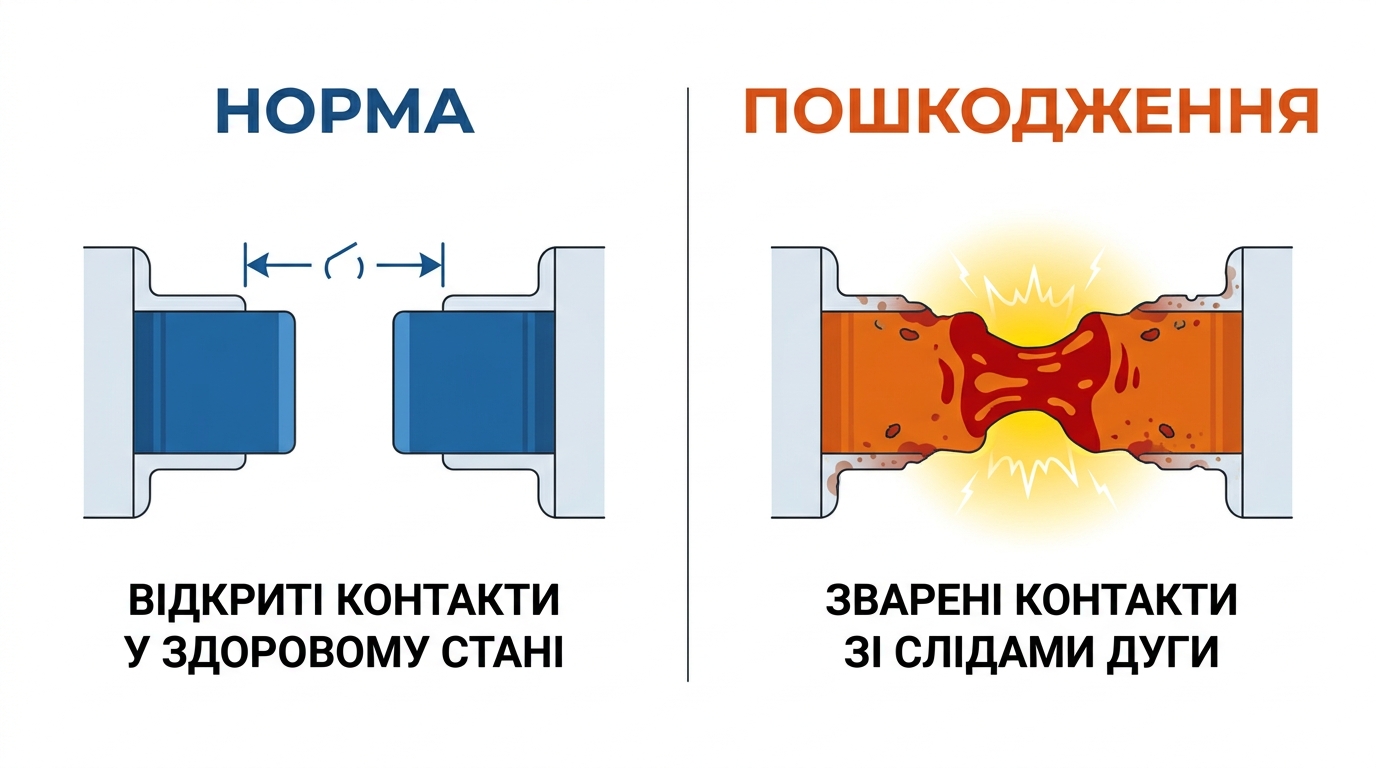
In simple terms: if your network could theoretically produce a fault current of 8,000 A, and you installed a breaker rated for 6 kA (6,000 A), it may simply fail to open the circuit during a short circuit. The internal arc-quenching chamber cannot handle the plasma energy, and the contacts will weld together. High breaking capacity is critically important for protecting wiring and equipment in locations with low phase-neutral loop impedance — for example, in main distribution panels located near transformer substations, where SC currents reach peak values. This is a direct requirement of IEC/EN 60898-1 safety standards.
The main rule:
The rated breaking capacity of the breaker must be no lower than the calculated SC current at its installation point. Otherwise — risk of contact welding, housing destruction, and fire.
10 kA, 6 kA, 4.5 kA — what's the difference (table comparison)
It is important to understand that the "kA" figure does not indicate the "quality" or longevity of the breaker in normal mode, but its ability to survive an extreme situation. Breaking capacity is not related to rated current In (A) (which is responsible for load) or trip characteristic B/C/D (which determines the threshold for inrush currents). The engineer's main rule: the rated breaking capacity must be no lower than the calculated SC current at its installation point.
"Based on our experience at UEC and analysis of inquiries from our partners, we see that for modern new construction, 6 kA has become the 'gold standard,' while 10 kA is mandatory for main distribution groups."
— UEC, Technical Department
Comparison of breaking capacity classes
| Breaking capacity (Icn) | Typical facilities | Risks if underrated | Recommendation | Cost note |
|---|---|---|---|---|
| 4.5 kA | Older housing stock, dacha cooperatives, networks with high impedance (thin, long lines) | High risk of contact welding during SC near the panel | Only for repairing existing networks, not recommended for new projects | Cheapest, but an outdated series |
| 6 kA | Apartments in new buildings, offices, floor-level panels | Risk exists only when installed directly in the main switchboard near a substation | Baseline standard for residential sector (per European norms) | Optimal (10–15% more expensive than 4.5 kA) |
| 10 kA | Main panels, industry, shopping centers, buildings near substations | Minimal. Provides reliability margin | Mandatory for main breakers and critical consumers | 20–30% more expensive — the price of safety |
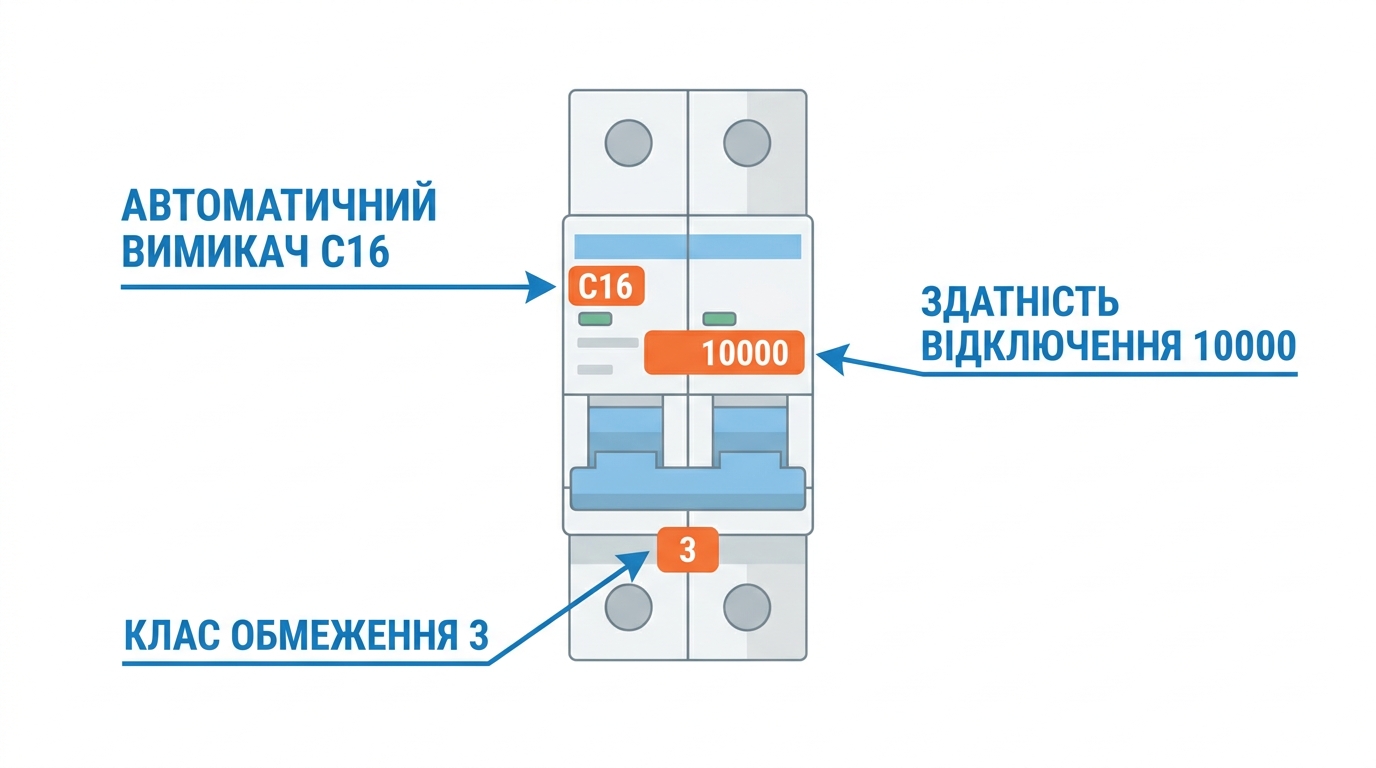
Standards regulating these parameters: IEC/EN 60898-1 (for residential use, marking simply "6000" or "10000") and IEC/EN 60947-2 (for industrial use).
Read more about standard gradation in our article: which breaking capacity to choose: 4.5 kA, 6 kA, or 10 kA.
Where are 10 kA circuit breakers used (when it's really needed)
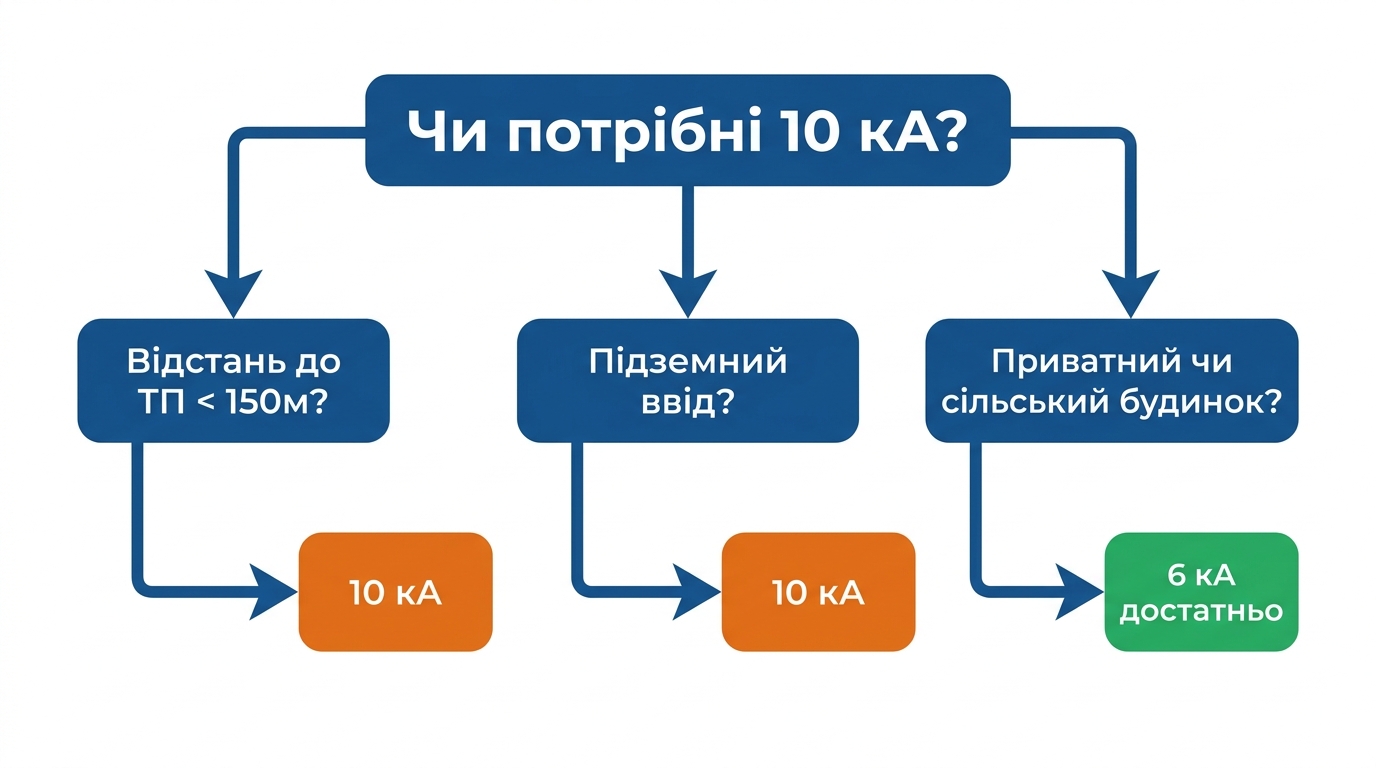
10 kA breakers are used where network physics creates conditions for extremely high currents. These are facilities with low total phase-neutral loop impedance. If you are designing a system for an industrial workshop or a modern shopping center, using 10 kA is not just a recommendation but often a regulatory requirement for ensuring selectivity and stability. "10 kA doesn't hurt" in an ordinary apartment, but it may be economically unjustified if calculations show an SC current of only 300–500 A.
- Proximity to the power source: If the facility is within a 150–200 meter radius of a transformer substation.
- High-capacity feeders: Use of large cross-section cables (from 16 mm² copper), which have low resistance and barely limit the SC current.
- Industrial networks: Where dedicated transformers and motors are installed that can operate in generation mode during a fault.
Main panels (apartment/house/commercial): why 10 kA is often installed at the main feeder
The main breaker is the first line of defense. At this point, line impedance is lowest, and therefore the short-circuit current (Isc) is highest. While the SC current at a bedroom outlet may drop to 400–600 A due to internal wiring resistance, at the main breaker terminals it can reach 5–8 kA. That is why main breaker selection often dictates the need for a 10 kA model, even if branch breakers further down the chain are rated at 6 kA. This provides so-called cascading: a powerful "input" backs up weaker "outputs."
Industrial installations and facilities with high-capacity power supply
In industry, the stakes are higher. Both modular series (MCB) rated at 10 kA and molded case circuit breakers (MCCB) capable of interrupting 25, 36, and even 50 kA are used. If you are selecting protection for a machine with a powerful motor, it is important to consider not only kA but also the utilization category (A or B), which determines selectivity. Read more about types of industrial and residential breakers in our dedicated review.
MCB vs MCCB comparison for high-power consumers
| Type | In range | Typical Icu/Ics | Application area |
|---|---|---|---|
| MCB (Modular) | up to 125 A | 6, 10, 15 kA | Distribution panels, end consumers |
| MCCB (Molded case) | up to 1,600 A | 16 – 150 kA | Main feeders, workshop power line protection |

Warning! Working with electrical equipment is life-threatening!
All work in the electrical panel must be performed only by qualified electricians with the power disconnected. Before starting work, be sure to de-energize the line and verify the absence of voltage with a measuring device.
Service (Ics) vs ultimate (Icu/Icn) breaking capacity — which matters more
Often, on the breaker housing or in its datasheet, you can see two figures, for example: Icu = 10 kA and Ics = 7.5 kA (or 75% Icu). Understanding the difference can save your equipment.
Ultimate capacity — the "last hero"
Icn (Rated Capacity) / Icu (Ultimate Capacity): This is the "last hero." The maximum current the breaker will withstand once, interrupt the circuit, and possibly fail (requiring replacement), but will not explode or allow current to pass through.
Service capacity — the "workhorse"
Ics (Service Capacity): This is the "workhorse." The current the breaker can interrupt and after which it is guaranteed to remain operational and continue working in normal mode.
For residential series (IEC 60898), typically Icn = Ics (100%). For industrial series, Ics may be 50%, 75%, or 100% of Icu. When selecting equipment for critical infrastructure, at UEC we always recommend paying attention specifically to Ics.
- Marking "6000" in a rectangle: Usually indicates Icn per residential standard EN 60898.
- "10kA" as text: Often indicates Icu per industrial standard EN 60947-2. Check the manufacturer's datasheet.
"Not all '10 kA' are equal. A budget brand may declare 10 kA as the ultimate limit (after which the breaker is trash), while a top manufacturer like GEWISS or UEC guarantees that at 10 kA the breaker will remain operational (Ics = 100% Icu). Always check the datasheet for the Ics parameter."
— Oleh Lukianchuk, UEC

What breaking capacity affects (safety, equipment, fire risks)
Ignoring this parameter is playing with fire in the most literal sense. A mismatch between the breaker and the actual SC current affects:
- Physical housing integrity: During an SC above the rating, the breaker may be mechanically destroyed.
- Fire safety: An electric arc that did not extinguish in the chamber escapes outward.
- Selectivity: Failure of the main breaker will de-energize the entire facility, even if the fault occurred on a single branch.
Contact welding during SC: consequences of choosing a breaker with insufficient breaking capacity
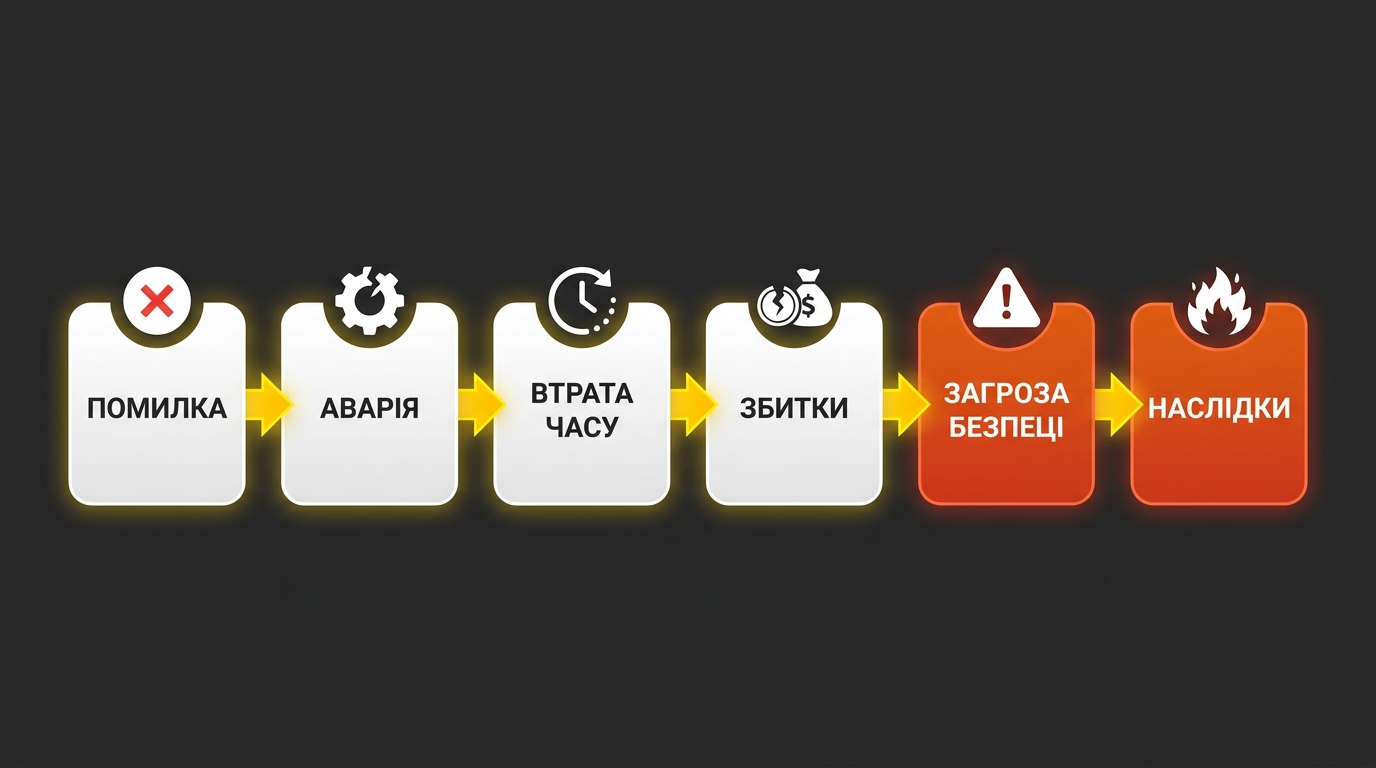
The most dangerous scenario is contact welding during a short circuit. When a current exceeding the contact group's switching capability passes through (for example, 8 kA through a 4.5 kA breaker), localized overheating occurs up to the melting point of copper and silver. Dynamic forces press the contacts together, and they literally fuse into a monolith. At this point, the breaker loses its protective function. Even if the trip mechanism activates, no physical circuit break will occur. Current continues to flow, heating the wiring until insulation ignites. That is why what happens if you choose a breaker with the wrong rating is a matter of your safety, not just a "technical nuance." According to research, breakers subjected to currents above their AIC (Ampere Interrupting Capacity) can fail catastrophically [Research 3, Wikipedia].
How to determine if 10 kA is needed in your network (quick algorithm)
How do you know it's time to buy a 10 kA series? Here is a simple verification algorithm:
- Determine the installation point: Main breaker, floor distribution panel, or final branch circuit?
- Gather source data: Transformer substation power (if known) and distance to it.
- Evaluate the line: Cross-section and material of the feeder cable.
- Calculate the expected Isc: At least roughly or using online SC calculators.
- Cross-reference with the project: If the design specifies 10 kA — downgrading the rating on your own is prohibited.
Short-circuit current calculation (simplified vs engineered)
For accurate results, engineers use specialized software that accounts for transformer reactance, arc length, and conductor temperature. However, for a preliminary estimate (not for a design project!), you can use the rule: the thicker the cable and the closer the substation, the higher the current. If you are connected by a 16 mm² (copper) cable 50 meters from a substation, the SC current is guaranteed to exceed 6 kA. A 10 kA breaker is needed here. You will find the detailed methodology in our section on calculating breaker ratings for 380V networks. Disclaimer: This information is an estimate. Accurate SC current calculations must be performed by a certified designer in accordance with IEC 60909.
Regulatory requirements (IEC/national standards) — what to check
When selecting, refer to the applicable standards in your country.
Key regulatory documents
| Regulatory document | Description |
|---|---|
| PUE (Electrical Installation Rules) | Define minimum requirements for line protection and selectivity. |
| DBN V.2.5-23:2010 | Regulates design of electrical equipment for civilian facilities. |
| DSTU EN 60898-1 | Standard for modular AC circuit breakers (residential). |
Practical selection of a 10 kA circuit breaker: what to look for in specifications and markings
When purchasing, pay attention not only to the large rated current figure (e.g., 25 A) but also to the fine print markings. Your criteria:
- In (Rated current): selected based on cable cross-section.
- Breaking capacity: 10000 or 10kA (often in a rectangle).
- Trip characteristic (B, C, D): Affects sensitivity to inrush currents. Read more about the difference between B, C, and D breakers.
- Current limiting class: Number 3 in a square (highest class, extinguishes the arc fastest, minimizing cable damage).
- Brand and series: Premium series (e.g., GEWISS MT) often have higher Ics ratings.
Common mistakes during selection (and how to avoid them)
Common mistakes and solutions
| Mistake | Consequence | Correct approach |
|---|---|---|
| Confusing 10 kA with In (thinking it's "power") | Buying an expensive breaker where it's not needed, or vice versa. | Distinguish between Amperes (load current) and Kiloamperes (fault current). |
| Installing 6 kA right next to a powerful substation | Risk of panel destruction during the first SC. | For main panels near substations — minimum 10–15 kA. |
| Ignoring series compatibility | Inability to connect a busbar comb. | Choose breakers from the same series of the same brand. |
| Overvaluing "D" characteristic | Breaker won't "see" an SC at the end of a long line. | Use D characteristic only for motors. |
Installation and operation: what affects the real ability to interrupt SC
Even the best 10 kA breaker won't perform properly if installed with violations. The key factor is contact transition resistance. A poorly tightened terminal heats up, altering the thermal characteristics of the trip mechanism and accelerating its aging.
- Tightening torque: Use a torque screwdriver per the datasheet (typically 2–2.5 Nm).
- Cleanliness: Construction dust inside the breaker can become a conductor during arc formation, reducing the actual breaking capacity.
- Cooling: Maintain spacing between rows in the panel (diversity factor), as we discussed in our article on modular circuit breakers.
Regular inspection and testing: what you can actually check in the panel
In residential conditions, it is impossible to verify actual 10 kA performance without destroying the breaker. Therefore, maintenance comes down to prevention.
- Visual inspection: Every six months, check whether the plastic near the terminals has changed color (sign of overheating).
- Terminal re-tightening: Especially relevant for aluminum conductors (though at UEC we recommend copper only).
- Thermal imaging: Ideally — check the panel under load with a thermal camera for "hot spots."
⚠ Important: Any work in an electrical panel must be performed only after complete de-energization and verification of the absence of voltage by qualified personnel.
FAQ about 10 kA circuit breakers and breaking capacity (brief and to the point)
❓ Can you install a breaker with higher breaking capacity (10 kA instead of 6 kA)?
Yes, you can. This provides an additional reliability margin. The only limiting factors are economic feasibility and available space in the panel (sometimes 10 kA series have different dimensions or accessories).
❓ Is breaking capacity related to trip characteristic B, C, D?
No, these are independent parameters. The characteristic (B, C, D) determines "when" the breaker trips (at what overcurrent multiple), while breaking capacity (kA) determines "how" it will handle extinguishing the arc during a catastrophic fault.
❓ Does the number of poles affect "kA"?
No. The number of poles (1P, 2P, 3P) is selected based on the network phase configuration, while breaking capacity is a design feature of the mechanism.