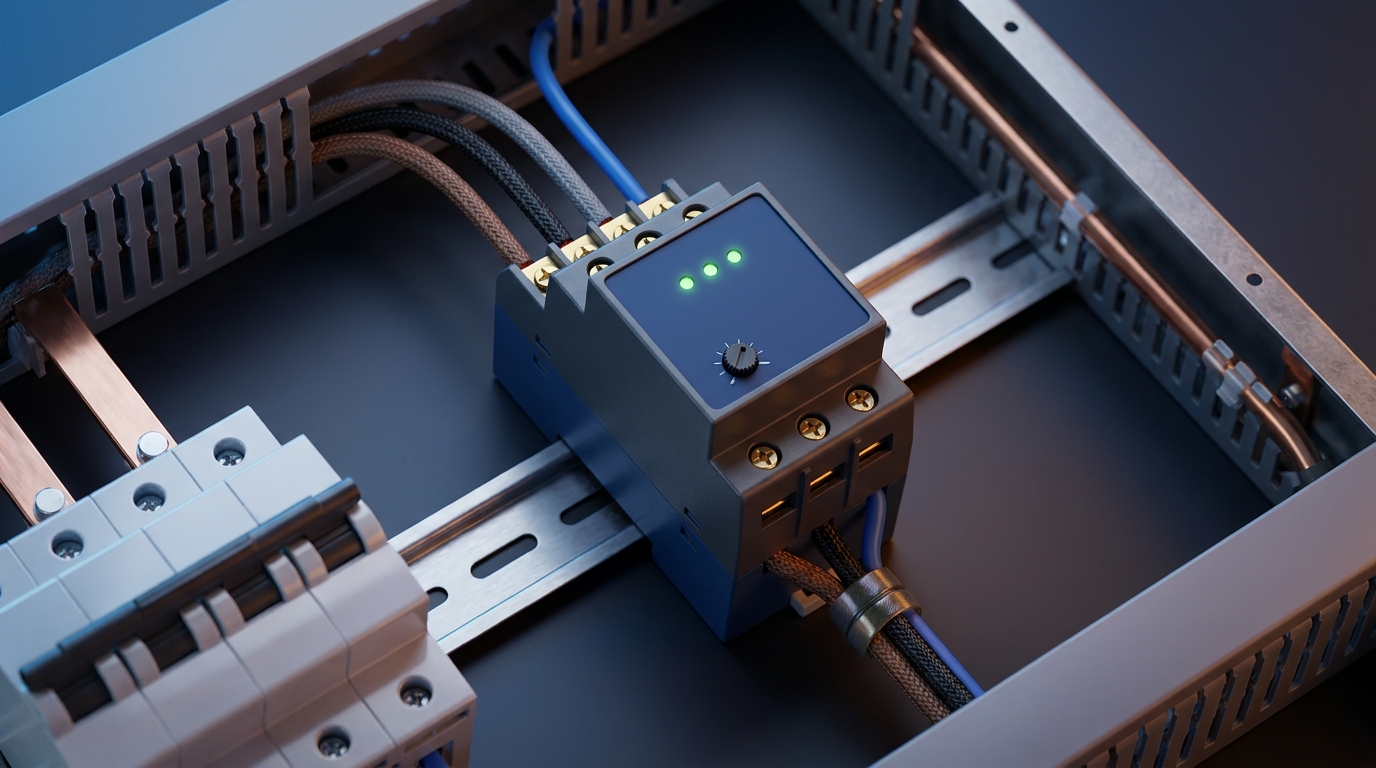

Article Contents
Breaking Capacity 4.5, 6, 10 kA - Comparison & Selection Guide


Key Takeaways
- 4.5 kA — when appropriate: Use exclusively for remote networks (old rural cooperatives) with confirmed low fault current. An economical option that requires caution.
- 6 kA — the apartment standard: The "golden mean" for 90% of urban housing and new buildings. Provides the necessary safety margin in residential panels.
- 10 kA — high-risk scenarios: Mandatory near transformer substations (TS), in main panels of cottages and commercial facilities. Guaranteed protection during major faults.
Hello, I'm Oleh Lukianchuk, a technical training engineer at UEC. With an honours degree and a background in railway diagnostics laboratory, I don't tolerate superficial solutions.
In this article, I will thoroughly examine which breaking capacity (Icn) to choose for a circuit breaker — 4.5, 6 or 10 kA — for different types of facilities, and present a step-by-step selection algorithm.
Quick Answer: What to Install in an Apartment/House/Near a Substation (Decision Matrix)
Breaking capacity (Icn) is the maximum short-circuit current that a circuit breaker can safely interrupt without exploding or welding its contacts. This parameter is measured in kiloamperes (kA). For typical residential buildings, 6 kA is the baseline reliability standard. If you're dealing with older networks and lack precise data, choose at least 6 kA to cover potential spikes. Near a transformer substation (TS) or in industrial settings, risks grow exponentially, making the switch to 10 kA unavoidable.
From my experience equipping facilities at UEC, I always start by assessing the "geography" of the site. In a Kyiv apartment built after 2010, the calculated fault current (Isc) rarely exceeds 1–1.5 kA at outlets, so a 6 kA breaker (for example, GEWISS) operates with an enormous margin. However, in buildings located "next door" to a substation, the current can reach 7–9 kA — here, saving on a 10-kiloampere breaker could cost you the entire panel.
Breaking Capacity (Icn) Selection Matrix
Find the row matching your facility and follow the recommended Icn value.
| Scenario | Recommended Icn | Why | Risk if Lower | What to Check |
|---|---|---|---|---|
| City Apartment | 6 kA | Typical Isc 1–2 kA (inlet) | Arc chamber destruction during fault | Phase-neutral loop |
| Private House | 6–10 kA | Depends on distance to TS | Panel fire | Inlet cable length |
| Cottage / Garage | 4.5–6 kA | High resistance of long lines | False economy | Overhead line condition |
| Commercial (Office) | 6–10 kA | Equipment density | Equipment damage | Transformer capacity |
| Manufacturing | 10–15 kA+ | High currents, inductance | Entire line shutdown | Power supply design |
| Panel near TS (<100m) | 10 kA | Maximum fault current | Breaker explosion | Line impedance |
⚠ WARNING: Fault current calculation and protective device selection for complex, three-phase or industrial facilities must be performed exclusively by a qualified design engineer. An error in selecting the breaking capacity rating can lead to fire.
Circuit Breaker Catalogue (4.5 kA / 6 kA / 10 kA) — Select and Buy
In the UEC catalogue, we've implemented a convenient filtering system. To avoid overpaying, first select the Icn (Rated Breaking Capacity) parameter:
- Select 6 kA for apartments and most private houses.
- Select 10 kA for main panels and commercial facilities.
Then narrow down by rated current (e.g. 16A for outlets), trip curve (B or C) and brand.
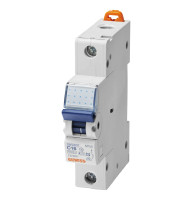
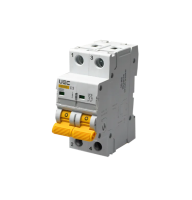
⚡ 6 kA Series (Residential)
Optimal choice for apartment wiring. Curve C, IEC 60898-1 standard.
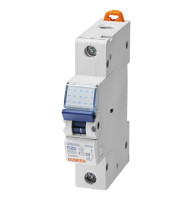
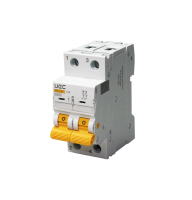
⚡ 10 kA Series (Professional)
Professional series for main inlet or critical loads. Curve B, reinforced contact group.
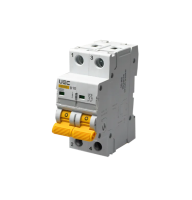
⚡ 4.5 kA Series (Economy)
Budget solution for garages and rural cooperatives with long supply lines.
For a deeper understanding of parameters, we recommend reading our articles on calculating rated current for a 220V network and the consequences of choosing the wrong trip characteristic. It's also important to know how to select the number of poles for proper panel configuration.
How to Properly Select a Circuit Breaker by kA (Breaking Capacity)
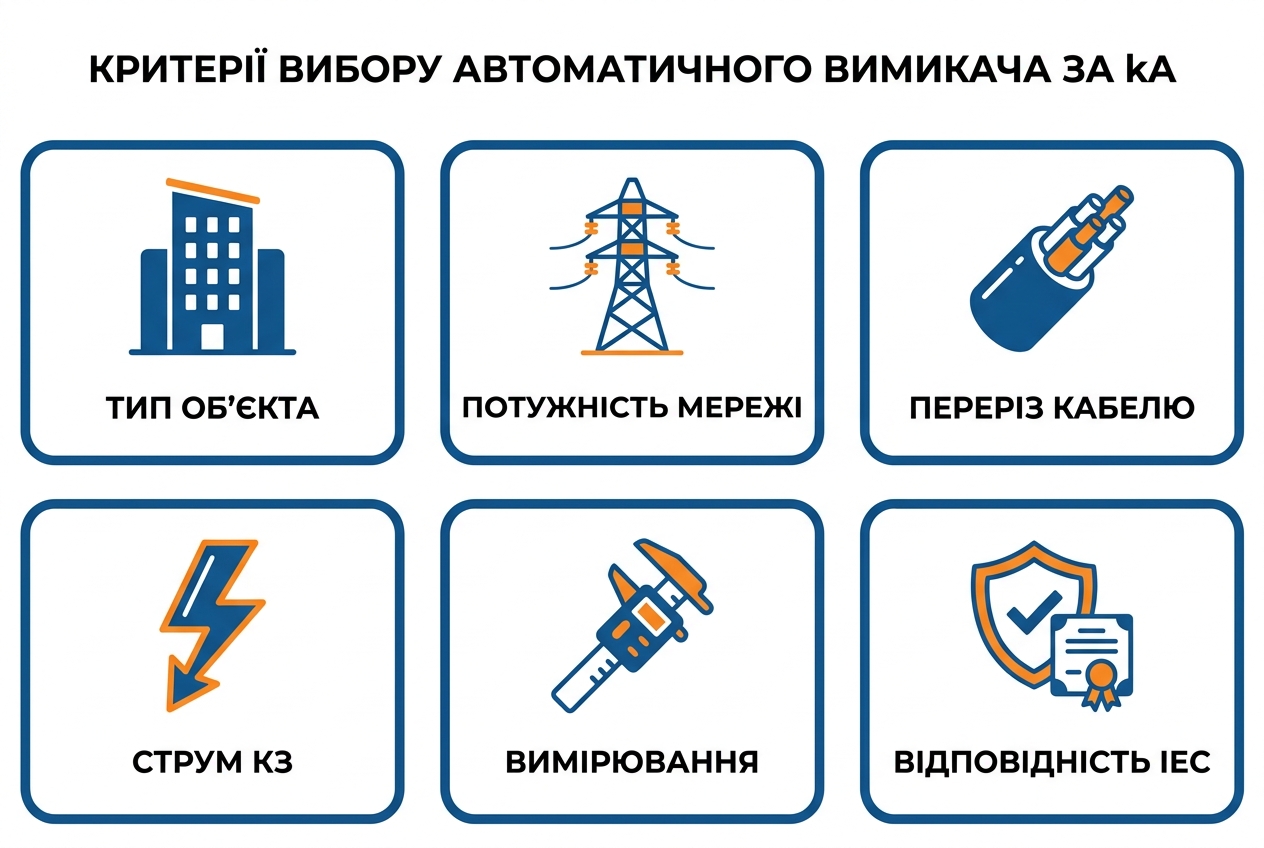
Circuit breaker breaking capacity in kA (Icn) is the parameter that guarantees your physical safety during a fault. The main selection rule — the breaker's rating (its ability to interrupt the circuit) must exceed the calculated short-circuit current at the installation point. If a breaker is rated for 4.5 kA but the actual fault produces 6 kA, the contacts will simply weld together and protection will fail.
To select the right device, evaluate the following factors:
- Facility type: A residential building in the city typically fits within 6 kA. An industrial facility or office requires 10 kA and above.
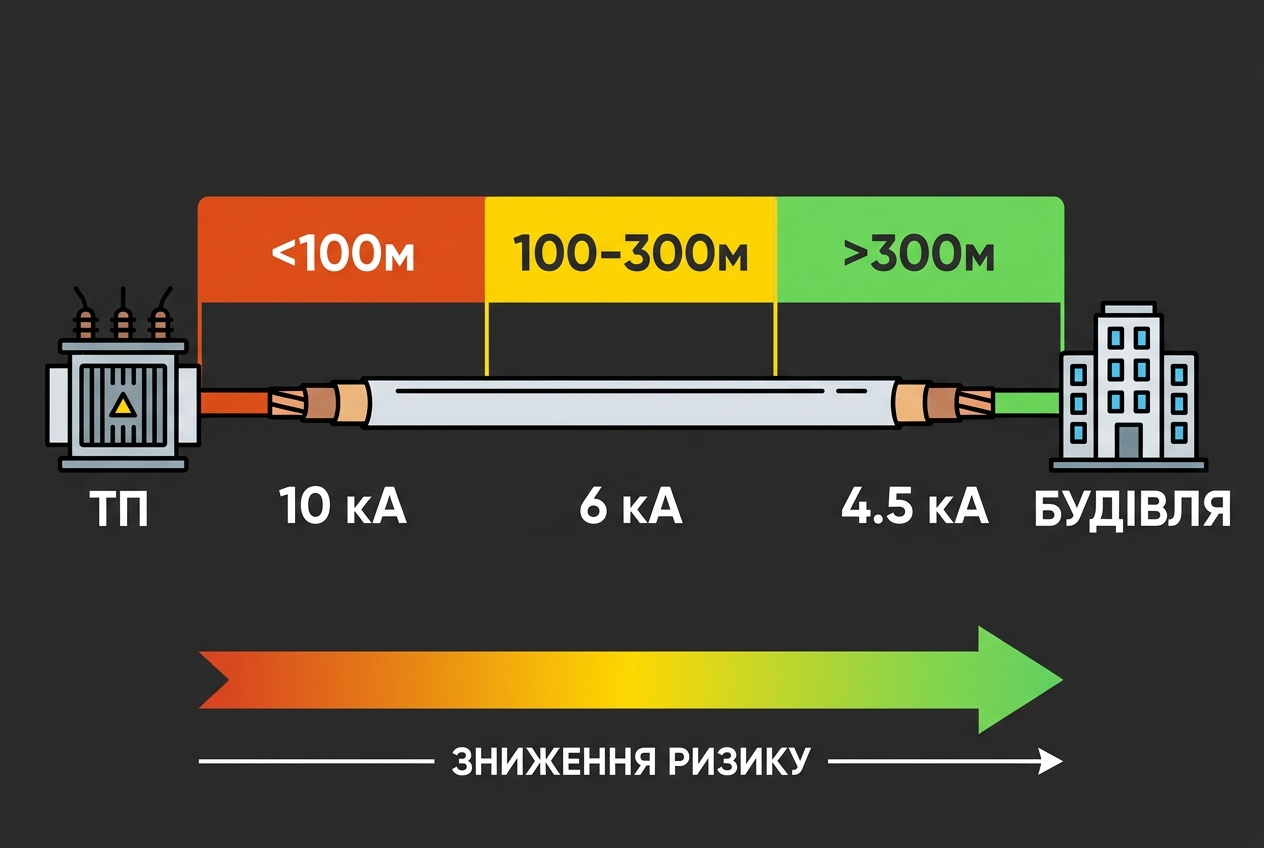
- Distance to transformer substation: If the TS is closer than 100–150 metres, fault currents increase sharply.
- Electrical network quality and condition: Old aluminium lines have higher resistance, reducing fault current (sometimes 4.5 kA is sufficient); new copper lines — the opposite.
- Data availability: The ideal option is an instrumental phase-neutral loop impedance measurement.
- Standards: Always choose equipment certified to IEC/EN 60898-1 (residential) or IEC 60947-2 (industrial).
From my experience working on the railway, where every ampere matters, an error in Icn assessment is unacceptable. At UEC, we frequently encounter situations where clients try to save on the main breaker for their cottage. We always insist: if you haven't done the calculation — choose with a margin.
Useful Standards:
- IEC 60898-1: Circuit breakers for overcurrent protection for household use (range up to 10 kA).
- IEC 60947-2: Industrial switchgear (stricter requirements, Icu can reach 50–100 kA).

Warning! Working with electrical equipment is life-threatening!
All work in the electrical panel must be performed only by qualified electricians with the power disconnected. Before starting work, be sure to de-energize the line and verify the absence of voltage with a measuring device.
What Is the Difference Between 4.5 kA, 6 kA and 10 kA (Icn) — In Simple Terms
What Is Breaking Capacity (Icn) and How It Differs from Rated Current (A)
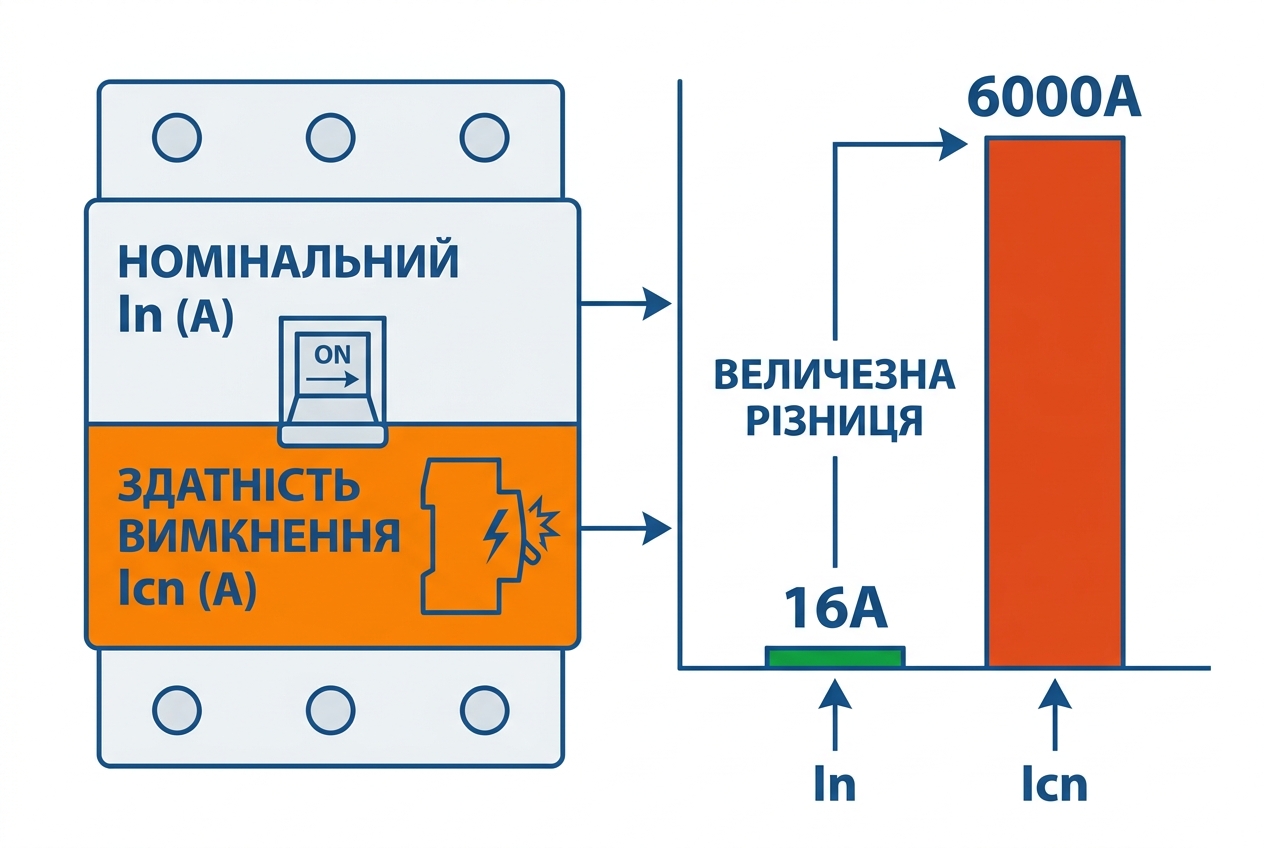
It's important not to confuse two concepts. Rated current (In) (e.g. 16A, 25A) is the operating mode at which the breaker works for years. Breaking capacity (Icn) (4500, 6000, 10000 A) is the breaker's "heroism" indicator: the maximum hit it can withstand once or twice, save the line and not burn out itself.
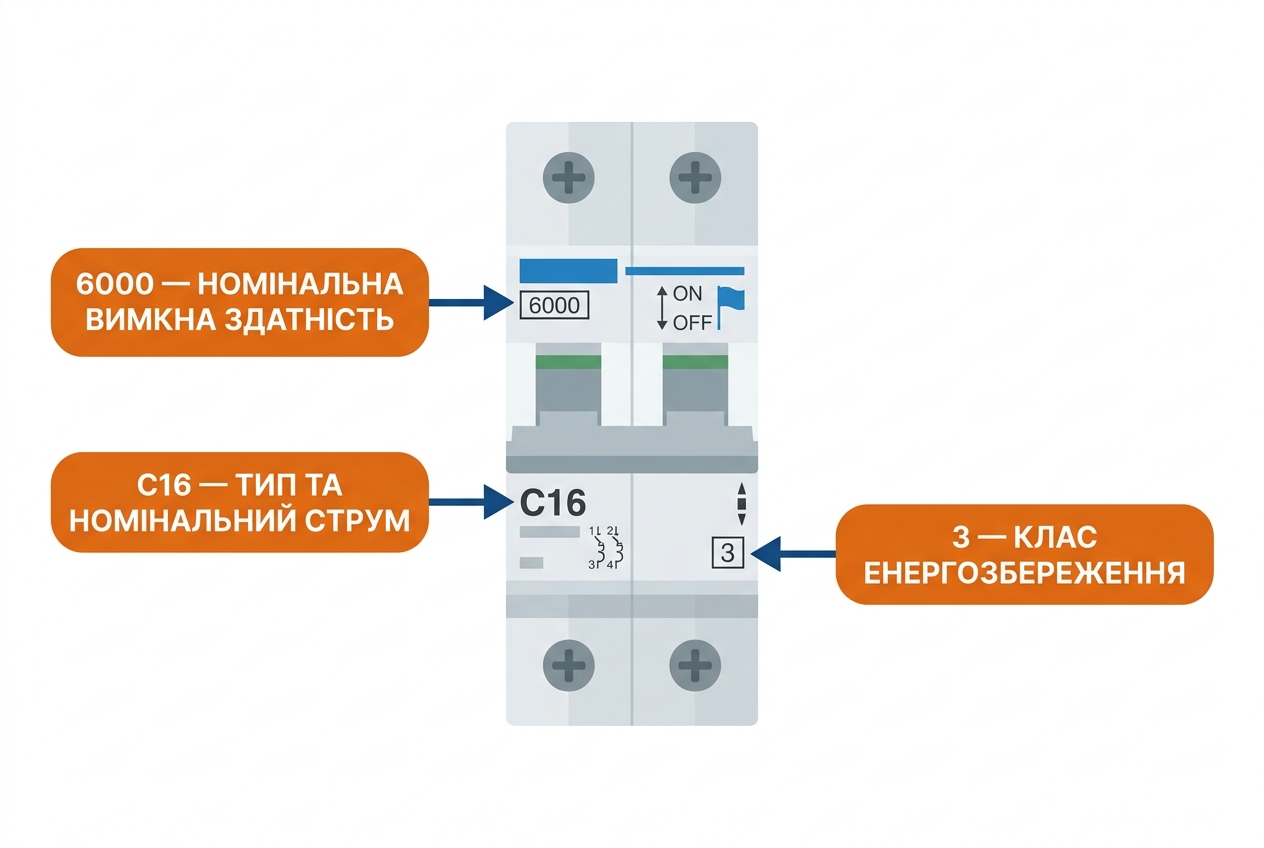
For example, the marking C16 6000 means: the device normally passes 16 Amperes, but during a short circuit it can safely interrupt an arc of 6000 Amperes (6 kA). If the current surges to 8000 A during a fault, this breaker may be destroyed, ejecting hot plasma outward. As experts at onccy.com [1] note, "an inability to interrupt the fault current can lead to serious consequences such as equipment damage or fire".
"Icn is chosen not 'by eye', but based on the calculated fault current at a specific point in the network. Underrating this parameter is a direct path to replacing the entire panel."
— Oleh Lukianchuk, UEC Expert
Read more about breaking capacity 4.5 kA, 6 kA or 10 kA in our specialised article.
4.5 kA vs 6 kA Circuit Breaker: What's the Difference and Which to Choose?
A common dilemma arises: 4.5 kA or 6 kA breaker? The main difference is the safety margin of the contact group and the arc-quenching chamber design. A 6 kA breaker has more robust contacts and a more efficient arc-extinguishing system. Compared to it, 4.5 kA is a compromise.
When it comes to choosing, for a modern apartment the advantages of 6 kA are obvious: compliance with current European standards and reliability. The price of a 4.5 kA model may be 15–20% lower, but is that saving worth the reduction in fire safety? The Ukrainian standard DSTU (harmonised with IEC) does not prohibit 4.5 kA, but residential use is increasingly shifting towards 6 kA as the universal solution.
| Parameter | 4.5 kA (Economy) | 6 kA (Standard) |
|---|---|---|
| Rated breaking capacity | 4500 A | 6000 A |
| Standards compliance | Basic IEC 60898-1 | Primary IEC 60898-1 |
| Recommended application | Cottages, old networks, temporary structures | Apartments, offices, private houses |
| Approximate price | 100–150 UAH | 150–250 UAH |
Where 10 kA Fits In: When You Need an Increased Safety Margin
10 kA circuit breakers are the "heavy artillery" of modular equipment. They are needed where network resistance is negligible and fault current can instantly surge to enormous values. This isn't always "better for everyone" — installing 10 kA on a lighting circuit in a distant room of an apartment block is technically permissible but financially impractical.
Install 10 kA if:
- The distance from the building to the transformer substation is less than 150 metres.
- It's the main breaker in the building's main distribution board (MDB).
- The facility has its own substation or a powerful generator.
- Phase-neutral loop measurement showed an expected fault current above 5.5 kA.
- The panel contains industrial equipment with high inrush currents.
- It's a commercial facility (shopping centre, office building) with high reliability requirements.
As noted in the tosunlux.eu study [3], 10 kA breakers can safely interrupt fault currents up to 10,000 amperes, making them the standard for industry and facilities near substations. It's also useful to know how to calculate a breaker by power to take a comprehensive approach to selection.
When to Choose a 4.5 kA (4500A) Circuit Breaker
Typical Scenarios (Where 4.5 kA Is Usually Sufficient)
4.5 kA (or simply 4500) circuit breakers are still available for sale and have their niche. Their use is justified where the network physics "dampens" the short-circuit current. Long power lines (especially old overhead lines in rural areas) have high resistance. This naturally limits fault current to 0.5–1.5 kA.
Under such conditions, installing a 4.5 kA breaker is technically permissible. They are often placed on end lighting circuits in rural cottages or garage cooperatives far from the TS. However, I recommend doing so only after verification.
Risks of Saving: What Happens If 4.5 kA Isn't Enough
Saving on this parameter is perhaps the most dangerous economy. If a 4500 A breaker trips in a network with an actual fault current of 6000 A, the physics of the process will be as follows:
- 1. Contact destruction — The arc energy will melt the contact group metal faster than the mechanism can separate them to a safe distance.
- 2. Welding (sintering) — Contacts may "weld" to each other. The breaker will remain in the ON position, and the fault current will continue flowing, heating the wiring to ignition.
- 3. Plasma ejection — The arc-quenching chamber will not cope with gas pressure. The breaker housing may rupture, damaging neighbouring modules in the panel.
- 4. Fire — Heated mechanism parts or wire insulation become a source of open flame.
According to oohmage.com [4], most residential standards in the UK already require a minimum of 6 kA or even 10–16 kA depending on the supply, confirming the global trend away from low Icn ratings.
Why 6 kA Is the Standard for Modern Apartments and Private Houses
Typical Fault Currents in Urban Networks and the 6 kA "Safety Margin"
In urban development, substation density is high and cable lines are made of copper with good cross-sections. This ensures stable voltage but also high short-circuit currents — typically in the range of 1 to 4 kA at the apartment inlet. A 6 kA breaker in such conditions operates with a safety factor of 1.5–2.
This guarantees that during a fault the breaker will not only disconnect the line but also remain functional for further use. This is precisely why for the equipment series we supply at UEC (for example, GEWISS residential lines), 6 kA is the "default" standard.
The Impact of Transformer Substation Proximity on Icn Selection
Simple physics applies here: the fewer metres of cable from the TS to your panel, the lower the resistance and the "fiercer" the short-circuit current.
- Far from TS: Line resistance acts as an additional resistor, reducing fault current.
- Close to TS: There are virtually no "brakes" for the current.
If you live in a new building with the transformer substation in the courtyard (or built into the building), the cable length may be just 30–50 metres. In this case, the calculated inlet current can easily exceed 6 kA. Research from onccy.com [1] confirms: transformer impedance and short lines are the key factors driving Isc growth.
How to Determine the Required Breaking Capacity (Icn) at Your Installation Point
The Most Reliable Method: Phase-Neutral Loop (Impedance) Measurement and Fault Current Calculation
The most accurate way to find out the truth is instrumental measurement. A specialist uses a device (e.g. Sonel MZC-304 or equivalent) that briefly loads the network for microseconds and measures the total phase-neutral loop impedance. Knowing the voltage and resistance, the device automatically calculates the expected short-circuit current (Isc).
| What Was Measured | What It Means | Impact on Icn |
|---|---|---|
| Low impedance (e.g. 0.04 Ohm) | Very high Isc (>5 kA) | Choose 10 kA (with margin) |
| Medium resistance (0.1–0.3 Ohm) | Moderate Isc (1–3 kA) | 6 kA is sufficient |
| High resistance (>0.8 Ohm) | Low Isc (<0.5 kA) | 4.5 kA possible, but 6 kA is better |
⚠ Important: Such measurements are performed with live voltage. Entrust this only to certified electrical laboratories or electricians with the appropriate authorisation level.
Simplified Approach Without Measurements: When Acceptable and How to Avoid Mistakes
If calling a laboratory isn't an option, we use the risk assessment method. This doesn't provide 100% accuracy but helps avoid gross errors.
Assessment by facility type, construction year and proximity to TS
For new residential complexes and cottage communities with their own substations, we recommend 10 kA for the inlet and 6 kA for branch circuits by default. For old housing stock ("khrushchyovkas", panel blocks) with aluminium wiring, fault currents physically cannot be high due to connection degradation, so 6 kA there is already with a large margin.
Why "I'll get what my neighbour has" is a bad strategy
Your neighbour may have bought a "cheap" breaker at the market without understanding the risks. Or they may be on a different, less loaded phase. Focus on your conditions. As recommended by the specialist resource oohmage.com [4], "calculate your fault current... then choose a breaker where the Icu is at least 20% greater". A 20% margin is the minimum.
- What is your facility type? Rural house (wooden/remote) City apartment Commercial / Manufacturing
- How far is the transformer substation? I can see it from my window / in the courtyard Somewhere in the neighbourhood (100–300m) Don't know / Very far
For precise selection, we also recommend reviewing the circuit breaker selection table by cable cross-section.
Standards and Markings: How to Read a Breaker and Avoid Buying a "Fake"
Which Standards Appear on Breakers (IEC/EN/DSTU) and What They Mean
A quality breaker always shows the standard on its casing.
- IEC/EN 60898-1: This is the "residential" standard. Devices certified under it are simple to maintain (can be operated by unqualified personnel) and typically have Icn of up to 6 kA or 10 kA.
- IEC/EN 60947-2: The "industrial" standard. Testing requirements here are significantly stricter. Breakers are tested under extreme conditions.
When choosing for home use, look for a reference to 60898.
| Standard | Application | Typical Icn | Notes |
|---|---|---|---|
| IEC 60898-1 | Residential buildings, offices | 4.5, 6, 10 kA | Non-adjustable releases |
| IEC 60947-2 | Industry, MDB | 15 kA – 100 kA | Allows protection adjustments |
Reference sources: IEC 60898-1 — Circuit-breakers for overcurrent protection for household installations. UEC / GEWISS technical specification catalogues (available on request).
Where 4.5/6/10 kA Is Shown on the Casing: Marking Examples
Brands mark breaking capacity differently, but the logic is the same. Look for a rectangle or number on the front face:
- 6000 or 6kA (often in a rectangular frame).
- 4500 or 4.5kA.
- 10000 or 10kA.
It's important not to confuse this number with the energy limiting class (number 3 in a small square) or the rated current (e.g. B16).
Common Mistakes and Myths When Choosing Breaking Capacity
“The Higher the Better” — When 10 kA Offers No Benefit
The myth that a 10 kA breaker will trip "faster" or "better" on a weak line is a misconception. Trip speed depends on the curve (B, C, D), not on kA. If your fault current is only 500 A, a 6 kA and a 10 kA breaker will trip identically. Overpaying for 10 kA in a rural house often makes no technical sense.
Confusion: Rated Current (A) vs Breaking Capacity (kA)
Some users think a breaker "rated at 6000 A" will trip constantly. No — this is merely its endurance limit. The working current is the number next to the letter (e.g. C16).
| Myth | Reality | What to Do |
|---|---|---|
| “10 kA will protect equipment better” | kA protects the breaker and panel from explosion, not your TV. | Choose kA based on fault current calculation; for equipment, install a voltage relay. |
| “Any breaker will do” | A weak breaker during a strong fault becomes a fire source. | Don't economise on the main breaker. |
| “A cheap Chinese 6kA is the same as a branded one” | Without certification, the number on the casing is just decoration. | Verify IEC certificates. |
Comparing Series and Brands: What to Look for Beyond kA
When choosing between, say, GEWISS (Italy) and budget alternatives, look deeper than the "6000" figure.
- Weight: A quality breaker is heavier due to massive copper coils and arc-quenching grids.
- Arc quenching: Budget models have 5–7 plates in the chamber, professional ones have 11–13. This directly affects the ability to extinguish the arc.
- Terminals: The presence of serrations and the correct alloy prevent contact overheating.
- Warranty: Official distributors (like UEC) provide a warranty confirming the mechanism's service life.
Transparency policy: We recommend UEC and GEWISS equipment because we directly control their quality and IEC compliance. However, the Icn selection principles outlined in this article are universal for any certified brand.
Also pay attention to modular circuit breakers for apartments to compare different series.
Step-by-Step Icn Selection Algorithm (4.5/6/10 kA) for Your Panel
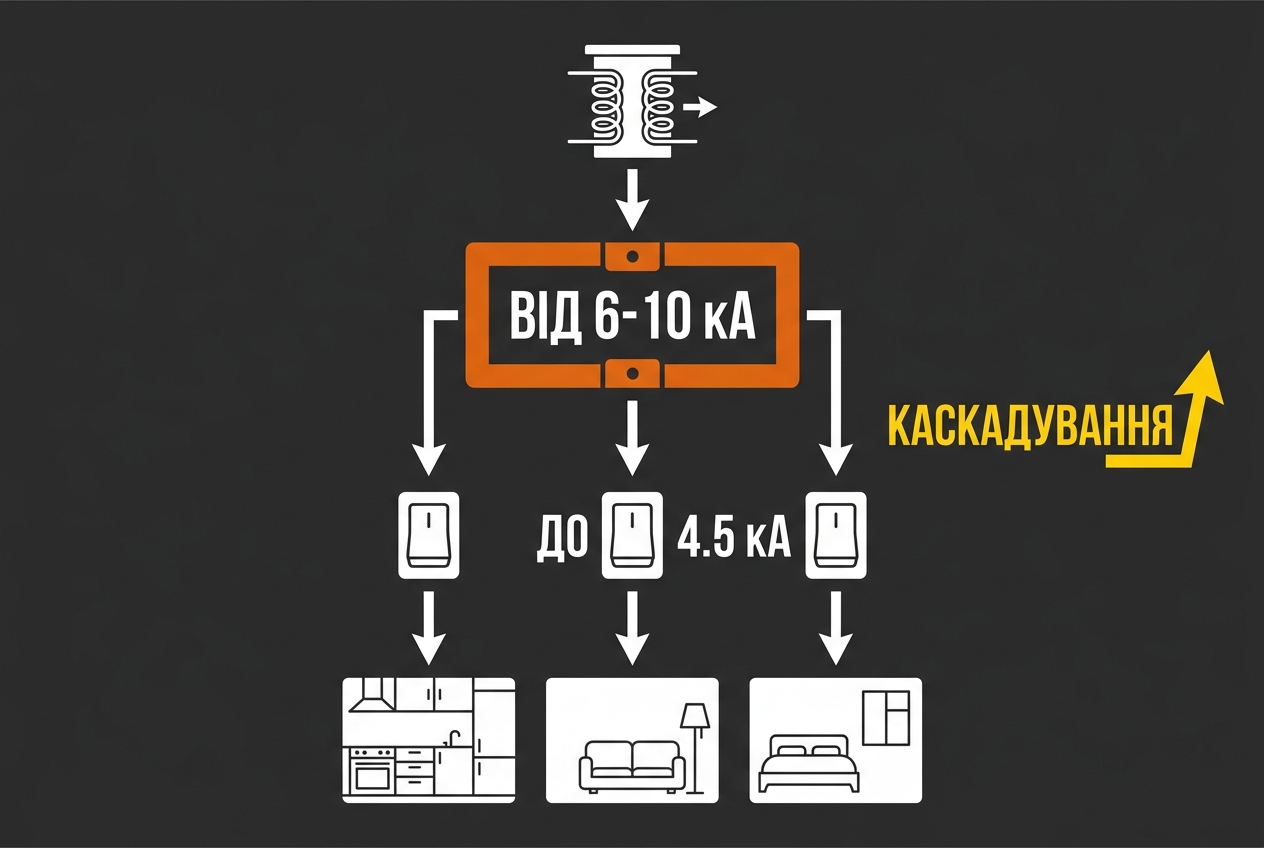
- Step 1: Location. Determine where you're installing the breaker. Building inlet? (Maximum needed). Bedroom outlet circuit? (Can be lower if cascading allows).
- Step 2: Network assessment. Find out the distance to the TS. If possible, order a phase-neutral loop measurement.
- Step 3: Rating selection. Multiply the calculated fault current by 1.2 (+20% margin). Round up to the nearest standard value (4.5, 6, 10).
- Step 4: Compatibility check. Ensure the selected breaker is compatible with busbars and other devices in your panel (RCD, relay).
FAQ — Expert Answers on Safety (4.5 kA / 6 kA / 10 kA)
❓ Can I install 6 kA instead of 4.5 kA?
Yes, absolutely. This is called reliability upgrading. Installing a breaker with higher breaking capacity (6 kA instead of 4.5 kA) does not harm the wiring in any way — on the contrary, it provides an additional safety margin in case of a serious fault.
❓ What happens if the breaking capacity is insufficient?
During a short circuit whose current exceeds the breaker's capabilities, the contacts may weld together and the casing may be destroyed. This creates a direct fire hazard in the electrical panel.
❓ Should breakers be replaced when rewiring?
Preferably. New copper wiring has lower resistance than old aluminium. This means fault currents will increase. Old 4.5 kA breakers may no longer meet the new network conditions, so upgrading to 6 kA is standard practice during major renovation.
❓ Is there any point in installing 10 kA in an apartment?
In a typical high-rise apartment there's little point unless it's a ground floor directly above the electrical room. Fault currents on upper floors rarely reach such values. The exception is premium new builds with their own TS and short supply lines.
❓ Should the main breaker and branch breakers have the same kA?
Cascading is often used: the main breaker is installed with a higher capacity (e.g. 10 kA) to guarantee it withstands the maximum hit, while branch breakers are 6 kA. This allows budget savings without critical safety loss, provided it's confirmed by calculation.
About the author: Oleh Lukianchuk is a technical training engineer at UEC. With an honours degree and a background in railway diagnostics laboratory, Oleh doesn't tolerate superficial solutions. His goal is to ensure every electrical panel in Ukraine is assembled competently and safely.