
Article Contents
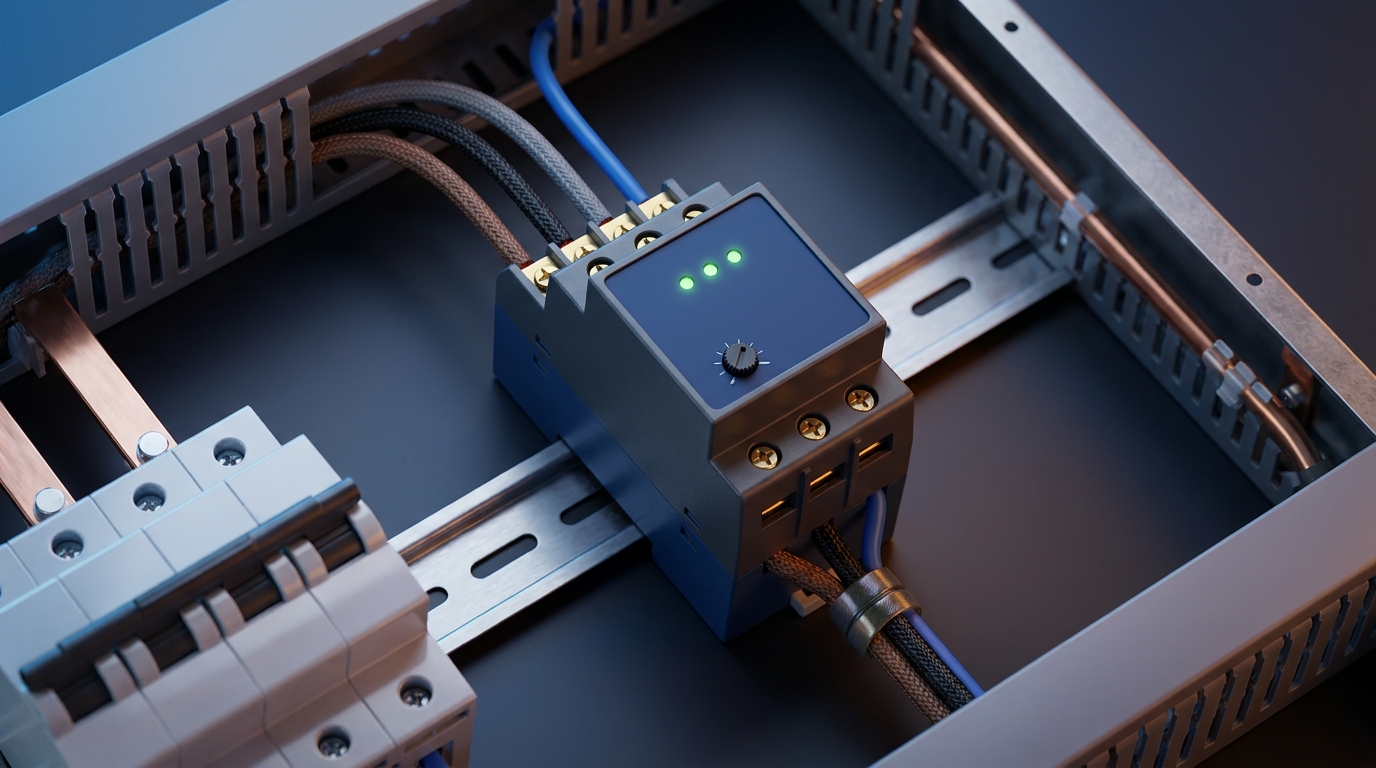
Voltage Relay + RCD and RCBO: Proper Connection Sequence in Electrical Panel


Key takeaways
Voltage relay, RCD and RCBO are three protection devices that serve different functions and cannot replace one another.
Correct sequence in the panel: meter → main breaker → voltage relay → RCD → group breakers or RCBOs.
Key point: an RCBO combines circuit breaker and RCD functions but does not monitor voltage levels — a voltage relay remains mandatory.
Hello, I'm Oleg, an electrical engineer at UEC. For over 8 years I've been helping design electrical panels for residential and commercial facilities.
In this article we'll explain why voltage relays, RCDs and RCBOs are needed simultaneously, how to arrange them correctly in the panel, and what installation mistakes to avoid.

Warning! Working with electrical equipment is life-threatening!
All work in the electrical panel must be performed only by qualified electricians with the power disconnected. Before starting work, be sure to de-energize the line and verify the absence of voltage with a measuring device.
Why voltage relay and RCD are not interchangeable?
These two devices deal with fundamentally different types of faults. The confusion arises because both "disconnect something," but the triggering causes are opposite.
Relay = overvoltage protection; RCD = leakage protection
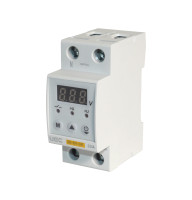
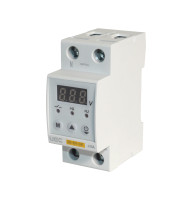
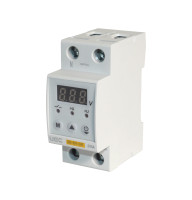
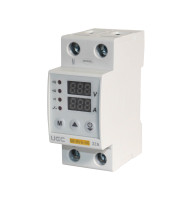
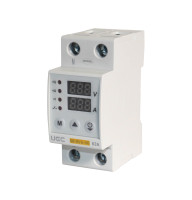
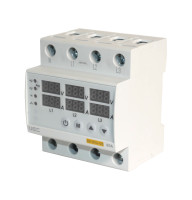
A voltage monitoring relay monitors the voltage level in the network. If the value goes beyond the set limits (usually 180–250 V), the relay breaks the circuit, protecting household appliances from overvoltage, voltage sag, and consequences of neutral wire break [1].
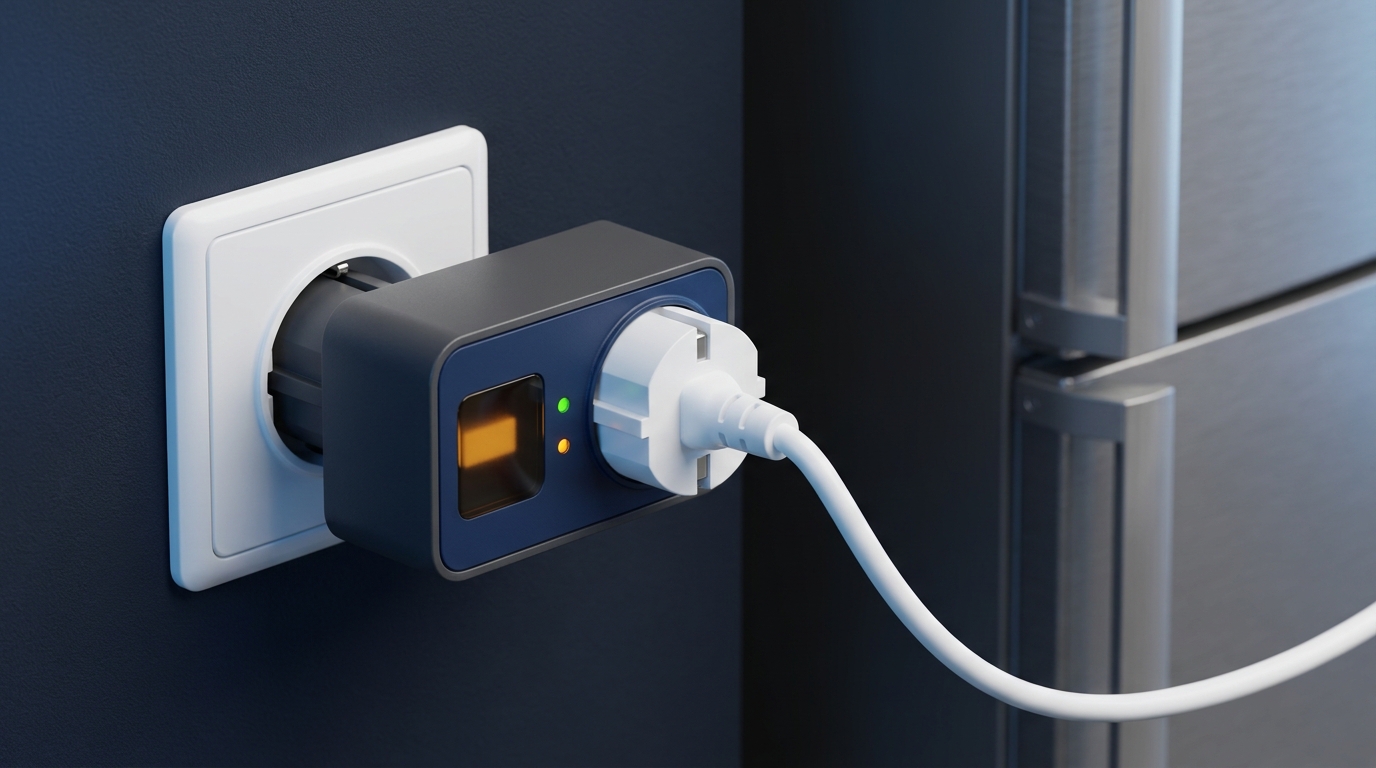
An RCD (Residual Current Device) reacts to leakage current (≥30 mA) and instantly disconnects the line. Its purpose is to protect people from electric shock when insulation breaks down on an appliance housing [2].
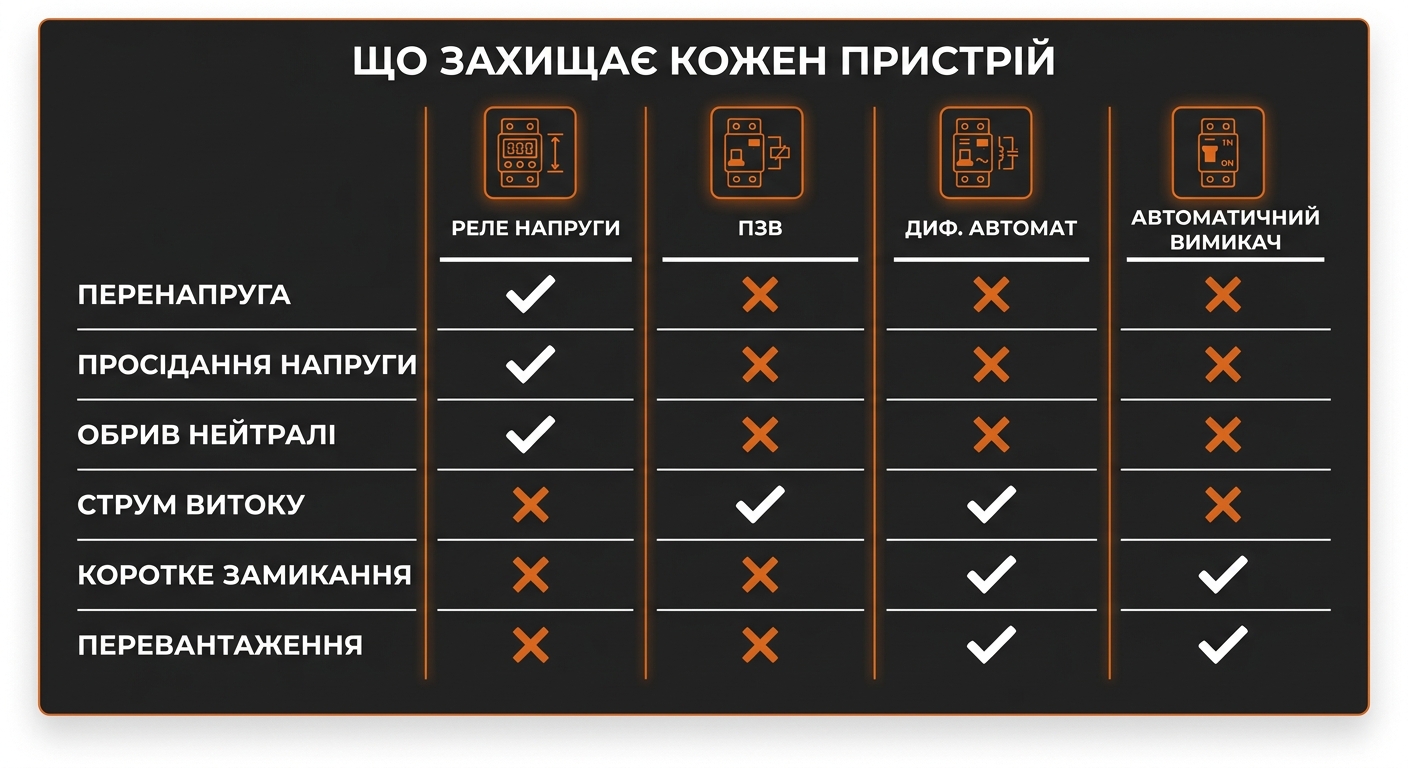
| Protection against | Voltage relay | RCD | RCBO | Circuit breaker |
|---|---|---|---|---|
| Overvoltage (>250 V) | ✓ | ✗ | ✗ | ✗ |
| Voltage sag (<180 V) | ✓ | ✗ | ✗ | ✗ |
| Neutral wire break | ✓ (partial) | ✗ | ✗ | ✗ |
| Leakage current (≥30 mA) | ✗ | ✓ | ✓ | ✗ |
| Short circuit | ✗ | ✗ | ✓ | ✓ |
| Overload | ✗ | ✗ | ✓ | ✓ |
Key conclusion:
As you can see, there is zero overlap. That is exactly why both devices are needed simultaneously.
What is the correct sequence: relay → RCD or RCD → relay?
The definitive answer: the voltage relay is installed BEFORE the RCD [1][2]. The correct sequence in the panel:
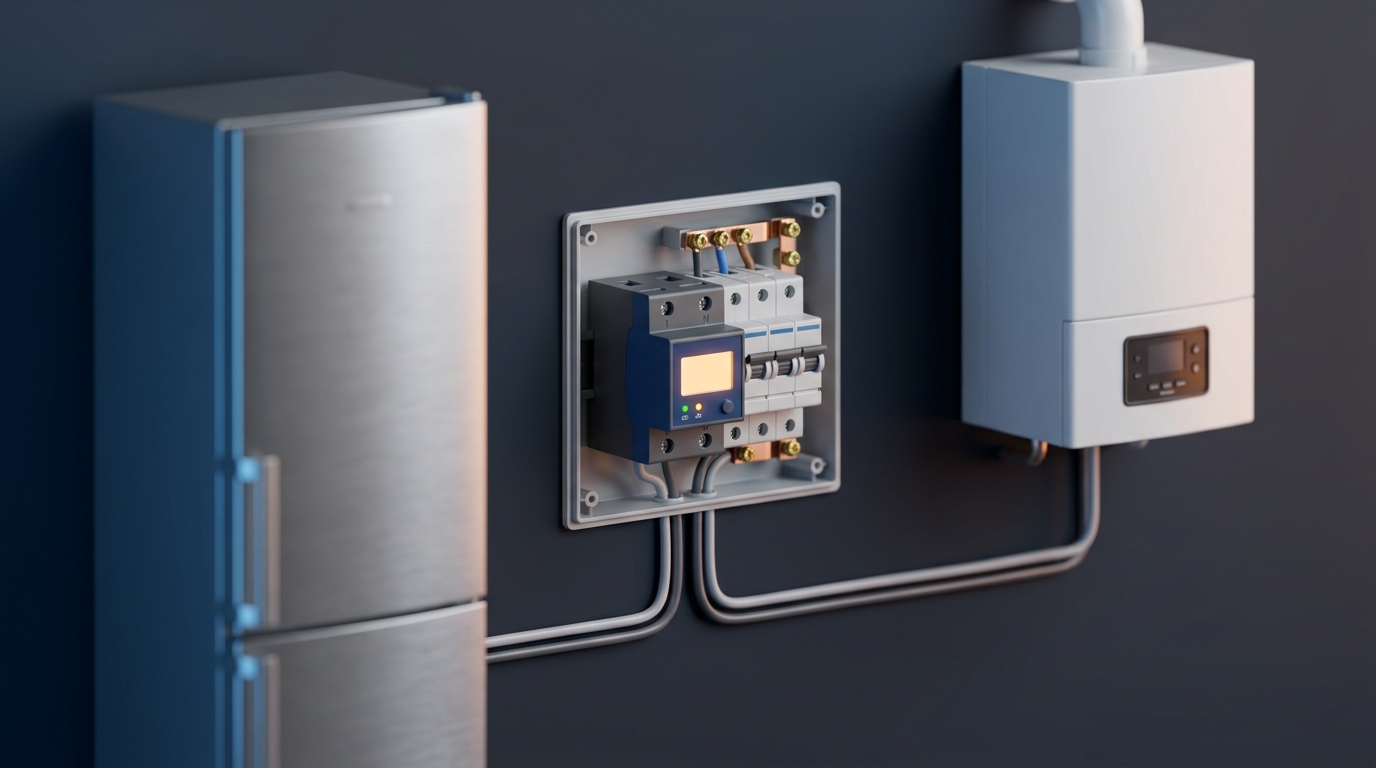
Meter → Main breaker → VOLTAGE RELAY → RCD → Group breakers / RCBOs
Why this order:
- Main breaker — protects against short circuit and overload at the input.
- Voltage relay — monitors the voltage of the entire network. Input (In) — from the main breaker output, output (Out) — to the busbar downstream. Neutral conductor (N) — directly to the neutral bus.
- RCD — monitors leakage after the relay has already filtered out dangerous voltage spikes.
- Group breakers / RCBOs — distribute the load across circuits.
⚠ Warning! If the RCD is placed before the relay, imbalance from neutral wire break or sharp voltage fluctuations will cause false RCD trips. The relay upstream eliminates this problem [1].
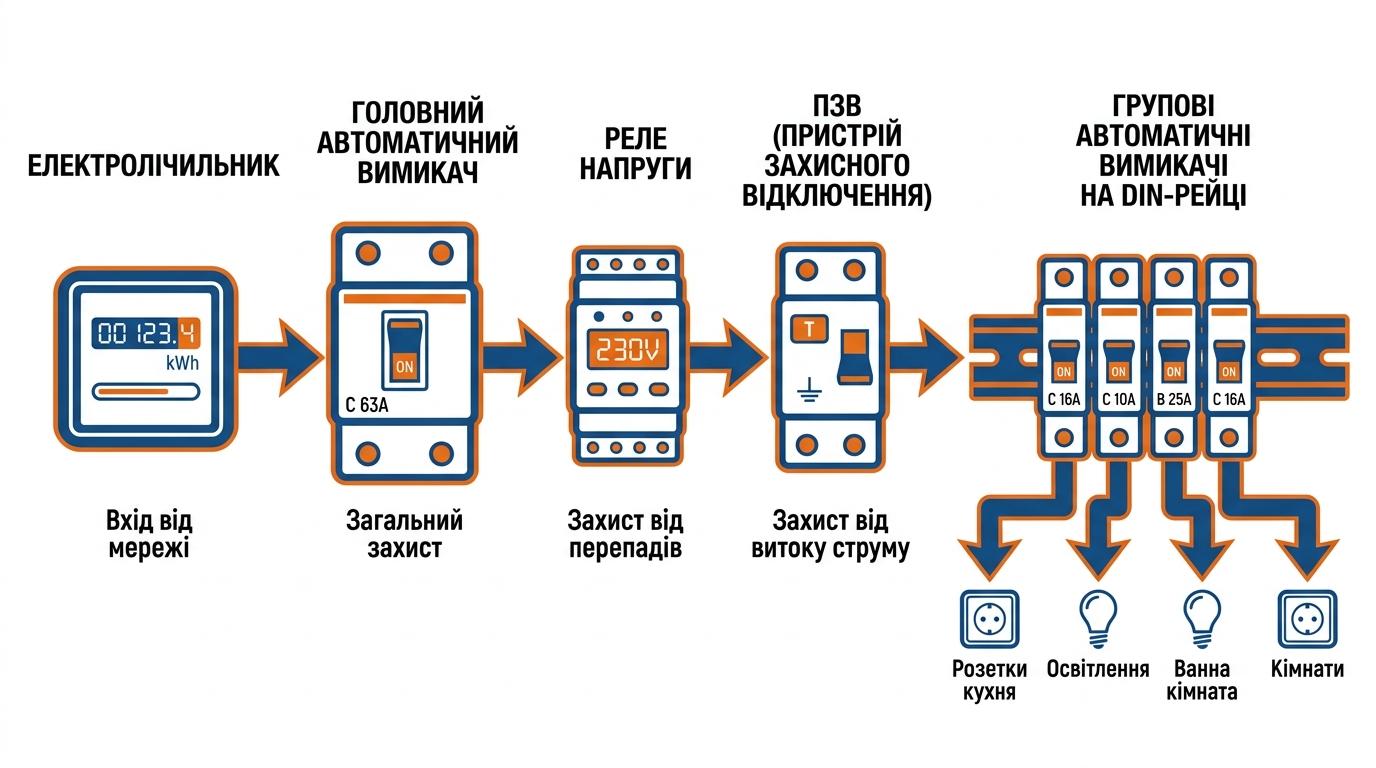
RCBO and voltage relay wiring diagram in one panel
An RCBO (Residual Current Breaker with Overcurrent protection) is a combined device that unites the functions of a circuit breaker and RCD in one housing. It protects against short circuit, overload, and leakage current simultaneously [3].
In a panel with RCBOs, the scheme is simplified:
Meter → Main breaker → VOLTAGE RELAY → RCBOs (per group)
The voltage relay sits at the input and monitors voltage for the entire panel. Each RCBO on its circuit protects against leakage and short circuit. This option is more compact: instead of an "RCD + breaker" pair for each group — a single RCBO.
⚠ Warning! Most common installation mistakes: incorrect neutral connection, missing grounding, mismatched rating, installing the relay before the meter (prohibited by electrical codes) [1].
Can a single RCBO replace the "relay + breaker + RCD" bundle?
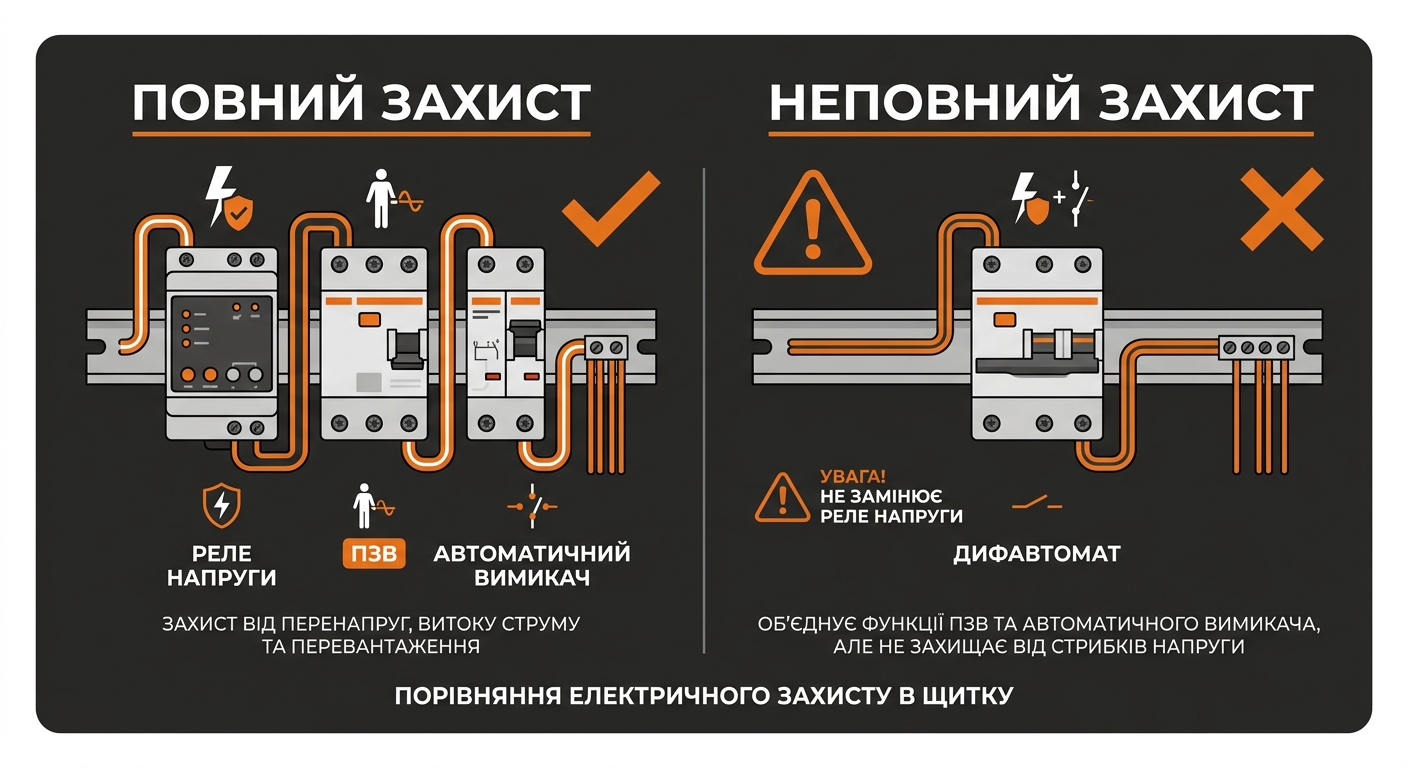
No. An RCBO = circuit breaker + RCD, but it does not monitor voltage levels in the network. Without a voltage relay, the risk of appliance burnout from voltage spikes up to 300 V remains [4].
Even if each group has a separate RCBO, none of them will react to overvoltage or voltage sag. The voltage relay is the only device in the panel that monitors voltage and breaks the circuit when limits are exceeded.
For more details on choosing an RCBO, read our article: differential protection — how to choose an RCBO.
For five typical relay wiring schemes in the panel, see the article voltage relay wiring diagram for electrical panel. If you have a three-phase supply, check out three-phase voltage relay for private homes.
FAQ — voltage relay and RCD
❓ How to connect RCD and voltage relay together?
The voltage relay is installed after the main breaker, the RCD — after the relay. Relay input (In) — from the breaker, output (Out) — to the RCD input. Relay neutral — to the neutral bus. This sequence protects the RCD from false trips during voltage spikes [1][2].
❓ Should the relay be installed before or after the RCBO?
Before. The relay monitors voltage for the entire panel, so its place is at the input, between the main breaker and group RCBOs. An RCBO does not protect against overvoltage, so the relay before it is mandatory [1].
❓ Is a voltage relay needed if there is an RCBO?
Yes. An RCBO protects against leakage, short circuit, and overload, but does not monitor voltage levels. During a spike to 300 V or a sag to 150 V, the RCBO will not trip — appliances will remain unprotected. The voltage relay closes precisely this gap [4].