
Article Contents
Voltage Relay - Complete Guide: How to Choose, Connect and Configure for Your Home


Key takeaways
A voltage relay disconnects the electrical network within 0.02–0.05 seconds when voltage exceeds the safe 207–253V range per DSTU EN 50160:2023 and automatically restores power after stabilization — the only way to protect household appliances from overvoltage and neutral break without human intervention.
Bottom line: Ukrainian electrical grids are far from ideal — aging substations, overloaded lines, accidental neutral breaks. A single properly installed relay saves equipment worth tens of thousands of hryvnias. This guide covers: operating principle, classification, 7 selection criteria, brand comparison with 2026 prices, wiring diagram, and 6 common mistakes.
Hi, I'm Oleg, an electrical engineer at UEC. Every day I assemble electrical panels for apartments and private homes and consult on selecting protective equipment.
In this article — everything you need to know about voltage relays: from the operating principle to specific threshold settings and installation mistakes.

Warning! Working with electrical equipment is life-threatening!
All work in the electrical panel must be performed only by qualified electricians with the power disconnected. Before starting work, be sure to de-energize the line and verify the absence of voltage with a measuring device.
What is a voltage relay and why do you need one?
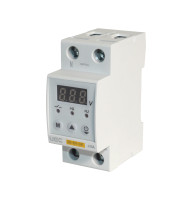
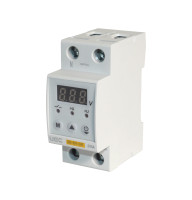
A voltage relay (also known as a voltage monitoring relay, voltage cutoff) is an electronic network protection device that continuously measures input voltage and instantly breaks the circuit when values exceed set limits. Once voltage returns to normal, the relay restores power after a time delay.
How a voltage monitoring relay works: the principle in 3 steps
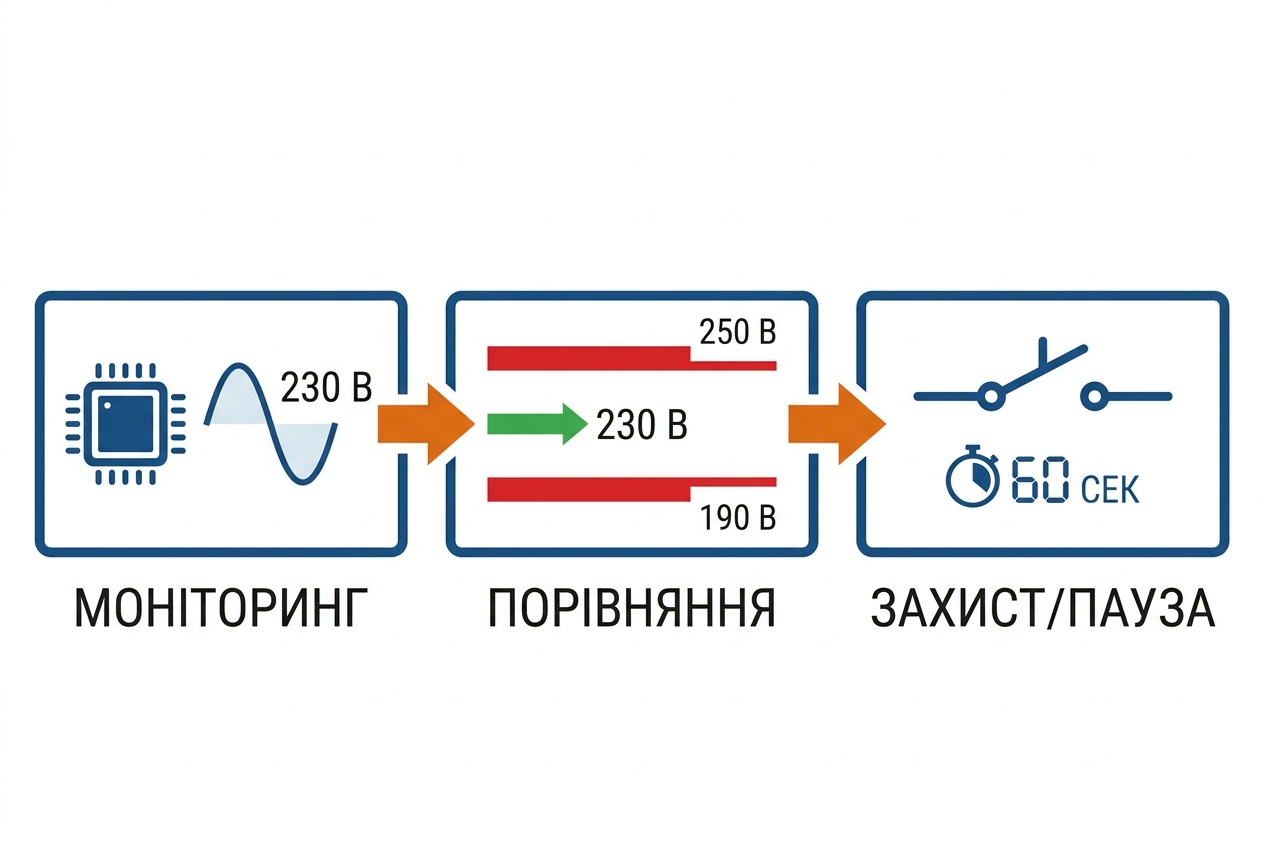
The operating principle of any voltage relay comes down to three stages:
- Measurement. A microprocessor (in digital models) or comparator (in analog ones) continuously reads the effective voltage value. Modern models use the True RMS method — measuring the true root mean square value rather than peak, providing ±1–2V accuracy even with a distorted sine wave.
- Comparison with thresholds. The measured value is compared every millisecond with two setpoints: the upper threshold (e.g., 250V) and the lower threshold (e.g., 190V). If voltage exceeds the upper limit or drops below the lower one, the relay proceeds to step three.
- Disconnection and delay. A power relay or thyristor breaks the circuit. After voltage returns to the acceptable range, the reconnection delay countdown begins — typically 5 to 600 seconds. This is critical for compressor equipment: refrigerators, air conditioners, and heat pumps need at least 5–15 seconds of pause, otherwise the compressor starts under pressure and fails.
What a relay protects against: overvoltage, undervoltage, neutral break
A voltage monitoring relay is designed to protect against three main emergency situations:
- Overvoltage — voltage rises above 253V (upper limit per DSTU). Causes: substation failure, disconnection of neighboring consumers, lightning strike on the line. At 280–380V, power supplies, LED drivers, and control boards burn out. Response time of quality relays to the upper threshold — 0.02 to 0.05 seconds [1].
- Undervoltage — voltage drops below 207V. Causes: line overload, inrush current of heavy equipment on the same phase. Compressor motors begin to overheat as they draw more current to compensate for the reduced voltage.
- Neutral break — the most dangerous situation. When the neutral conductor breaks at the building entrance, phases redistribute between apartments. Those consuming less receive up to 380V. The relay cuts power within milliseconds, preventing mass equipment failure.
From UEC experience:
From our experience assembling panels for private homes, neutral break is the #1 reason for post-accident service calls. An installed relay turns a potential catastrophe into a 30-second pause.
Types of voltage relays: 4 classification axes
The Ukrainian voltage monitoring relay market is dominated by electronic models from ZUBR, Novatek-Electro, DigiTOP, and Asko, which together account for about 90% of sales. They can be classified along four axes.
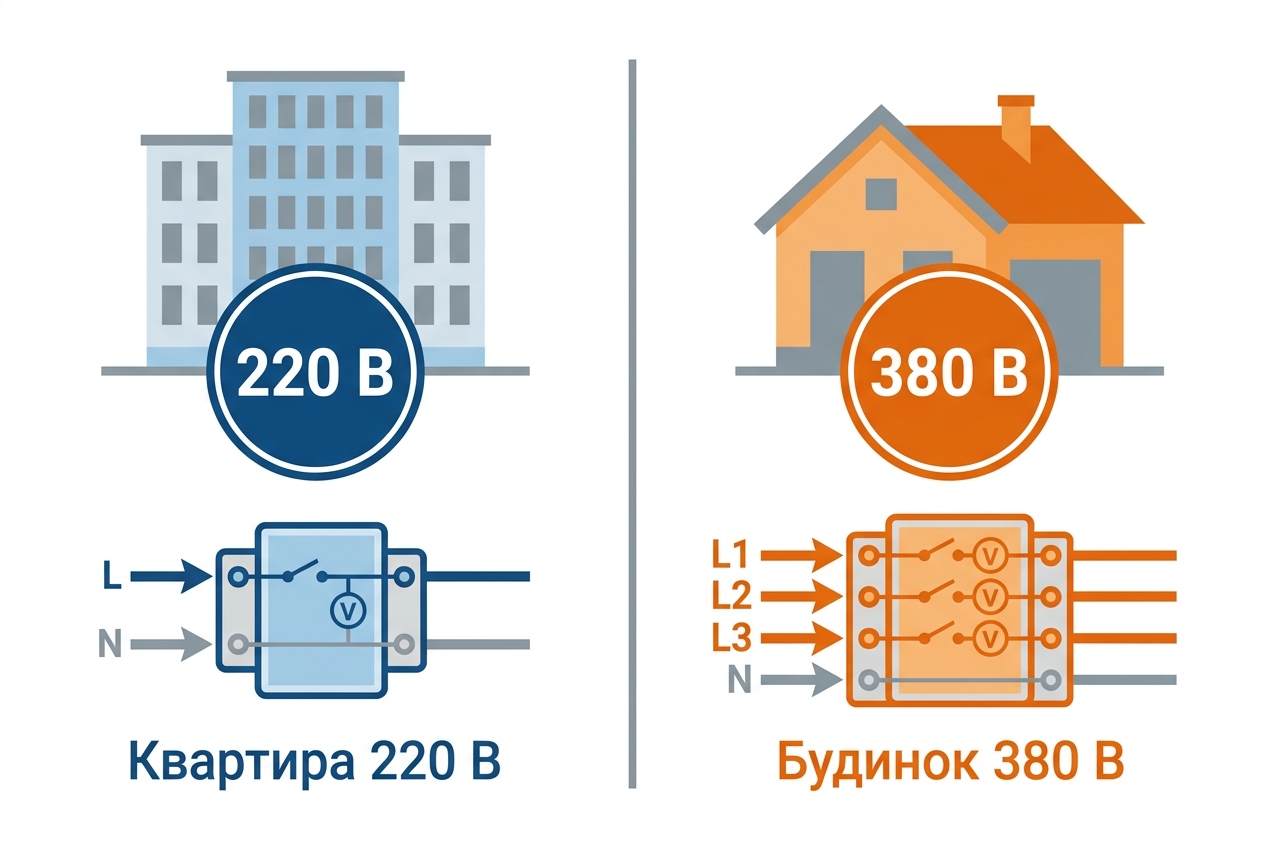
By number of phases — single-phase (220V) and three-phase (380V)
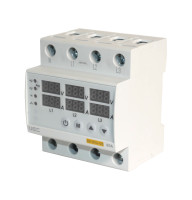
A single-phase relay is the standard for apartments and most private homes with single-phase connection. It monitors one phase and neutral. Examples: ZUBR D25t–D63t, Asko RN-40, DigiTOP VP-16A–VP-63A, Novatek RN-113.
A three-phase relay is for three-phase connections (380V). It monitors all three phases simultaneously, tracking phase imbalance, phase sequence, and sticking. Examples: ZUBR 3F, ZUBR D2-40/D2-63. An alternative is three separate single-phase relays (e.g., three ZUBR D63t), which provides greater flexibility: if one phase has a problem, the other two continue working.
By form factor — DIN rail, socket, extension cord
DIN rail
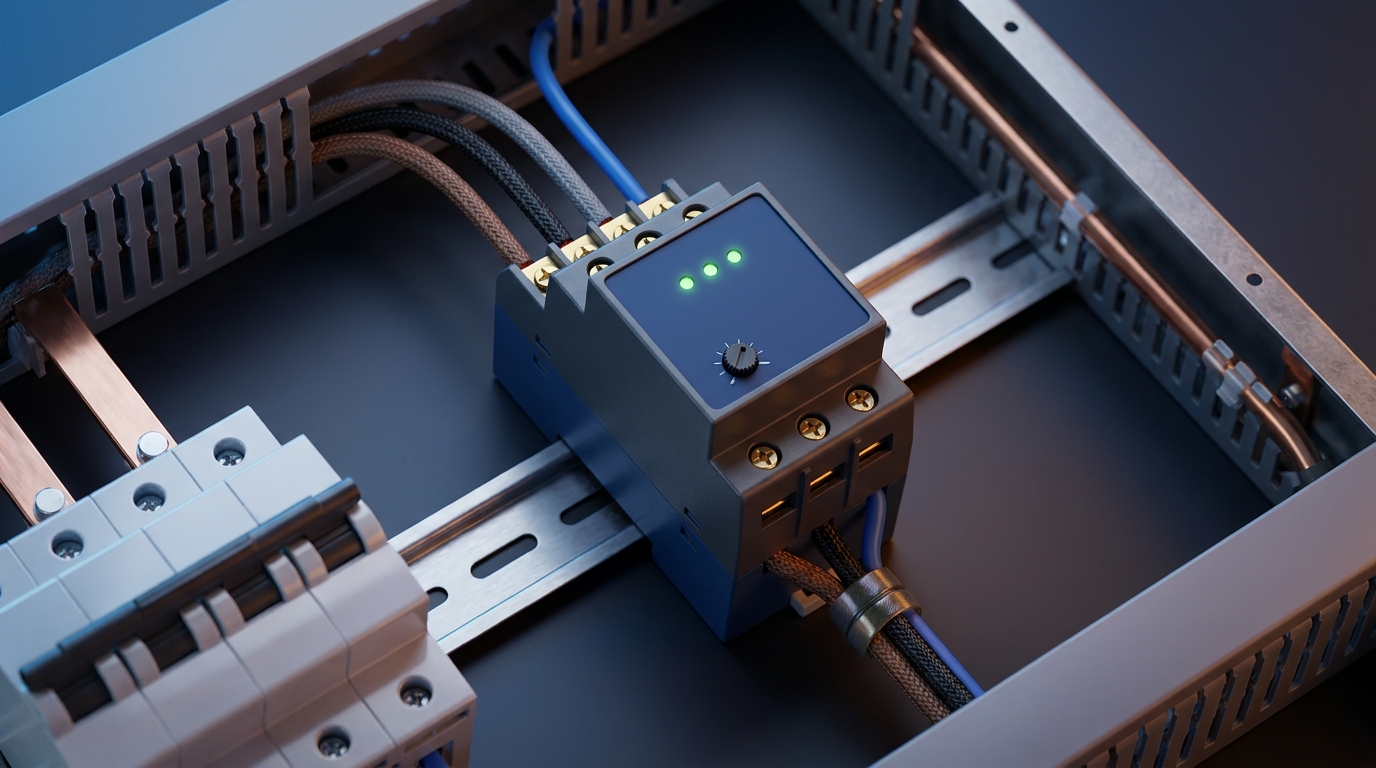
Mounts in the electrical panel on a standard 35mm profile. Protects the entire apartment or house. Takes up 2–3 modules. Examples: ZUBR Dt-series, Asko RN-63, Novatek RN-113.
Socket
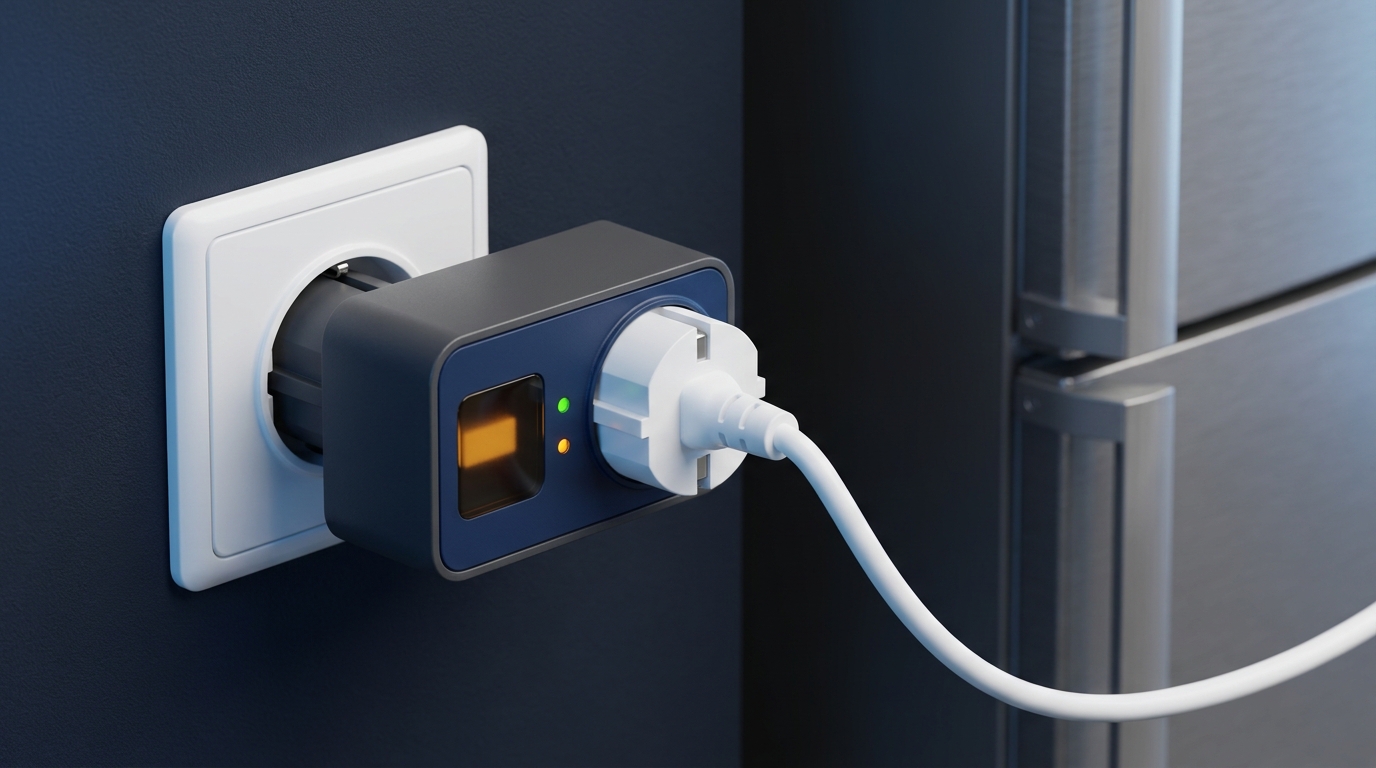
Plugs into a standard outlet, protects a single appliance or group via extension cord. Suitable for point protection of expensive equipment in older buildings without the option to upgrade the panel. Examples: DigiTOP VP-16A, ZUBR SR1 red, Novatek RN-116.
Extension cord
A portable option with built-in relay and multiple outlets. Example: DigiTOP VP-M3. Convenient for rented housing.
By functionality — voltage only, +current, multifunctional
- Basic (voltage only): ZUBR R116y, Asko RN-40, DigiTOP VP-16A — monitor only upper and lower voltage thresholds. Sufficient for most household tasks.
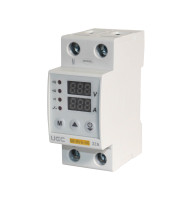
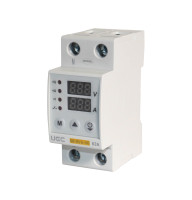
- Extended (voltage + current): ZUBR D63t, Novatek RN-113 — additionally measure load current and power. The display shows current values in real time, simplifying diagnostics.
- Multifunctional: ZUBR 3F, ZUBR D2-63, DigiTOP VP-50A M2 — phase control, imbalance, sequence, temperature. For industrial facilities and large homes with three-phase supply.
Is a voltage relay mandatory under DSTU and PUE standards?
Short answer: no, a voltage relay is not mandatory under current Ukrainian regulations. But it is recommended — and here's why.
DSTU EN 50160:2023 [1] — Ukraine's main power quality standard — sets the nominal voltage at 230V ±10%, i.e., an allowable range of 207–253V. This standard replaced DSTU EN 50160:2014, which expired on 01.03.2024. From July 1, 2025, Ukraine has officially transitioned to the 230/400V nominal instead of 220/380V [2].
PUE (Electrical Installation Regulations, 2021 edition) [3] govern general requirements for protecting electrical installations up to 1kV:
- Section 1.7 — requirements for protective devices, neutral conductors and marking
- Section 6.1 — lighting voltage not exceeding 220V in ordinary premises
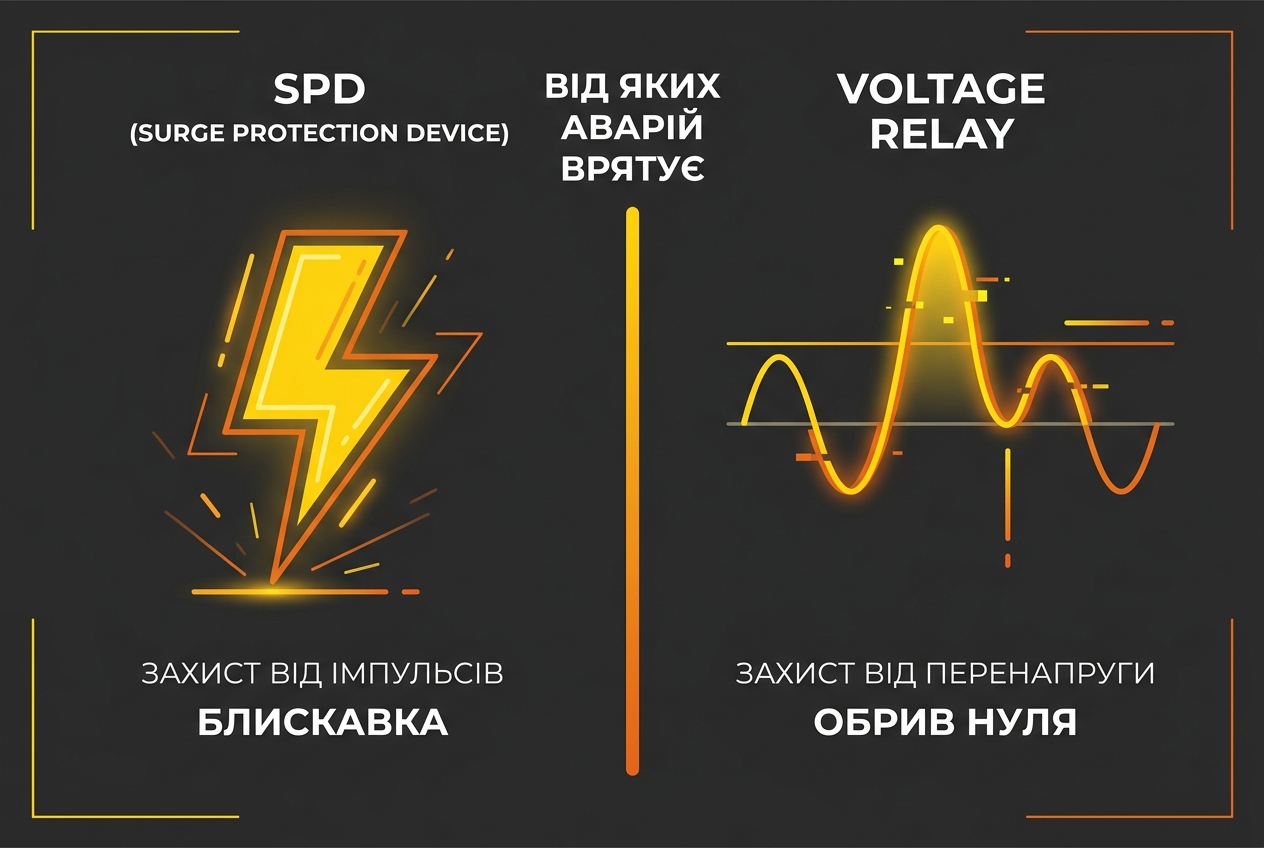
Neither of these documents prescribes a voltage relay as a mandatory element. However, PUE requires overvoltage protection through SPDs (Surge Protection Devices) per DSTU EN 61643-11:2015. Voltage relays and SPDs are different devices: SPDs protect against microsecond impulses (lightning), relays — against sustained voltage deviations. Ideally, you should have both.
7 criteria for choosing a voltage relay for apartments and houses
When choosing a voltage relay, consider seven parameters, each affecting safety and convenience. Below are specific figures for typical installations.
Rated current: from 16A (3.5 kW) to 63A (14 kW)
The rated current of the relay must match or exceed the rating of the main circuit breaker. Here are the benchmarks:
| Rating | Power | Typical application |
|---|---|---|
| 16A | 3.5 kW | Studio apartment, single appliance |
| 25A | 5.5 kW | Standard apartment without electric stove |
| 32A | 7 kW | Apartment with electric water heater |
| 40A | 8.8 kW | Private house with pumps |
| 63A | 13–14 kW | Large house with electric boiler |
Specific example: a 60 m² apartment with a 2 kW water heater and 1.5 kW air conditioner — total load ~6 kW. Main breaker 32A → voltage relay 32A or 40A with margin.
Upper and lower thresholds: what values to set
Threshold settings depend on the electrical network condition at the specific location. Recommended values:
| Property type | Lower threshold | Upper threshold |
|---|---|---|
| Apartment (new wiring) | 190–200V | 245–250V |
| Apartment (old wiring) | 180–190V | 250–260V |
| Rural house | 170–180V | 260–280V |
For new buildings with quality wiring, the optimal 190–250V range provides a balance between protection and minimal false trips. In rural areas with unstable networks, thresholds must be widened, otherwise the relay will trip daily.
Response time and reconnection delay
Response time to the upper threshold is the key parameter. The fastest models react in 0.02s (20 milliseconds), sufficient to protect even against a sharp overvoltage during neutral break. The lower threshold response is slower — 0.2–2s, since brief voltage dips (e.g., during elevator motor startup) do not harm equipment.
Reconnection delay: minimum 5–15 seconds for compressor equipment, standard 120 seconds, maximum up to 600–900 seconds in some models. Too short a delay risks damaging compressors; too long causes discomfort during frequent voltage spikes.
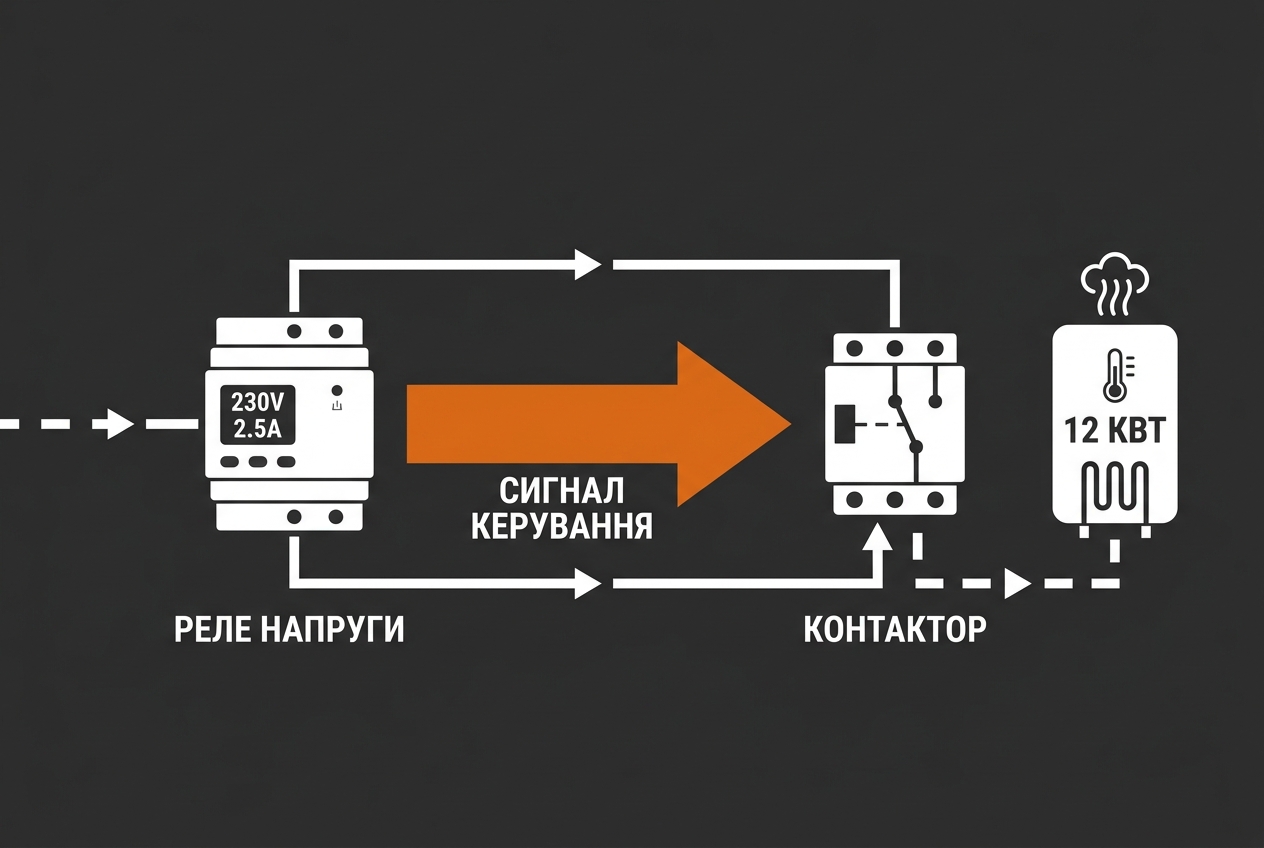
When you need a contactor: loads over 40A
A contactor is a switching device used in conjunction with a relay for loads exceeding 40A. The relay monitors voltage and sends a signal, while the contactor breaks the power circuit. This is necessary for electric boilers over 10 kW, powerful motors, and large homes with three-phase supply.
Without a contactor at loads over 40A, relay contacts overheat, causing arcing and welding. From our experience, a contactor is most often needed in private homes with electric heating.
What are the disadvantages of a voltage relay?
No device is perfect. Before choosing a relay, you should know its limitations:
- Does not correct voltage, only disconnects. If the network chronically runs at 190V, the relay will constantly cut power. In such cases, you need a voltage stabilizer that corrects voltage to normal.
- Does not protect against surge impulses. A microsecond lightning impulse will pass faster than the relay can react. For this, you need an SPD (Surge Protection Device).
- False trips in unstable networks. If thresholds are set too narrow (e.g., 210–240V in rural areas), the relay will cut power several times a day.
- Contact wear. Electromechanical contacts have a limited lifespan (typically 100,000 cycles). With frequent trips, they wear out faster.
- Does not replace a circuit breaker and RCD. The relay does not protect against short circuits or earth leakage current. The panel must have all three devices.
What's better — a voltage relay or stabilizer?
This is one of the most common questions, and the answer depends on the specific situation.
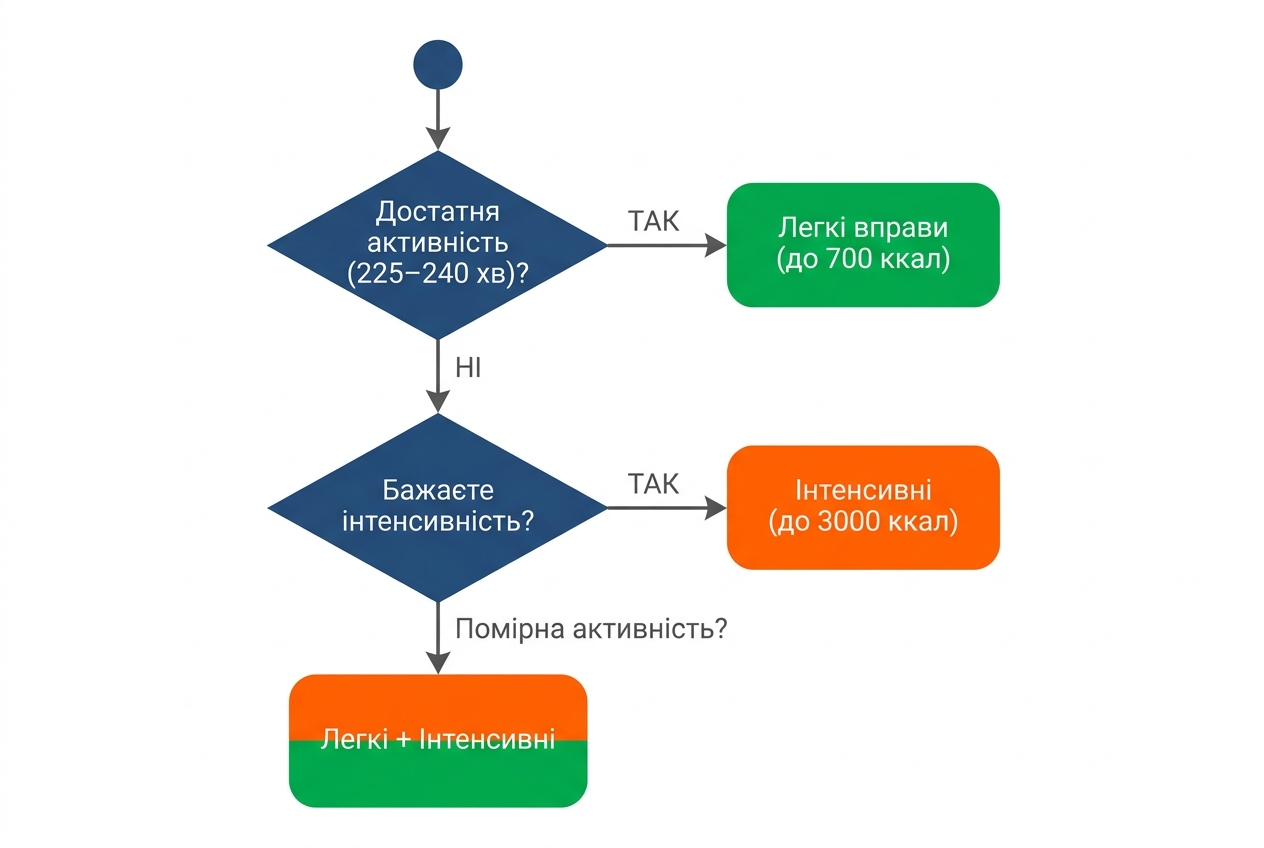
A voltage stabilizer is an active device that corrects input voltage to the 230V nominal. It raises or lowers voltage using a transformer or electronics. A voltage relay is passive: when deviation occurs, it simply disconnects.
| Criterion | Voltage relay | Voltage stabilizer |
|---|---|---|
| Function | Disconnects the network | Corrects voltage |
| Price | 700–4,000 UAH | 3,000–30,000 UAH |
| Size | 2–3 DIN modules | Separate cabinet or unit |
| Response speed | 0.02–0.05s | 0.1–0.5s (electronic) |
| Best for | Normal network with rare emergencies | Chronically unstable network |
| Limitation | Does not correct, only disconnects | Does not protect from neutral break |
When a relay is enough: The network is generally stable (230V ±5%), spikes are rare, the main threat is emergency overvoltage or neutral break.
When you need a stabilizer: Voltage is chronically low (180–200V) or high (250–260V), equipment malfunctions regularly.
Ideal solution:
Stabilizer + voltage relay. The stabilizer corrects everyday deviations, while the relay protects against catastrophic spikes that exceed the stabilizer's capabilities.
Where is a voltage relay installed in the panel?
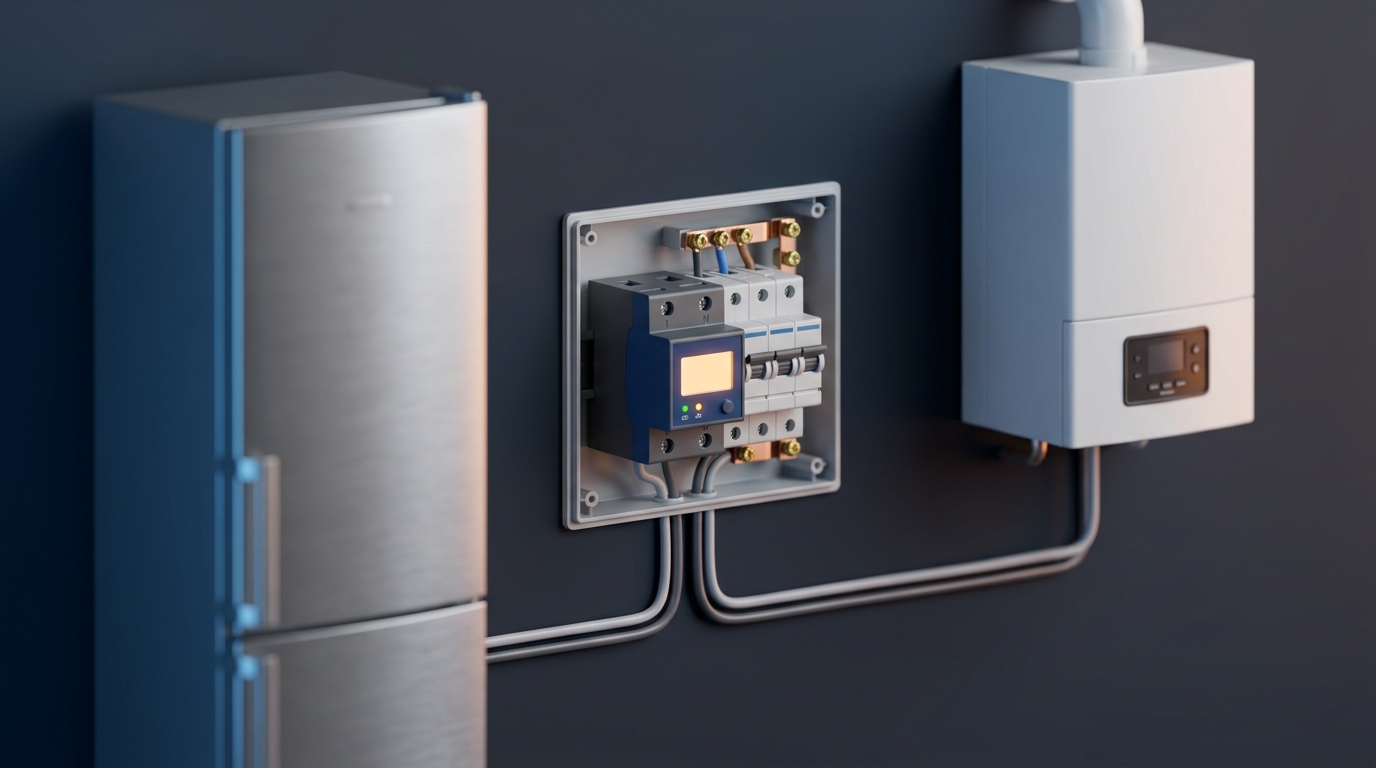
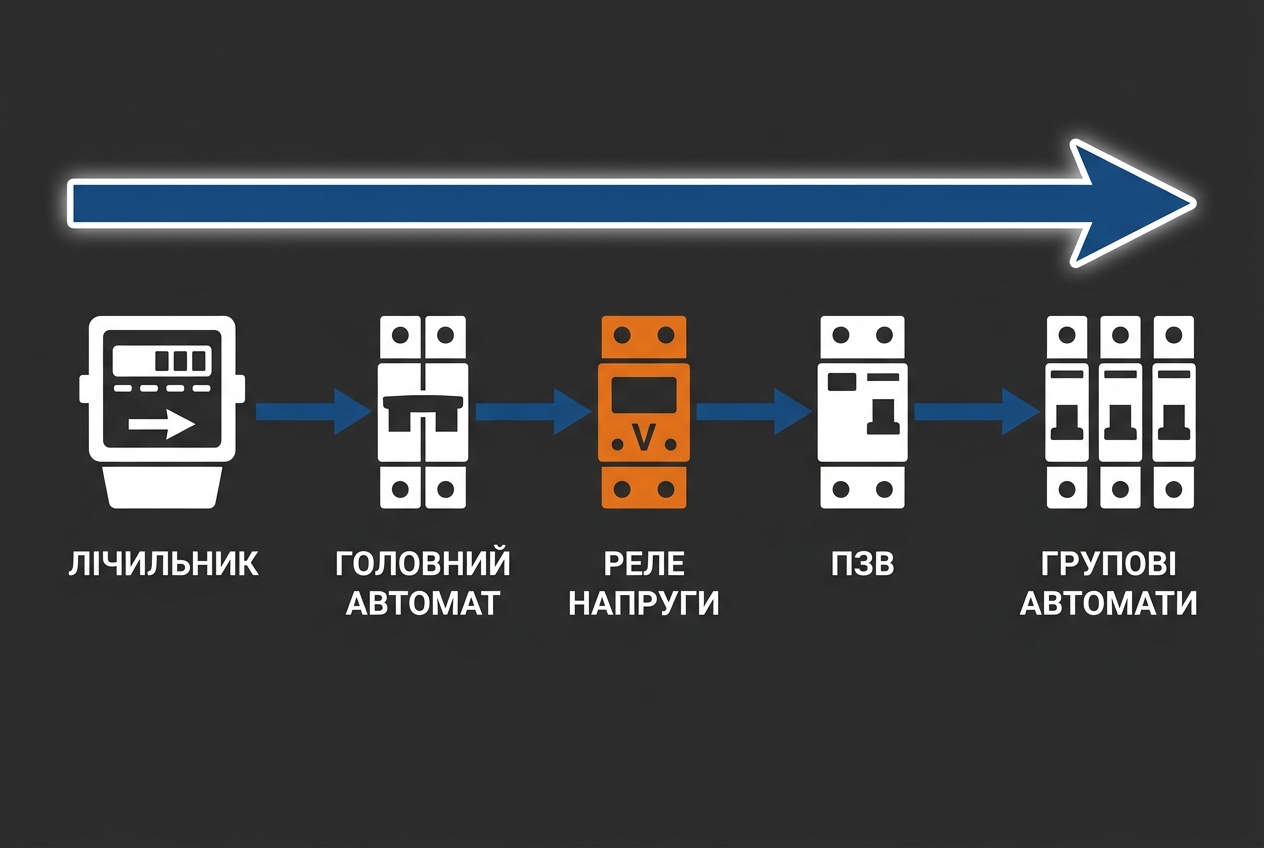
The correct position for a relay in the panel is after the main circuit breaker, before the RCD and group breakers. This is the only position that ensures protection of all downstream devices.
Correct sequence: meter → breaker → relay → RCD → group breakers
The complete device sequence in a residential panel looks like this:
- Meter (network input)
- Main circuit breaker (general, e.g. 40A) — circuit breaker selection guide
- Voltage relay (rating ≥ main breaker)
- RCD (Residual Current Device) or RCBO
- Group circuit breakers (lighting, sockets, water heater, kitchen)
Why this specific order? The relay is placed after the main breaker so the breaker protects the relay from short circuits. The relay is placed before the RCD so the RCD doesn't experience overvoltage, which can cause false trips or damage.
6 common voltage relay installation mistakes
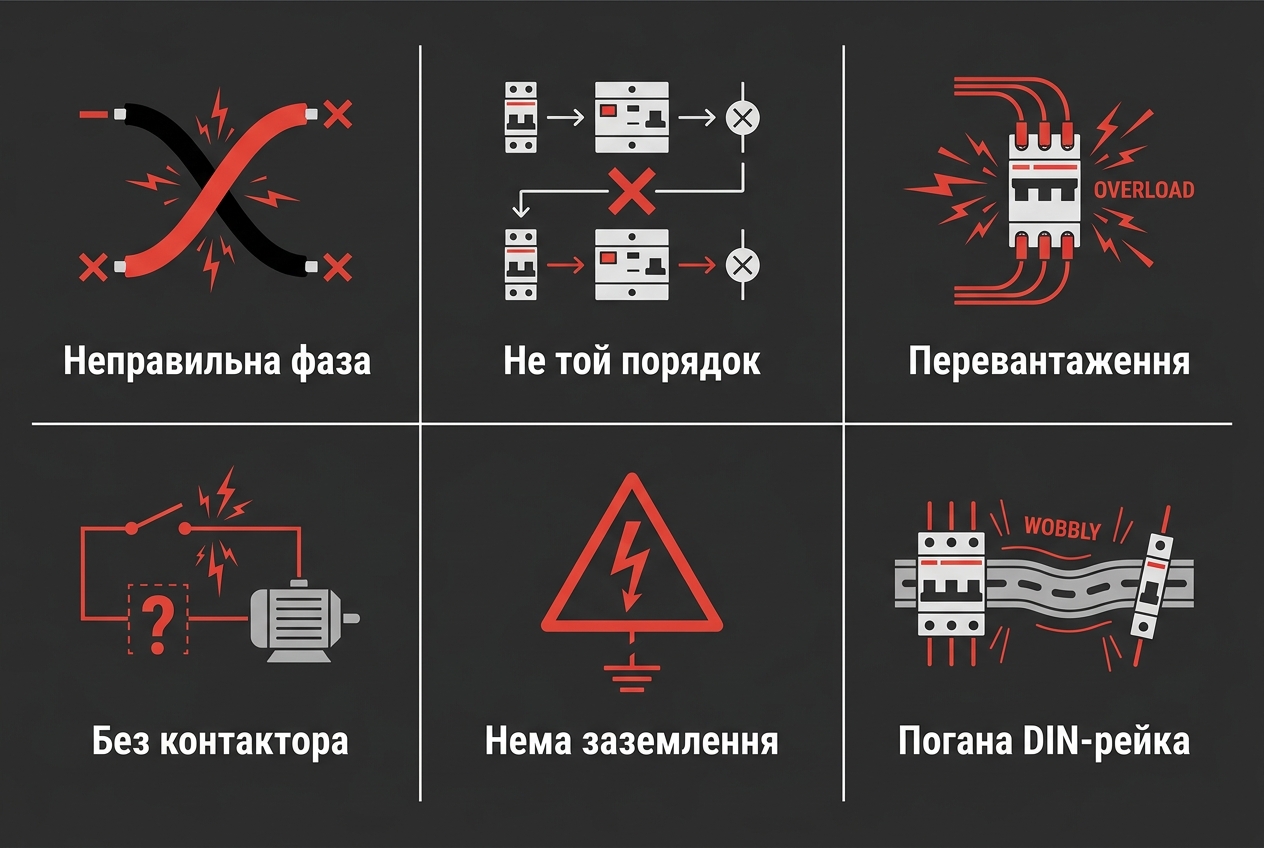
Even a quality relay won't protect if you make an installation mistake. Here are six most common problems we at UEC encounter during panel assembly and consultations:
❌ Incorrect neutral connection
Phase and neutral are swapped — the relay doesn't see actual voltage or shows incorrect readings. Equipment remains unprotected. Check: indicator screwdriver or multimeter.
❌ Relay after RCD
If the relay is placed after the RCD rather than before it, the RCD remains unprotected from overvoltage. During a voltage spike, the RCD may falsely trip or get damaged.
❌ Mismatched rating
A 16A relay with an actual load of 40A — contacts overheat, welding begins. Rule: relay rating ≥ main breaker rating.
❌ No contactor for loads over 40A
Without a contactor, the relay's power contacts operate at their limit; arcing reduces lifespan dramatically.
⚠ No grounding (PE)
During a neutral break without grounding, voltage appears on metal equipment housings — electric shock hazard. The relay disconnects the phase, but grounding is an essential second layer of protection.
⚠ Unstable DIN rail
A poorly secured DIN rail causes vibration, poor contact at relay terminals, and false trips. Secure the rail every 20–25 cm.
Why install a voltage relay in a private house?
In a private house, a voltage relay is even more important than in an apartment. Here's why:
- Longer line from the substation. The private sector is typically located farther from the transformer substation than apartment buildings. The longer the line, the greater the voltage losses and sensitivity to spikes.
- Expensive equipment. A gas or electric boiler (30,000–100,000 UAH), pumping station (5,000–20,000 UAH), air conditioner — the cost of a single accident can exceed the relay price by tens of times.
- Neutral break on overhead lines. Overhead power lines, typical for the private sector, are more vulnerable to breaks from wind, ice, and tree branches.
- Seasonal loads. Summer: air conditioner, well pump, lawn mower. Winter: electric heaters. Load on the network changes sharply, causing voltage sags.
For a private house with single-phase supply, a 40–63A relay is recommended (depending on supply capacity). For three-phase — a three-phase relay or three separate single-phase ones. If power exceeds 40A, a contactor must be added.
Can you leave a voltage relay on permanently?
Yes, a voltage relay is designed for continuous 24/7 operation. This is its normal mode — the device constantly monitors voltage and waits for an emergency. The relay's own consumption is minimal — 2–5W, which is less than 5 UAH per month in electricity.
There is no need to turn off the relay at night, during vacation, or when leaving home. On the contrary — when no one is home, the relay plays its most important role: in case of a neutral break, it will cut power, preventing fire from wiring overheating.
The only case when the relay should be temporarily deactivated is during electrical network troubleshooting by a qualified electrician.
FAQ — Frequently asked questions
❓ Why install a voltage relay?
A voltage monitoring relay protects household appliances from damage during voltage spikes in the electrical network. The device disconnects power when voltage exceeds the safe range (typically 190–250V) and automatically restores it after stabilization. Especially critical during neutral conductor break, when voltage can rise to 380V.
❓ What's better — a stabilizer or voltage relay?
If the network is generally stable and the threat is rare emergency spikes, a relay is sufficient (from 700 UAH). If voltage is chronically low or high, you need a stabilizer (from 3,000 UAH). The ideal solution for a private house is both devices together: the stabilizer corrects everyday deviations, while the relay protects against emergencies.
❓ What are the disadvantages of a voltage relay?
The relay doesn't correct voltage, only disconnects — with chronically low voltage you'll be without power. Doesn't protect against microsecond impulses (lightning) — you need an SPD for that. In unstable networks with narrow thresholds, frequent false trips are possible. Contacts have a limited lifespan — about 100,000 cycles.
❓ Is a relay necessary in a private house?
Yes, even more so than in an apartment. A private house is typically connected via an overhead line with a longer distance to the substation. Neutral breaks and voltage fluctuations occur more frequently. Equipment cost (boiler, pump, air conditioner) runs into tens of thousands of hryvnias, while a relay costs from 700 UAH.
❓ Can you leave a voltage relay on permanently?
Yes, continuous operation is the normal mode for a voltage relay. The device's own consumption is 2–5W. There's no need to turn off the relay at night or during vacation. When no one is home, the relay is most valuable: in an emergency, it will cut power, preventing fire from wiring overheating.