
Article Contents
RCD or RCBO — Which to Choose for an Apartment or House


Key takeaways
There is no universal answer: an RCD + breaker pair wins on cost and ease of diagnostics in large panels, while an RCBO saves space and simplifies wiring in compact apartment panels and on individual circuits.
Key point: the choice depends on panel size, budget and the number of circuits. Experienced designers often combine both solutions in a single panel.
Hi, I'm an engineer in the UEC technical support department. Every day I advise electricians and designers on equipping panels with differential protection — from budget series to premium imported devices.
In this article we compare an RCD + breaker pair and an RCBO across 8 key parameters, review use-case scenarios and help you choose the optimal solution for your site.
What an RCD is and what an RCBO is — the difference in one sentence
Responds only to leakage current
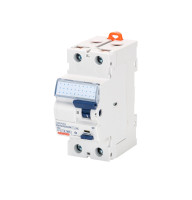
An RCD (residual current device) responds exclusively to leakage current, that is, to the difference between the phase and neutral conductors. If a person touches a bare wire, the RCD opens the circuit within 20–30 ms. But it will not protect against a short circuit or overload — for that you need a separate circuit breaker, connected in series.
Protects against everything at once
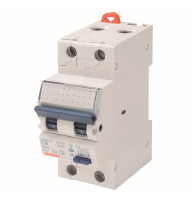
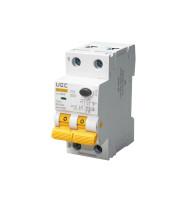
An RCBO (residual current circuit breaker with overcurrent protection, per DSTU EN 61009-1) is a combined device that unites the functions of an RCD and a circuit breaker in a single housing. A single device protects against leakage, overload and short circuit.
Put simply: an RCD + breaker = two devices with the same function as one RCBO.
How to tell them apart visually
In practice electricians distinguish these devices by three signs:
- Rated current marking. An RCD shows only a number (for example, 25 A). On an RCBO the number is preceded by a trip-curve letter — C16, C25, B32.
- Diagram on the housing. An RCD depicts only the differential transformer. An RCBO additionally shows the magnetic and thermal releases.
- Abbreviation. RCD — "VDT" (residual current switch). RCBO — "" (residual current circuit breaker).
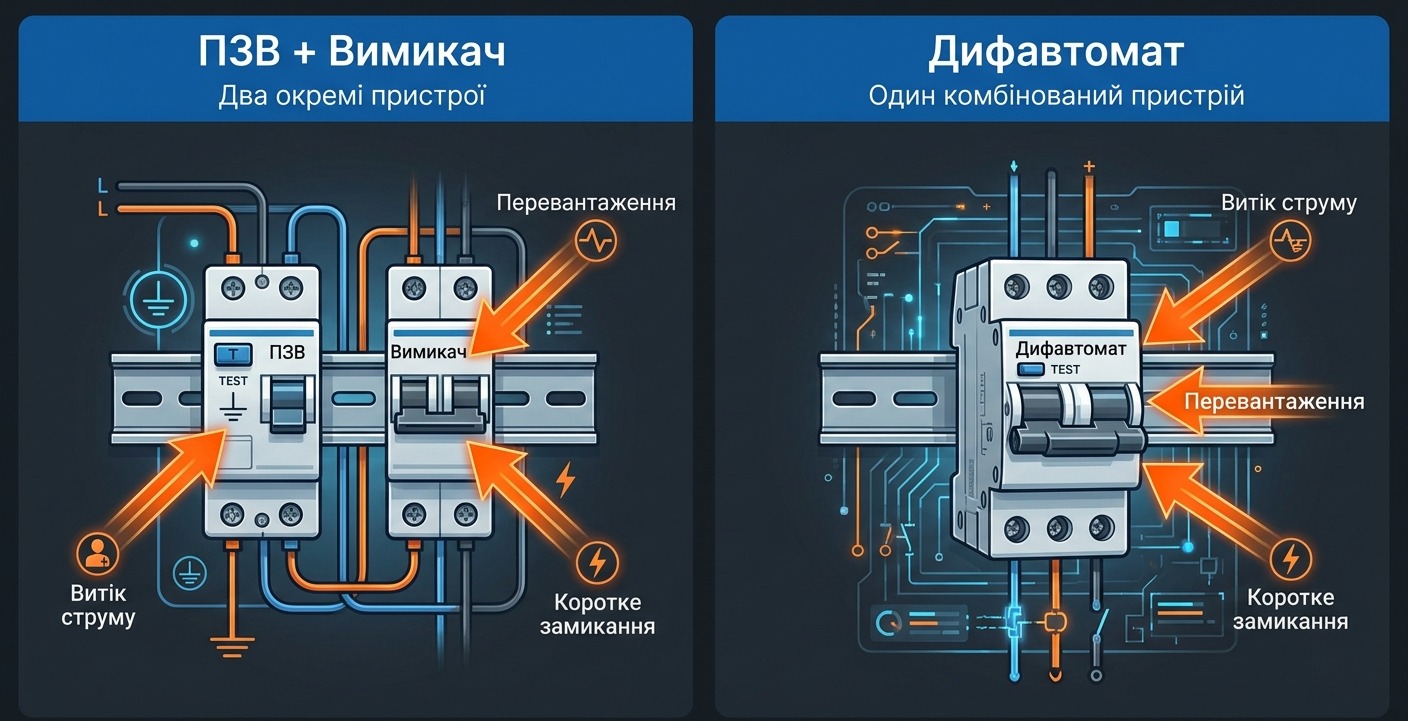
Comparison table: RCD + breaker vs. RCBO
| Parameter | RCD + breaker | RCBO |
|---|---|---|
| Leakage current protection | Yes (RCD) | Yes (built-in module) |
| Short-circuit and overload protection | Yes (breaker) | Yes (built-in release) |
| Space in the panel | 3–4 modules on the DIN rail | 2 modules on the DIN rail |
| Diagnostics on tripping | Easy: we see exactly what tripped — the RCD or the breaker | Hard: an additional analysis of the trip cause is needed |
| Cost of the set | Lower by 30–50 % for an equivalent rating | Higher, but a single device instead of two |
| Replacement on failure | We replace only the faulty component | We replace the entire device |
| Installation complexity | More connections, higher chance of error | Fewer connections, simpler installation |
| Reliability | Depends on the quality of both components | Factory calibration, coordinated module operation |


Warning! Working with electrical equipment is life-threatening!
Work in the electrical panel requires a qualification of at least group III in electrical safety. Entrust installation to a licensed electrician. All work must be performed with the power disconnected — before starting, be sure to de-energize the line and verify the absence of voltage with a measuring device.
When an RCD + breaker is better, and when an RCBO
Choose an RCD + breaker pair if:
- A large distribution panel (24+ modules). There is enough space, and the saving on each circuit is significant — especially with 8–12 circuits.
- Fast diagnostics are needed. In industrial premises and large houses it is critical to understand the trip cause without calling an electrician. If the breaker tripped — overload; if the RCD tripped — leakage.
- The budget is limited. For a typical apartment with 6–8 groups the cost difference can reach 30–50 % in favour of the pair.
- Frequent overloads. If the breaker trips regularly (old wiring, powerful equipment), it is cheaper to replace one breaker than the whole RCBO.
Choose an RCBO if:
- Limited space in the panel. In apartment panels of 12–18 modules every position counts. An RCBO saves 1–2 modules on each circuit.
- Wet zones and individual circuits. For a water heater, washing machine, dishwasher, bathroom — a single device provides full protection without extra connections.
- New construction or a major renovation. When designing from scratch, RCBOs simplify the scheme and reduce the number of contact points.
- The Electrical Installation Rules requirement for individual protection. Clause 7.1.79 of the Electrical Installation Rules recommends installing differential protection on each socket group with a rated residual operating current of no more than 30 mA [2].
A combined approach — the golden mean
Experienced designers often combine both solutions in a single panel:
- A group RCD on 3–4 lighting circuits (one RCD rated 40–63 A + separate breakers on each circuit).
- Individual RCBOs on critical consumers: water heater, washing machine, air conditioner, electric stove.
This approach is the optimal balance between cost, panel space and ease of maintenance. It is exactly what we recommend to clients in most projects.
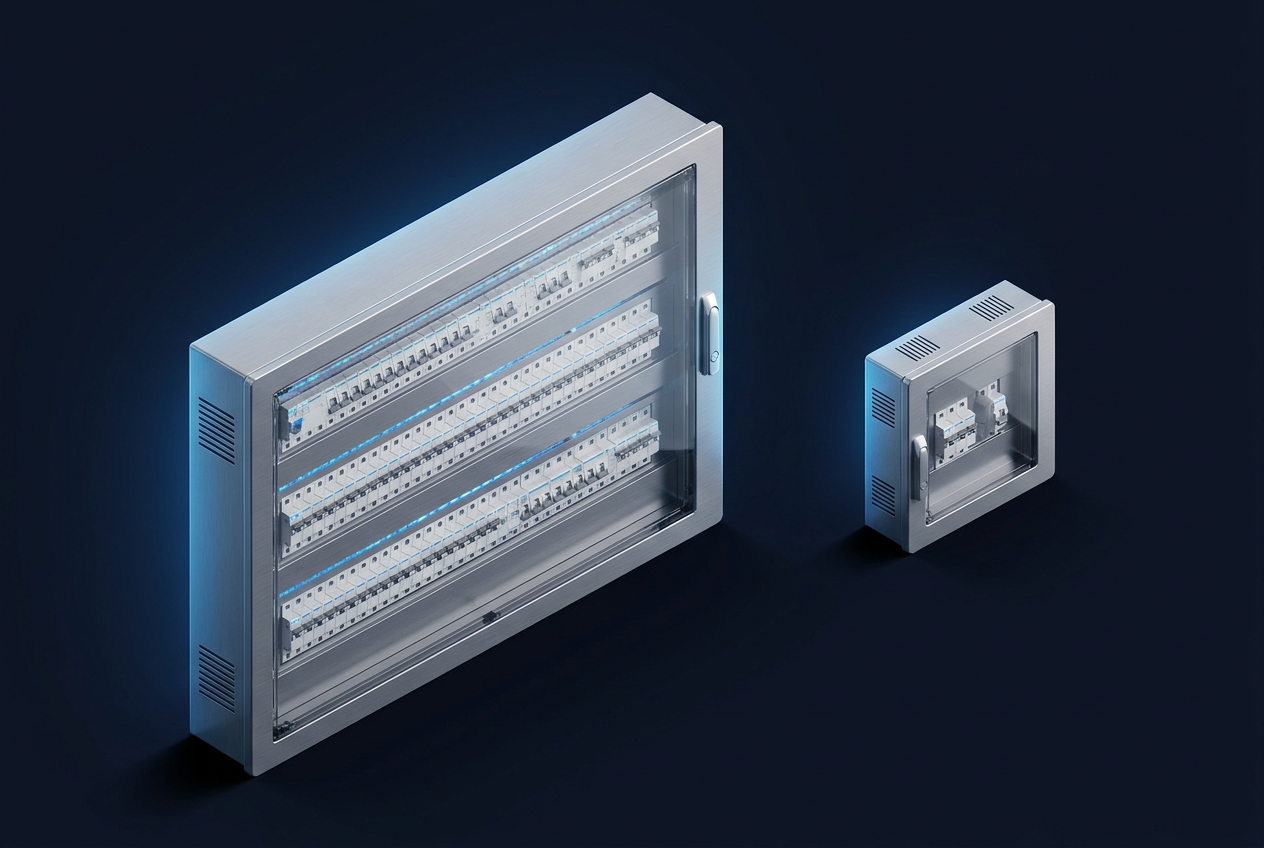
Which is cheaper: RCD + breaker or RCBO
The cost depends on the brand, rating and type (AC or A). We give a comparison using products from our catalogue — without specific prices, which change.
Budget segment: UEC
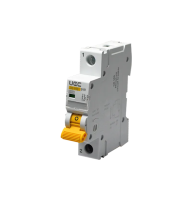
- An RCD of the SB-R10N series (2P, 30 mA, type AC) + an SB-C circuit breaker — two devices, 3 modules in the panel. A 7-year warranty.
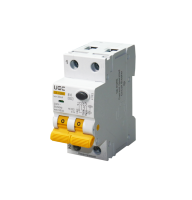
- An RCBO of the SB-R10 series (1P+N, C curve, 30 mA, 6 kA) — a single device, 2 modules. A 7-year warranty.
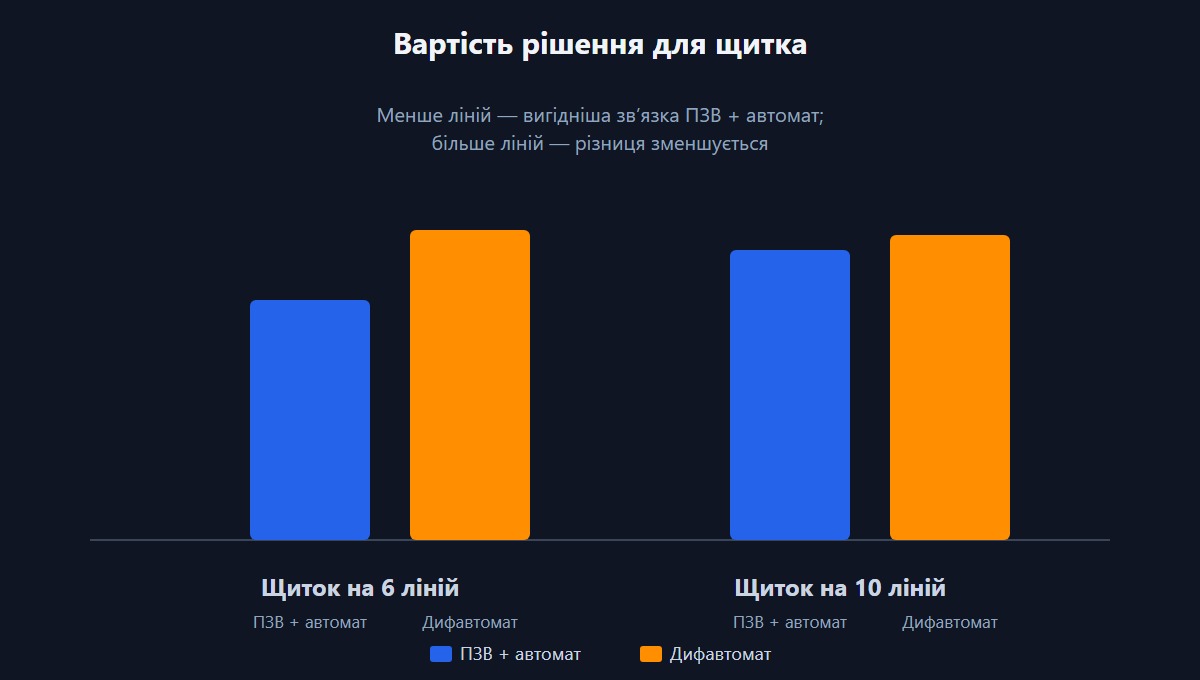
A UEC-series RCD + breaker pair will cost 30–40 % less per circuit. But with 8 circuits the overall cost difference decreases thanks to savings on the DIN rail, the panel enclosure and the electrician's labour.
Premium segment: GEWISS
- GEWISS MDC60 Compact RCBO (1P+N, 6 kA, type AC or A, 30 mA) — Italian manufacture, increased reliability, a compact 2-module housing. The optimal choice for sites with high demands on component quality.
For commercial and critical sites (medical facilities, children's institutions) the investment in a premium RCBO is justified by durability and stable characteristics.
The full catalogue of differential protection devices is available on the site with current prices and technical specifications.
Calculation formula for the panel
Compare not the "price per unit" but the total cost of the solution for the whole panel:
Option A (RCD + breakers): RCD cost × number of groups ÷ 3–4 + breaker cost × number of circuits + cost of a larger panel enclosure.
Option B (RCBOs): RCBO cost × number of circuits + cost of a smaller panel enclosure.
With 6 circuits option A is usually cheaper. With 10+ circuits the difference levels out thanks to savings on the panel enclosure and installation work.
Type AC or type A — which to choose
Besides the choice between an RCD and an RCBO, pay attention to the type of differential protection:
Alternating leakage current
Type AC — responds to alternating sinusoidal leakage current. Suitable for lighting and socket groups without electronics.
Alternating + pulsating current
Type A — additionally responds to pulsating direct leakage current. Mandatory for circuits with frequency converters, charging stations, induction cooktops and inverter appliances.
According to DSTU EN 61008-1 and IEC 61008, for a modern apartment with an inverter air conditioner and an induction cooktop, type A is a justified choice [3]. Both UEC series (SB-R10N and SB-R10) and the GEWISS Compact RCBO are available in types AC and A.
FAQ — RCD or RCBO
❓ Can you install an RCD without a circuit breaker?
No. An RCD has no protection against short circuit and overload. Without a breaker, during a short circuit a current of thousands of amperes will flow through the RCD, leading to a fire. Always install a circuit breaker in series ahead of the RCD. The breaker's rated current must not exceed the RCD's rated current.
❓ The RCBO trips — how do I find the cause?
If the housing has an indicator window (a mechanical flag), it will show the cause: leakage or overload. In models without an indicator — disconnect all consumers, switch the RCBO on. If it holds — connect the appliances one by one. A detailed diagnostic scheme is described in the article How to correctly connect an RCBO.
❓ How many RCDs are needed for an apartment?
The minimum is one RCD at the input (a fire-protection one, 100–300 mA). Optimally — additional RCDs or RCBOs on socket groups (30 mA) and separately on wet zones (30 mA, type A). For a typical two-room apartment with 6–8 groups, 2–3 RCDs or a combination of RCDs + RCBOs are enough.
❓ Does an RCBO replace the main breaker?
No. An RCBO protects a specific circuit. The main breaker limits the apartment's total consumption current according to the allocated power. These are different functions, and both devices must be in the panel.
❓ Which sensitivity IΔn to choose: 10 mA or 30 mA?
30 mA is the standard for protecting a person from electric shock (Electrical Installation Rules, clause 7.1.79). 10 mA is for especially hazardous conditions: bathroom, nursery. But 10 mA can cause false trips on long cable runs or with a large number of consumers on a single group.