


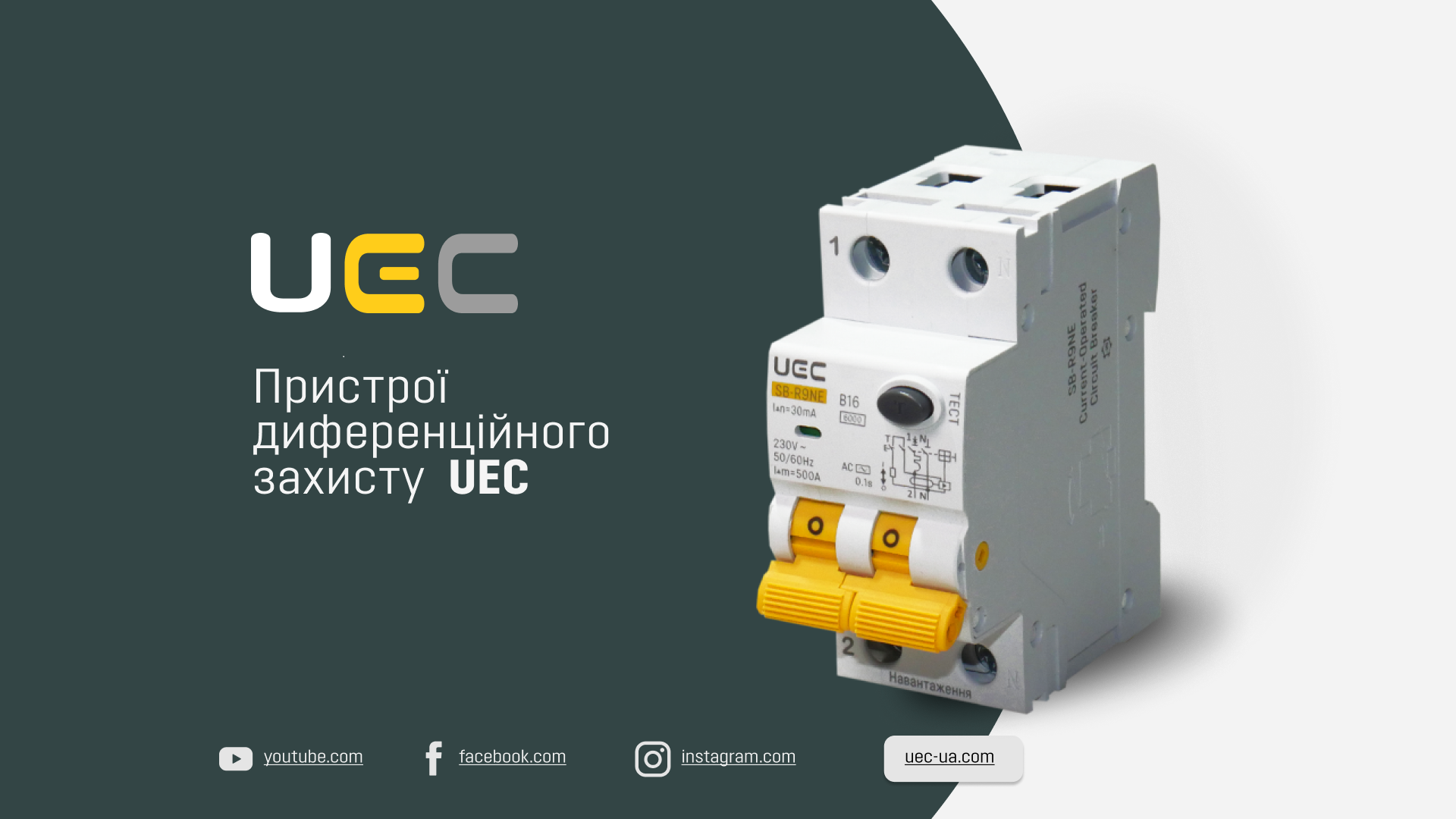
In this video, we take a detailed look at UEC differential protection devices. This overview provides a better understanding of the differences between models in different series and which option is best for a specific application.
The three main series of UEC devices:
✔ SB-L9M — protective shutdown devices (PSD).
This series protects electrical circuits from current leakage. The devices have an electromechanical design that ensures correct operation regardless of the mains voltage. The line has rated currents from 16 to 80 A and a sensitivity of 10 or 30 mA. Options are available for 2 and 4 poles.
✔ SB-R9NE — differential automatic circuit breakers.
The main difference from the SB-L9M is the presence of additional protection against short circuits and overloads. The devices have rated currents of 6–63 A, sensitivity of 10–30 mA, and are available in 2- and 4-pole versions. The line supports B and C trip curves, RCD types AC and A, as well as the ability to connect additional accessories.
✔ SB-R10N — compact residual current circuit breakers.
The main advantage of the series is space saving: one module for two poles. The devices combine protection against current leakage, short circuit, and overload. Rated currents range from 6 to 32 A, sensitivity is 30 mA, type AC.
All UEC differential protection devices have a breaking capacity of 6 kA, which meets modern safety requirements and ensures reliability in operation.
This overview will help you decide between the SB-L9M, SB-R9NE, and SB-R10N series by explaining their design features and functional capabilities.

