
Article Contents
Types of Circuit Breakers and Their Classification: Complete Selection Guide


Key Points
A circuit breaker protects the cable from overheating during overloads and short circuits. Selection depends on three parameters: number of poles (1P-4P), trip curve characteristic (B, C, or D), and rated current (which must match the cable cross-section).
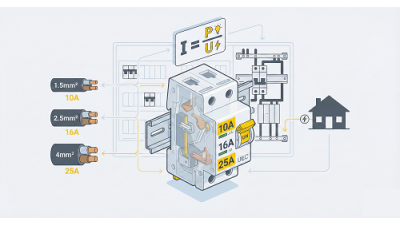
Main rule: the breaker protects the cable, not the equipment. The rating is selected based on the wire cross-section: 1.5 mm² → 10A, 2.5 mm² → 16A, 4 mm² → 25A.
Hello, I'm an electrical engineer at UEC with over 10 years of experience designing residential and industrial electrical systems. I consult clients daily on selecting protective equipment.
In this article, we'll cover all types of circuit breakers: from basic classification to practical recommendations for your electrical panel.
Classification and Types of Circuit Breakers: A Complete Overview
A circuit breaker is a switching device designed to protect electrical networks from short-circuit currents and overloads.
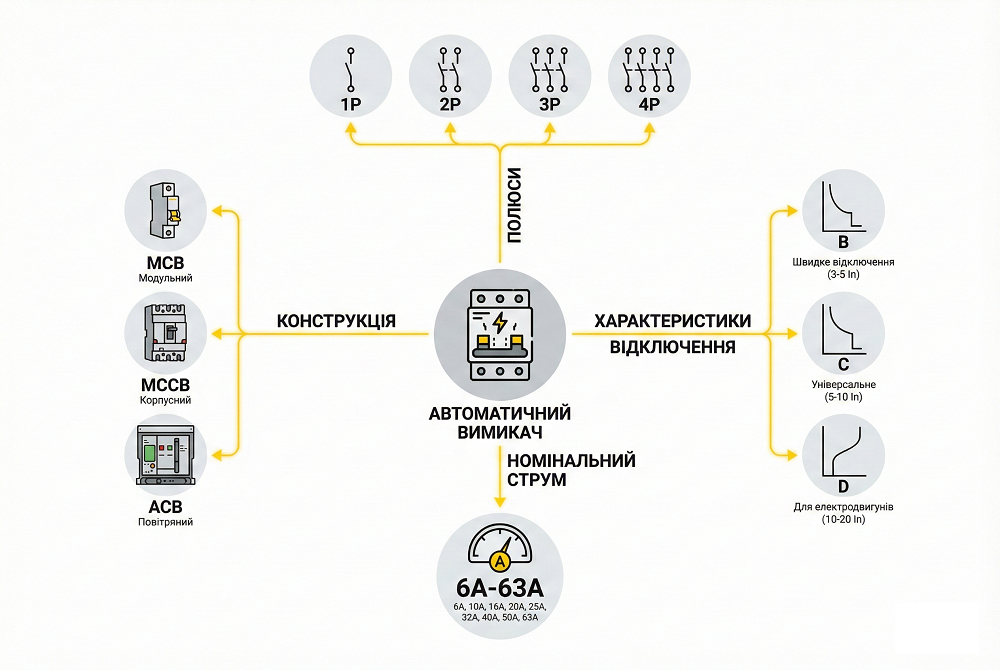
The main purpose of this device is to protect the cable line itself, not the household appliances connected to the outlet. Types of electrical circuit breakers are divided according to several key parameters: number of poles (phases), trip curve characteristic (response speed), and design type.
Proper classification of circuit breakers helps prevent electrical wiring fires and ensures the stability of the power system.

Warning! Working with electrical equipment is life-threatening!
All work in the electrical panel must be performed only by qualified electricians with the power disconnected. Before starting any work, always de-energize the line and verify the absence of voltage with a measuring instrument.
Types of Circuit Breakers by Number of Poles (Network Phases)
Selecting a switching device begins with the architecture of your electrical network. The number of poles determines how many conductors the device simultaneously monitors and disconnects. For single-phase networks (220V), single-pole (1P) or double-pole (2P) breakers are used. For three-phase networks (380V), three-pole (3P) and four-pole (4P) options are standard.
Proper connection and pole selection is not just a matter of convenience, but also of panel servicing safety.
Single-Phase Networks (220V): 1P vs 2P
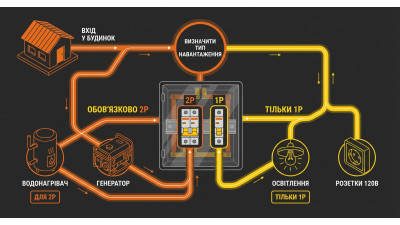
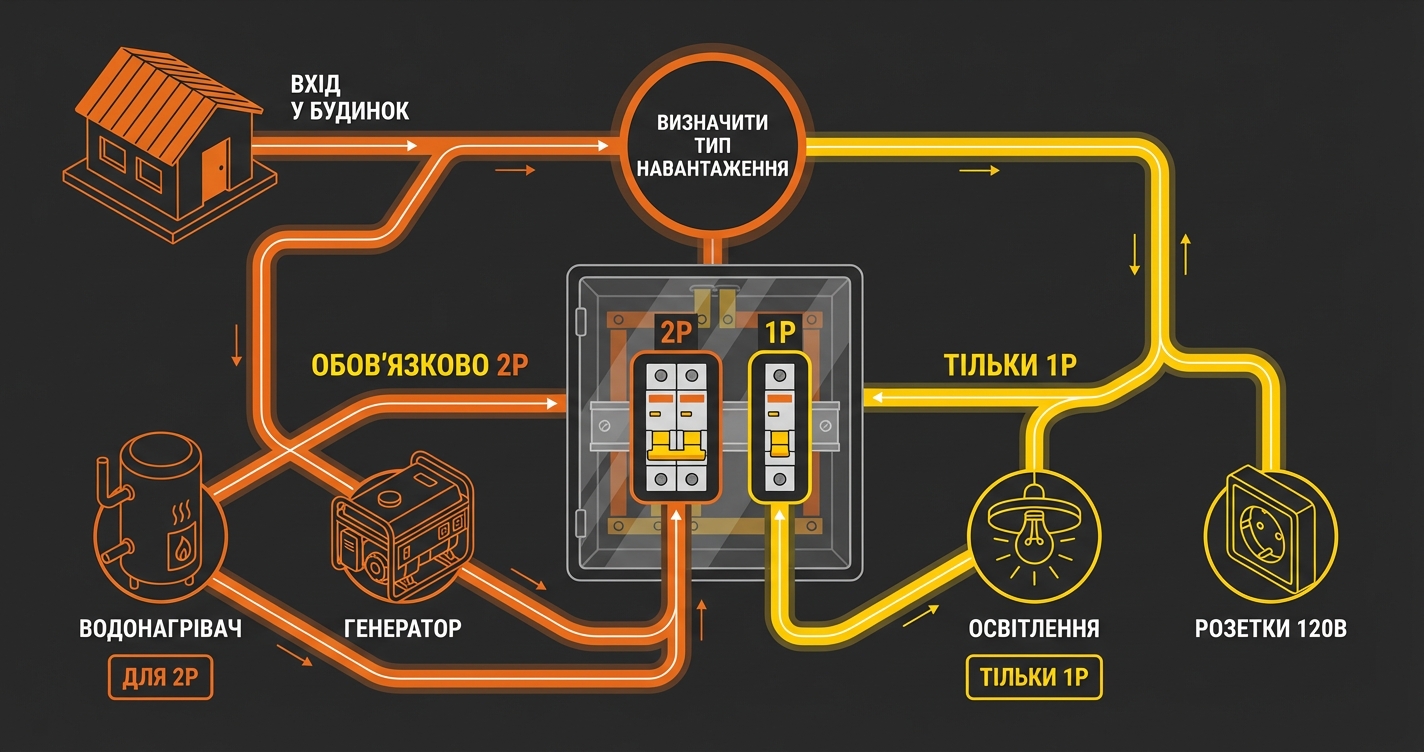
In 90% of apartment panels, 1P series breakers are installed. They disconnect only the phase conductor. This is an economical solution (occupies 1 module — 18 mm) that effectively protects the line from overcurrents. However, during a fault, the neutral conductor remains connected to the main network.
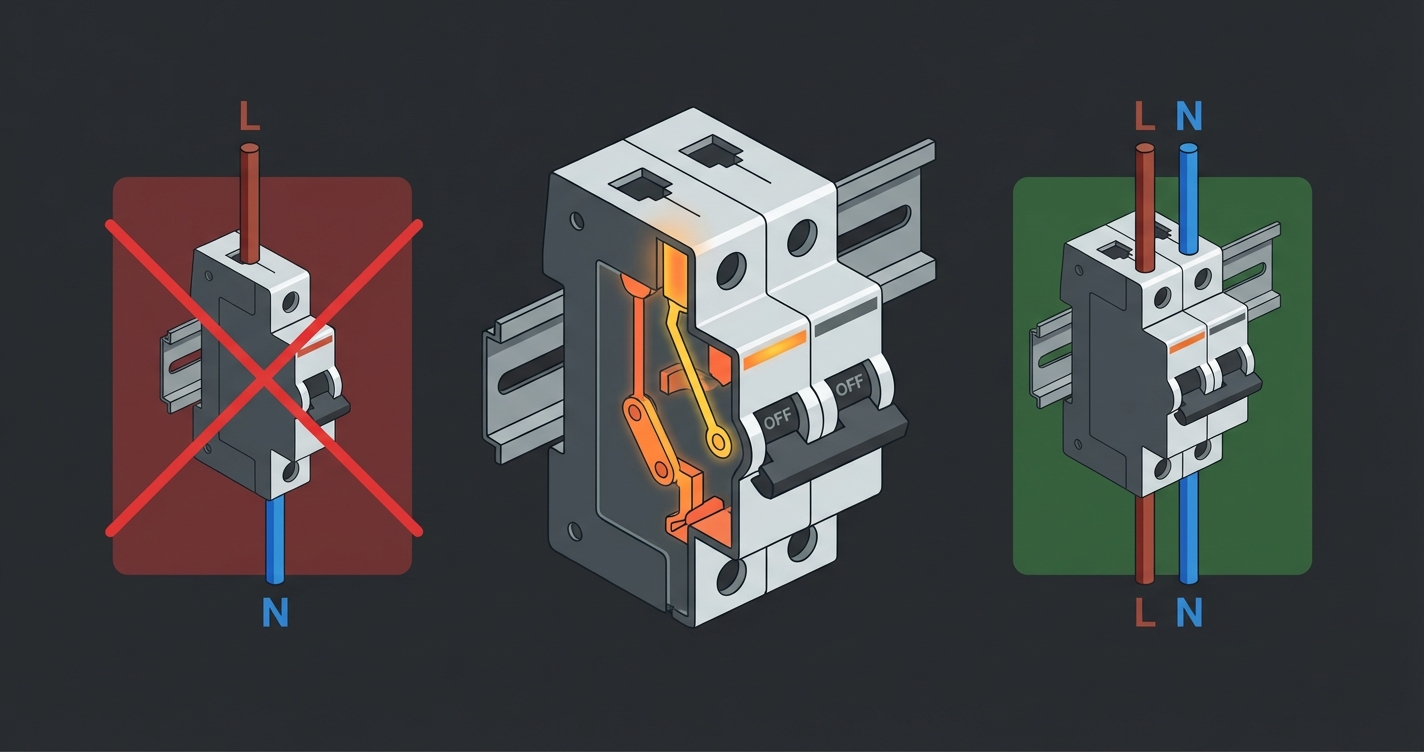
Using 2P (double-pole) breakers is justified in "wet" zones and at the apartment entrance. Such a device occupies 36 mm (or 18 mm in compact 1P+N series) and disconnects both phase and neutral simultaneously. This is critically important if the polarity is reversed at the floor panel or if a "neutral" break occurs in the hallway. My experience at UEC shows: troubleshooting current leakage in a line with a 2P breaker takes three times less time, since you can completely isolate the problem circuit from the grounding loop.
I discussed the nuances of choosing between these types in detail in the article on when to install a single-pole or double-pole breaker.
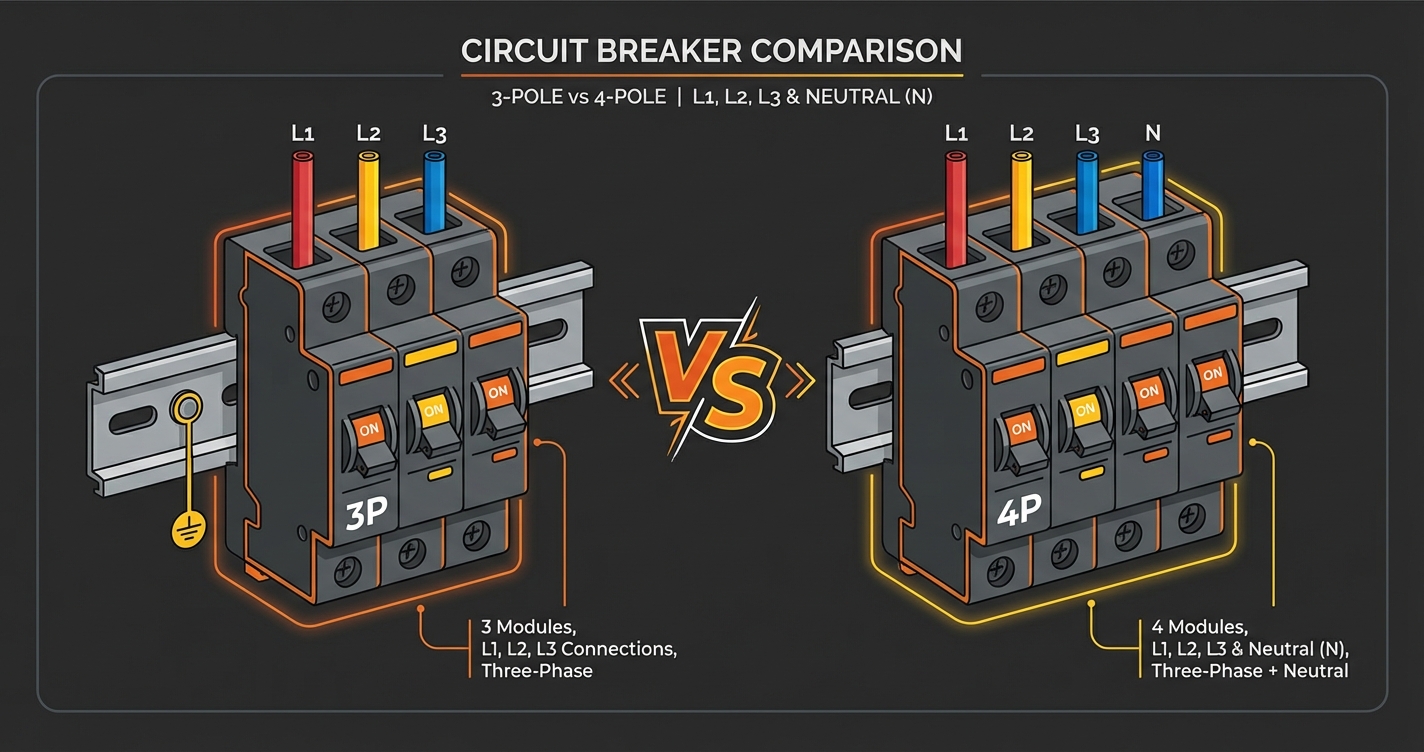
Three-Phase Networks (380V): 3P and 4P
A three-pole breaker (3P) is the standard for protecting three-phase loads, such as electric motors or boilers, where the neutral conductor is not involved in switching or is connected directly.
A four-pole (4P) breaker must be installed as the main entrance device in private homes with TN-C-S or TN-S grounding systems. It allows complete de-energization of the facility by disconnecting three phases and the working neutral, eliminating the risk of electric shock through potential on the neutral wire.
| Type | Width (modules) | Network | Typical Application |
|---|---|---|---|
| 1P | 1 (18 mm) | 220V | Protection of lighting circuits, room outlets |
| 2P | 2 (36 mm) | 220V | Apartment entrance, water heaters, "wet zones" |
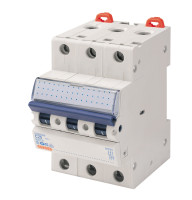
| 3P | 3 (54 mm) | 380V | Three-phase motors, pumps, machine tools |
| 4P | 4 (72 mm) | 380V | Main entrance to private home, generators |
Read more about three-phase protection in the article: when a three-pole and four-pole breaker is needed.
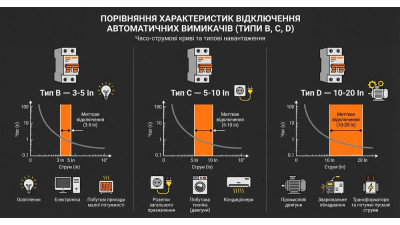
Classification by Time-Current Tripping Characteristic (Trip Curves)
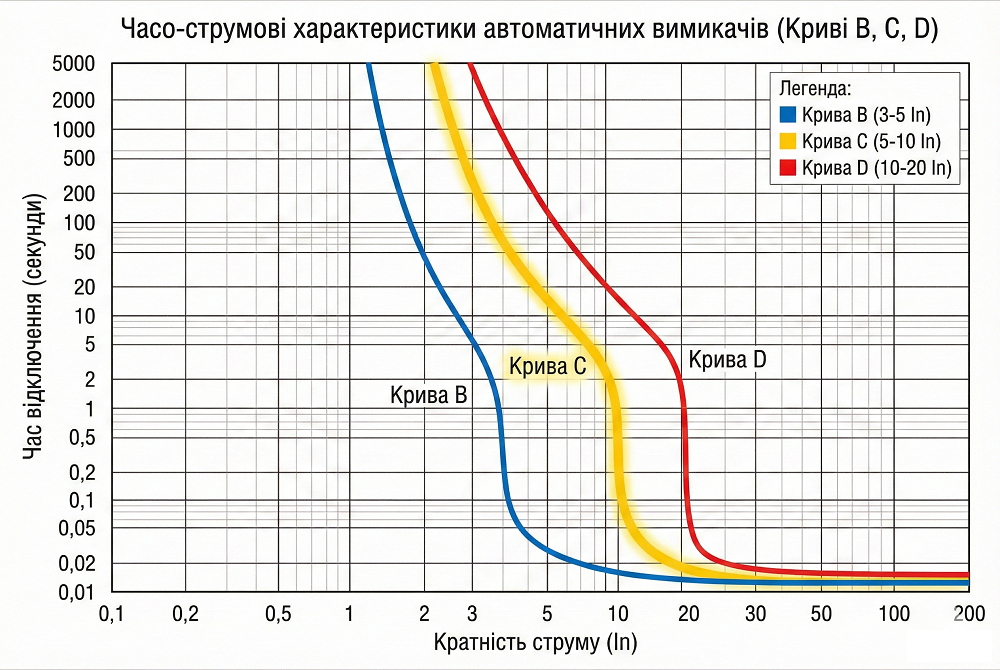
This is the parameter most often ignored by beginners. The trip curve (B, C, or D) shows how much short-term overload a breaker can withstand without tripping. This is necessary to compensate for inrush currents (for example, when a refrigerator or vacuum cleaner starts). Incorrect characteristic selection causes the breaker to "trip" without an actual fault.
Type "B" Characteristic (Sensitive Loads)
Tripping range: 3–5 In (rated currents)
Shortest delay. The electromagnetic release trips at a current 3–5 times higher than the rated value.
Application: Long cable runs (where short-circuit current is low due to resistance), networks with old aluminum wiring, resistive loads without inrush currents (incandescent lamps, heating elements).
Recommendation: Ideal for protecting lighting circuits and modern electronics.
Type "C" Characteristic (Universal Standard)
Tripping range: 5–10 In
The gold standard for residential construction. A Type C breaker handles overloads 5–10 times above the rating for a fraction of a second. This allows safe starting of air conditioners, vacuum cleaners, and other household appliances.
Application: Outlets in apartments, offices, general circuits.
Type "D" Characteristic (High Inrush Currents)
Tripping range: 10–20 In
Industrial characteristic. A Type D breaker does not trip during current surges of 10–20 times the rating.
Application: Heavy-duty electric motors, pumping stations, transformers, machine tools. Installing such a breaker at home is dangerous.
"Type C breakers are the most common because they are suitable for most residential and commercial applications with moderate inrush currents"
— Onccy Research
⚠ Warning! Installing a Type D characteristic breaker in a regular apartment is prohibited by safety standards. During a short circuit with low current (for example, in an extension cord), it may not trip in time before the insulation ignites.
Distribution of Circuit Breakers by Rated Current
Rated current (In) is the maximum current value that a breaker can carry indefinitely. As soon as the load exceeds this threshold (for example, 1.13 times the rating), the thermal release is triggered. On the housing, this is the number after the type letter (C16, B10).
The Electrician's Main Rule:
The breaker protects the cable, not the equipment. The rating is selected strictly based on the cable cross-section. If you install a 25A breaker on a 1.5 mm² wire, the wire will burn before the protection trips.
Standard rating range for residential use: 6A, 10A, 16A, 20A, 25A, 32A, 40A, 50A, 63A.
| Copper Cable Cross-Section (mm²) | Maximum Breaker Current (A) | Typical Application in Apartments |
|---|---|---|
| 1.5 mm² | 10A (rarely 13A) | Lighting |
| 2.5 mm² | 16A (max 20A if open installation) | Outlet circuits |
| 4.0 mm² | 25A | Cooktop, instantaneous water heater |
| 6.0 mm² | 32A | Apartment entrance (gas), electric stove |
Important Parameter: Breaking Capacity (SCC)
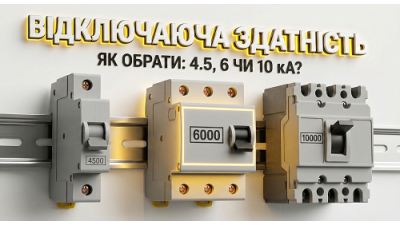
Ultimate breaking capacity (Icu) is the maximum short-circuit current that a breaker can interrupt once without falling apart. This is the number in a rectangle on the housing: 4500, 6000, or 10000.
- 4.5 kA (4500 A): Acceptable for older housing stock with high network impedance. Rarely used in modern renovations.
- 6 kA (6000 A): The modern European standard for the residential sector (apartments, cottages). These are the breakers we at UEC recommend for 95% of residential properties.
- 10 kA and above: Industrial standard. Required if your main panel is located directly near a transformer substation (TS), where short-circuit currents can reach enormous values.
"Circuit breakers have very high breaking capacity – for example, the housing can be rated to interrupt 50 kA, 65 kA, or even 100 kA of fault current at rated voltage"
— Breakerhunters
Classification by Release Type (Protection Design)
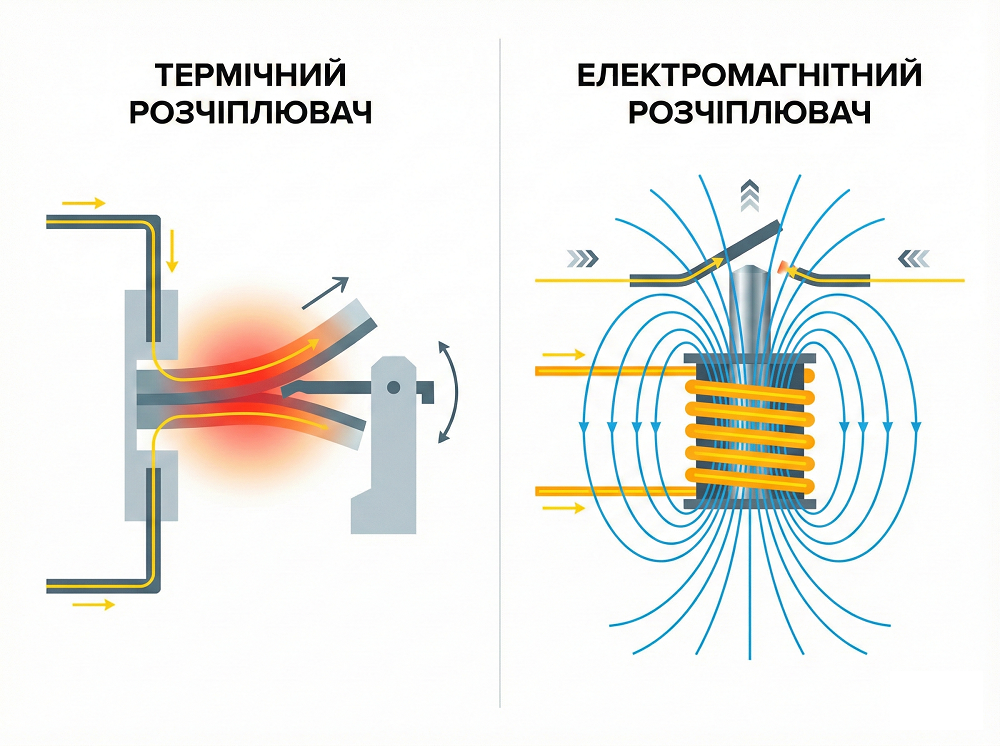
To understand the operating principle, it's worth looking inside the breaker. It contains two independent protection mechanisms:
- Thermal release (bimetallic strip). Works slowly. When the current is slightly exceeded, the strip heats up, bends, and presses on the trip mechanism. This is overload protection, which occurs when you plug a washing machine, kettle, and water heater into the same outlet.
- Electromagnetic release (solenoid with core). Works instantly. During a sudden current surge (short circuit), the magnetic field pushes out the core, which breaks the circuit in a fraction of a second. This is short-circuit protection.
Types of Circuit Breakers by Design
The form factor of the device determines its scope of use — from a small panel in the hallway to massive distribution cabinets in factories.
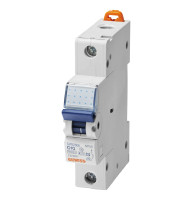
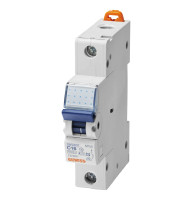
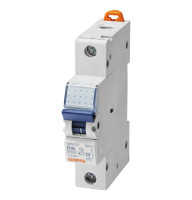
Modular (MCB) — DIN Rail Mounted
Currents: up to 125A
The most common type for residential and office use. They have a standardized width (multiples of 18 mm) and convenient rail mounting. Easily replaceable, compact.
Application: Apartment and office panels, individual circuit protection.
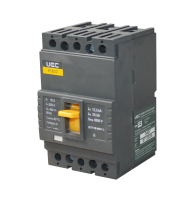
Power (MCCB) — Molded Case
Currents: from 100A to 1600A
These are the "big brothers" of modular breakers. They have adjustable releases, allowing precise protection tuning for specific equipment.
Application: Main breakers in multi-story buildings, workshops, industrial facilities.
Air Circuit Breakers (ACB)
Currents: from 1000A to 6300A
The heavy artillery of the power industry. Arc extinction occurs in air using special chambers.
Application: Main distribution boards (MDB) of factories and shopping centers.
What's the Difference Between a Circuit Breaker, RCD, and RCBO?
Beginners often call everything in the panel a "breaker." This is a mistake that can cost lives.
| Device | What does it protect against? | What does it protect? | Short-circuit protection? |
|---|---|---|---|
| Circuit Breaker | Overload, Short circuit | Cable | ✓ Yes |
| RCD (RCCB) | Current leakage (insulation damage) | Person (from electric shock) | ✖ No (will burn out without a breaker) |
| RCBO | Overload + SC + Leakage | Cable + Person | ✓ Yes |
Labeling: How to Read a Circuit Breaker
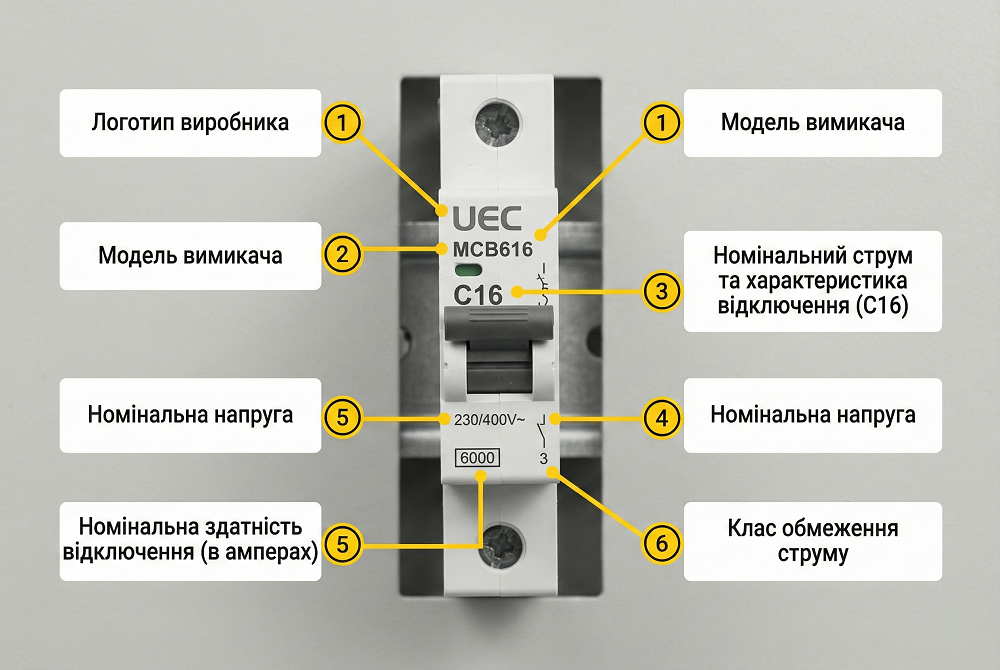
Manufacturers print all the necessary technical information on the front panel. Let's analyze using a hypothetical "C16" as an example:
- Manufacturer's logo (for example, GEWISS or UEC). Guarantee of origin.
- Model/Series (for example, MTC 45). Identifies the series (budget or professional).
- C16: The main parameter. C — time-current characteristic, 16 — rated current in Amperes.
- 230/400V: Rated operating voltage.
- 6000 (in a rectangular frame): Breaking capacity (ultimate short-circuit current) — 6 kA.
- 3 class: Current limiting class. The higher the number (maximum 3), the faster the breaker extinguishes the arc, preserving the cable.
Quick Selection Summary Table for Apartments and Houses
All the information below is based on the requirements of IEC 60898-1 "Circuit-breakers for overcurrent protection for household and similar installations" and years of experience from UEC engineers.
If you don't want to delve into calculations, use this proven algorithm for typical renovations:
- Lighting: 1.5 mm² cable → B10 breaker (or C10), 1 pole.
- Outlets (rooms): 2.5 mm² cable → C16 breaker, 1 pole.
- Water heater / Washing machine: 2.5 mm² cable → C16 30mA RCBO or "2P breaker + RCD" combination.
- Apartment entrance (single-phase): 6-10 mm² cable → C32 - C40 breaker, 2 poles.
For those hesitating between brands: if the budget is limited, UEC series provide honest stated specifications. If you need premium design and Italian assembly — choose GEWISS.
Frequently Asked Questions (FAQ)
❓ Which brand of breaker is better to choose?
For critical nodes (entrance, wet zones), we recommend "first-tier" brands: GEWISS, Schneider Electric, Hager. For less loaded circuits, certified Ukrainian brands such as UEC work excellently, offering a balance of price and compliance with IEC standards.
❓ Can I install a higher-rated breaker if the old one keeps "tripping"?
Absolutely not. If a breaker trips, it means it's doing its job — protecting the line from overload. Replacing it with a higher rating (for example, from 16A to 25A) without replacing the wiring will lead to cable overheating, insulation melting, and fire.
❓ What's the difference between alternating (AC) and direct (DC) current for breakers?
Breakers marked as AC (Alternating Current) are designed only for alternating current (household network). A direct current (DC) arc is much more stable and harder to extinguish. Using an AC breaker in a DC network (for example, solar panels) is dangerous — the contacts will burn out after a few operations. Specialized devices are required for DC.