
Article Contents
3P & 4P Circuit Breakers


Key takeaways
A 3P circuit breaker protects three phases (L1, L2, L3) without breaking the neutral — ideal for motors and balanced loads.
A 4P circuit breaker additionally disconnects the neutral (N) — mandatory for main disconnects, generators, and unbalanced loads.
Main selection criterion: grounding system type (TN-C → 3P, TN-S/TT → 4P at the main disconnect).
The UEC and GEWISS catalog features circuit breakers from 200 UAH with delivery from our Kyiv warehouse.
Brands, Quality and Authenticity (How Not to Buy a Counterfeit)
What to Look for When Purchasing
The market is saturated with copies. At UEC, as an official representative, we guarantee authenticity, but you should know the signs of quality:
We provide a full warranty on GEWISS and UEC products. Upon return, we verify the integrity of factory seals. UEC clients can always rely on technical support.

Hello, I am Oleh Lukianchuk, an engineer and electrical equipment expert at UEC. Over 15 years of experience, including work on railway signaling and interlocking systems, I have seen firsthand that proper selectivity and correct pole count selection reduce the risk of emergency shutdowns by 30%.
In this article, I will cover three-pole (3P) and four-pole (4P) circuit breakers: present our catalog with prices, explain the differences, help you choose, and provide wiring diagrams.
Catalog of Three-Pole and Four-Pole Circuit Breakers
Hello, Oleh Lukianchuk here. At UEC, we understand that choosing protection for a three-phase network is not just about stability — it is about the safety of personnel and equipment. Our catalog features reliable 3P circuit breakers and 4P circuit breakers from the Italian brand GEWISS and our own UEC production line.
I personally test samples in our technical department. In practice, including during my work on railways with signaling systems, we recorded that proper selectivity and correct pole count selection reduce the risk of emergency shutdowns by 30%. Here you can buy verified equipment at fair prices from a direct importer. Use the filters to quickly find the right circuit breaker by pole count and technical specifications.
Product Cards
Quick selection of popular UEC and GEWISS models.
Filters and Sorting (selection in 30 seconds)
To save time, use the parameters: Pole count (3P/4P/3P+N), Rated current (A), Trip curve (B/C/D), Breaking capacity (kA). Sorting by price and availability at our Kyiv warehouse is also available.
Quick Selection Helper: 3P, 4P or 3P+N?
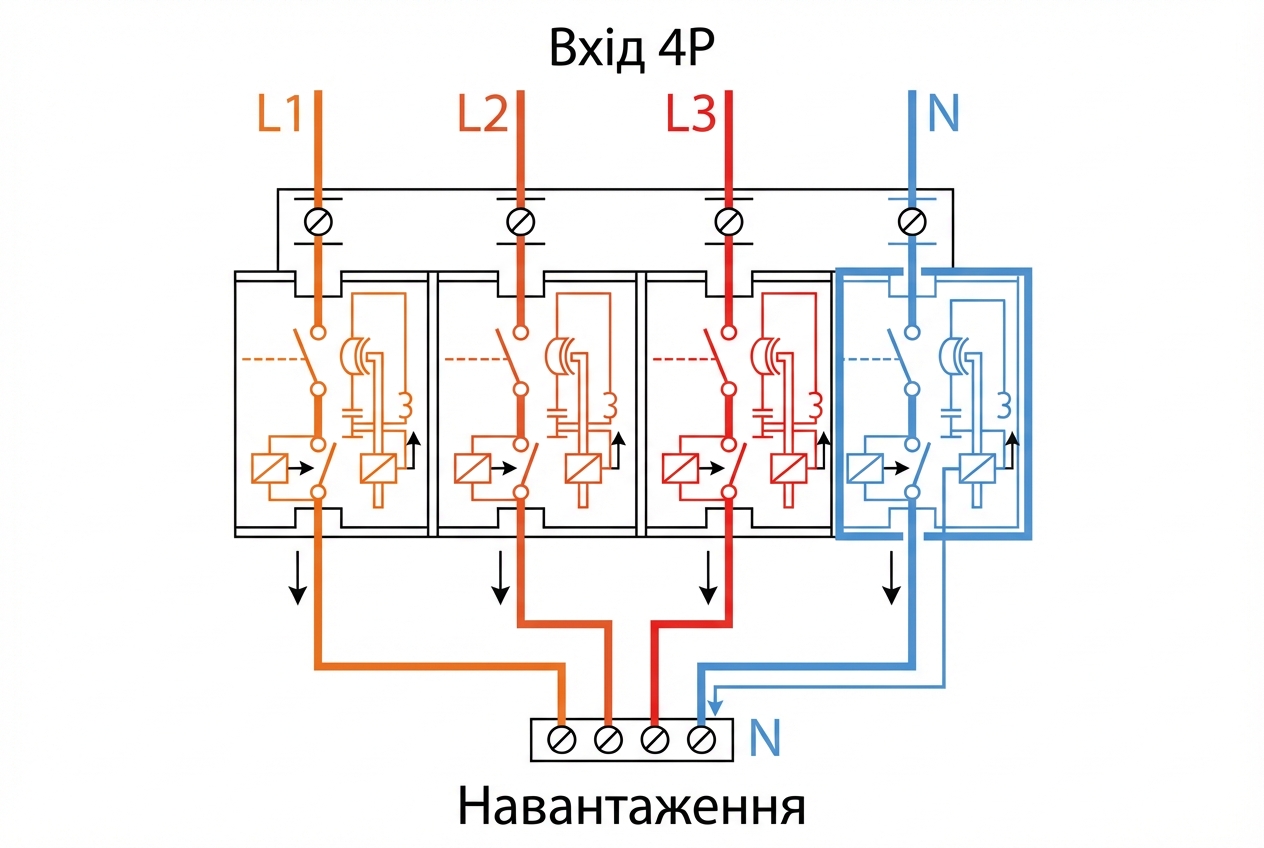
- 3P — choose when there is no need to break the neutral (e.g., balanced motor load).
- 4P — when you need to disconnect the neutral (N) together with the phases (safety requirement for unbalanced loads or TN-S systems).
- 3P+N — an economical option where the neutral is switched but overcurrent protection is only on the phases. Read more about when to use single-pole vs multi-pole breakers in our guide.

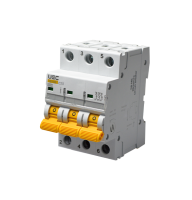
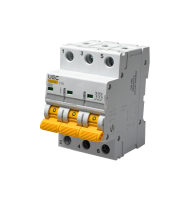
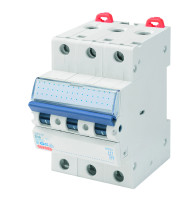
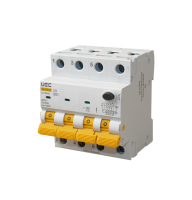
Three-Pole and Four-Pole Circuit Breaker Prices (Table)
We work without intermediaries, so we offer competitive pricing. Below are approximate prices for popular items.
Popular model price comparison
| Pole Count | Rated Current (A) | Curve | kA | Brand | Price from | Availability |
|---|---|---|---|---|---|---|
| 3P | 16A | C | 6 | UEC | 200 UAH | In stock |
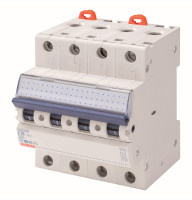
| 4P | 25A | C | 6 | GEWISS | 650 UAH | In stock |
What Is a Three-Pole 3P Circuit Breaker and Where Is It Used?
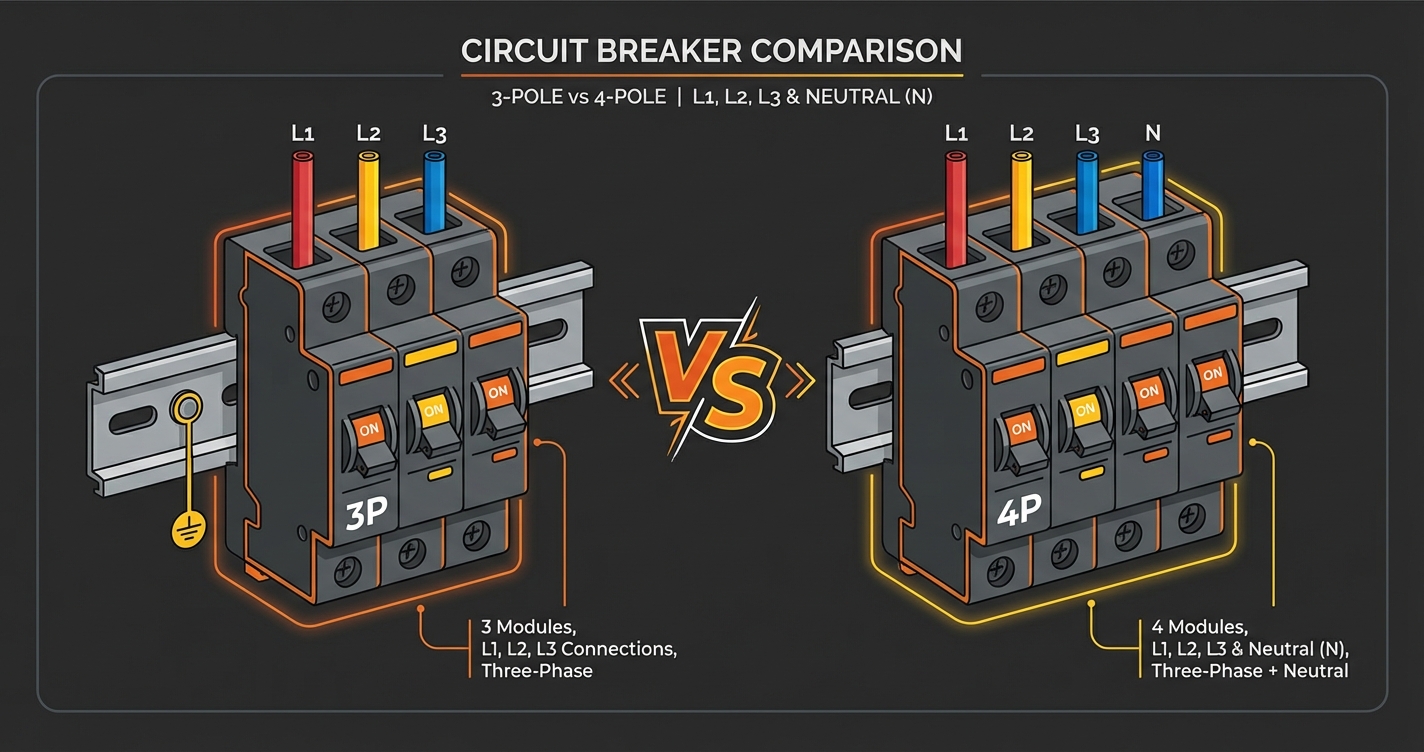
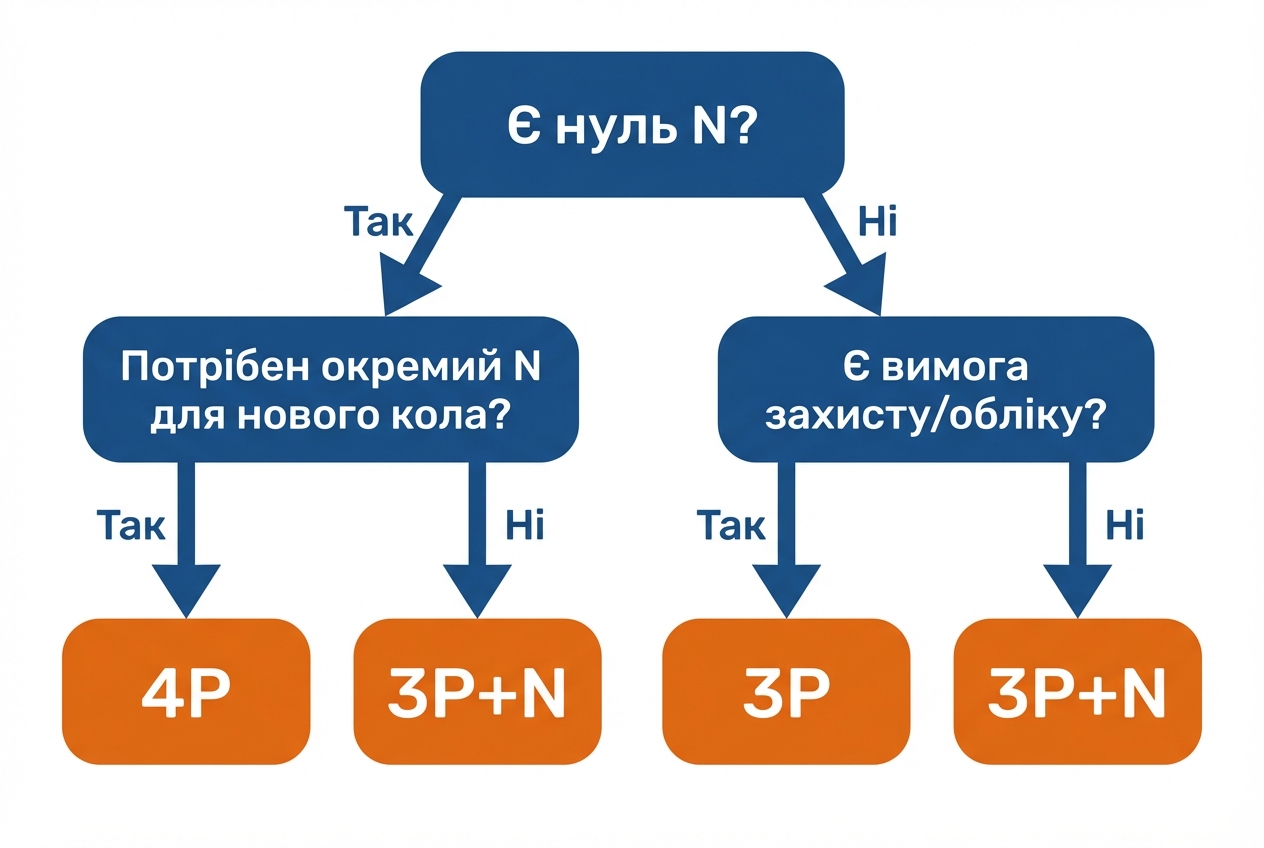
A three-pole circuit breaker (3P) is a switching device for protecting three phase conductors (L1, L2, L3) against short-circuit and overload currents. Its design features three independent poles united by a common operating mechanism, ensuring simultaneous disconnection of all phases when a fault occurs on any of them. This breaker is widely used in industry and domestic applications for connecting three-phase networks to loads where neutral disconnection is not required.
- The main application area is protection of electric motors and power equipment.
- Installed in systems with a solidly grounded neutral (TN-C), where the PEN conductor must not be broken.
- Effective for balanced loads without a neutral connection.
- Feature: more compact dimensions and lower cost compared to 4P.
"The use of 3-pole circuit breakers is the standard for low-voltage systems powering motors and generators."
— VOZWEI [1]
Why You Need a Four-Pole 4P Circuit Breaker: Features and Applications
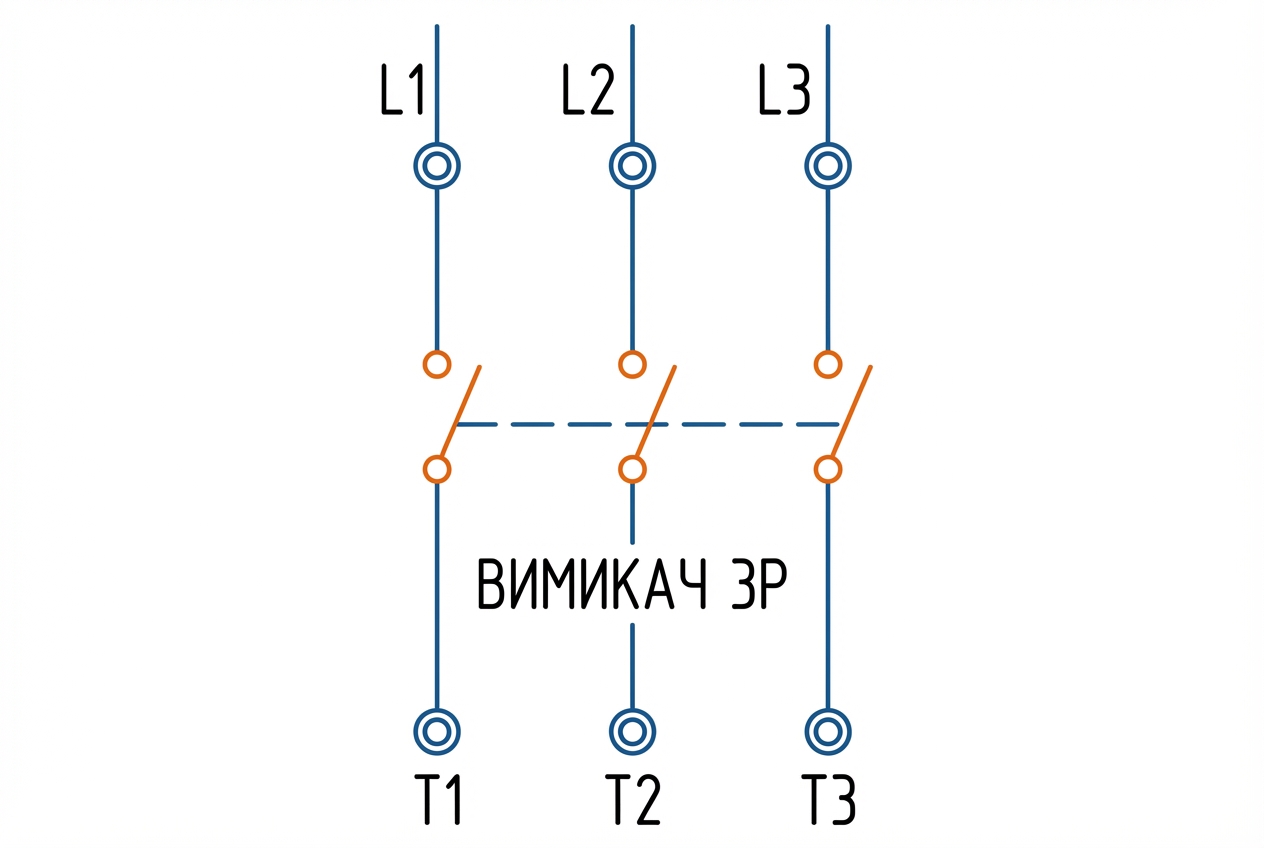
A four-pole 4P circuit breaker is a device that provides switching and protection of all four conductors: three phases (L1, L2, L3) and the neutral (N). The key feature is complete galvanic isolation of the neutral together with the phase conductors, which is critically important for safety in TN-S and TT grounding systems. This circuit breaker eliminates the risk of voltage appearing on the neutral conductor due to phase imbalance or a substation fault.
- Mandatory application — backup power inputs (generators) where the network neutral must be isolated.
- Used to protect lines feeding single-phase loads from three phases (risk of neutral current).
- Electrical code requirement: for facilities with high electrical safety and fire protection demands.
- Prevents electronic equipment damage during neutral wire failure.
"4-pole breakers are the only correct solution for unbalanced loads where significant currents can flow through the neutral."
— Westhomes [2]
Regulatory references: Electrical Installation Code (chapters 1.7, 7.1), IEC 60947-2 (industrial breakers), IEC 60898-1 (domestic breakers).

Warning! Working with electrical equipment is life-threatening!
All work in the electrical panel must be performed only by qualified electricians with the power disconnected. Before starting work, be sure to de-energize the line and verify the absence of voltage with a measuring device.
Comparison of 3P and 4P Circuit Breakers: Key Differences
The main comparison and difference between these devices lies in the safety architecture: 3P vs 4P is a choice between basic phase protection and complete network isolation. The difference concerns the number of poles, the ability to break the neutral, as well as dimensions and cost. Which is better depends solely on your network type and equipment.
Technical comparison of 3P and 4P circuit breakers
| Parameter | 3P Circuit Breaker | 4P Circuit Breaker |
|---|---|---|
| Poles | 3 | 4 |
| Protected conductors | L1-L3 | L1-L3+N |
| Neutral breaking | No | Yes |
| Dimensions | 3 modules | 4 modules |
| Application | Motors, balanced loads | Main disconnects, unbalanced loads |
"4-pole circuit breakers provide an additional level of neutral conductor protection, which is critical in the presence of harmonics or non-linear loads."
— Quisure [3]
How to Choose Between a 3P and 4P Circuit Breaker: 3 Key Criteria
To determine which to choose — 3P or 4P — you do not need to guess. There are clear engineering criteria based on network type, load characteristics, and electrical code requirements. Your safety depends on a correct assessment of the wiring diagram.
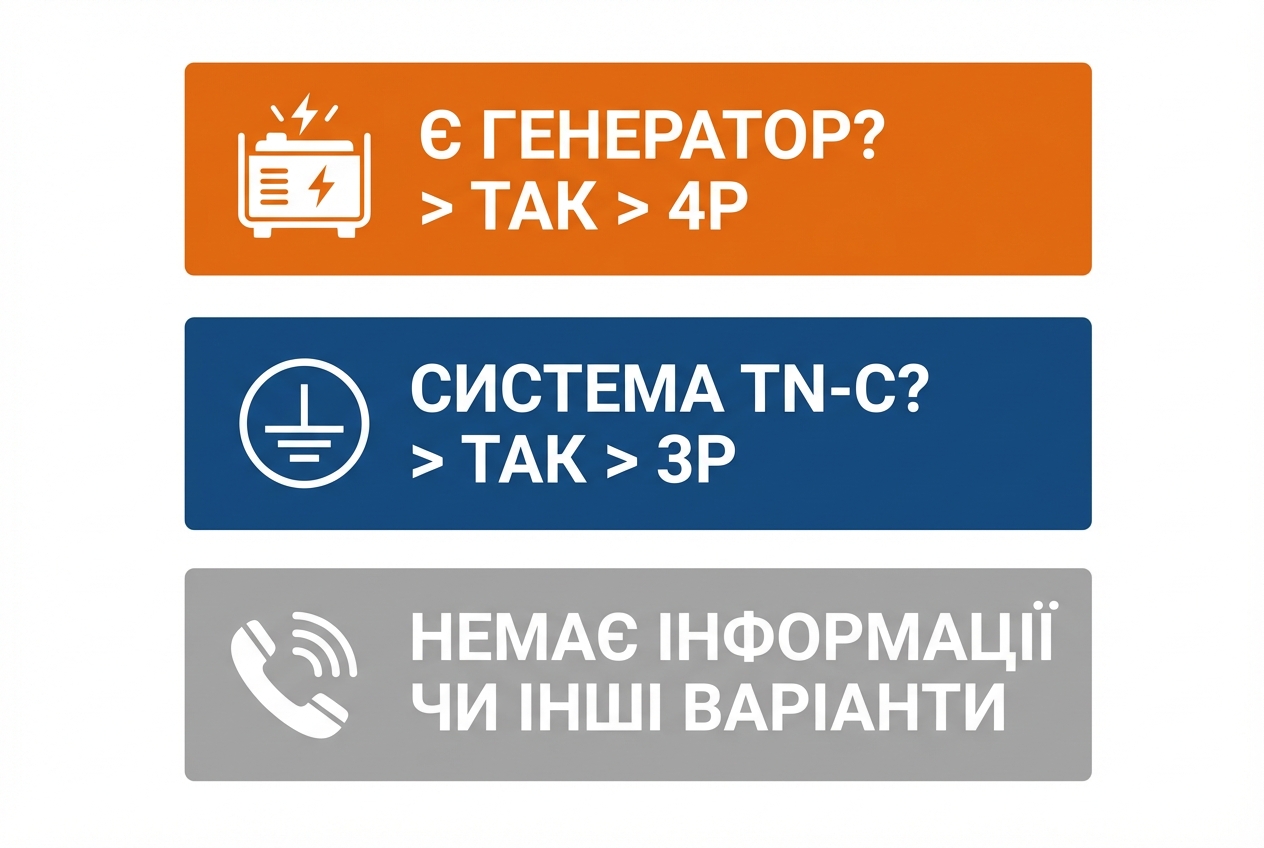
- Grounding system type and presence of N. If you have a TN-C system (combined PEN conductor), breaking it is prohibited — use 3P. For TN-S or TT systems with separate N and PE, the recommendation is to install 4P at the main disconnect for complete de-energization.
- Load type. For balanced consumers (electric motors without neutral) 3P is sufficient. If you are powering mixed loads (office building, residential building with single-phase consumers on different phases) — you must choose 4P for phase imbalance protection.
- Need for complete disconnection. If the facility is powered by a generator or requires a high level of fire safety (e.g., a wooden house), regulations dictate the use of 4P for guaranteed neutral breaking.
Conclusion:
For a motor — 3P, for a building/office main disconnect — 4P. CNCELE experts also note that 4-pole breakers are the standard for medical facilities where leakage current is unacceptable [7].
"As an engineer, I often see mistakes in panels where people save on poles. Remember: the neutral is a current-carrying part. In the event of a line fault (for example, 'neutral burnout' at a substation), a dangerous potential may appear on your neutral wire. Only a 4-pole circuit breaker can protect you in such a situation."
— Oleh Lukianchuk, UEC Expert
Where 3P/4P Circuit Breakers Are Used in Real Panels (Load Examples)
Typical 3P Applications (3 phases without neutral)
- Three-phase electric motors: pumps, ventilation units, machines, where connection is made in delta or star without a neutral tap.
- High-power heaters: industrial heating elements, electric boilers connected in a balanced configuration.
- Main distribution lines: network sections where the neutral passes through in transit and does not require breaker protection (provided the conductor cross-section is adequate).
I recommend reading our article on how to choose a circuit breaker for a motor to avoid mistakes during startup.
Typical 4P Applications (3 phases + neutral)
- Main distribution panel (MDP) of a building: where loads are distributed across phases to lighting and outlet groups.
- Automatic transfer switch (ATS): a mandatory requirement for correct "Mains-Generator" switchover operation.
- Sensitive electronic equipment: servers, data centers, audio-video studios, where stray currents in the neutral can cause interference.

How to Select Circuit Breaker Specifications (Important for Both 3P and 4P)
⚠ Important: All calculations and installation must comply with the project and electrical installation code. If you are unsure of your calculations — consult a specialist. Incorrect protection selection can lead to fire.
Rated Current (A): Selection by Cable and Load
Key rule:
The circuit breaker protects the cable, not the appliance. The breaker rating (In) must be less than the cable's continuous current capacity (Iz).
- For residential 3-phase mains, the most popular ratings are: 16A, 25A, 32A.
- High-power mains and semi-industrial solutions: 40A, 50A, 63A.
Learn more about calculating the breaker rating for a 380V network in our detailed article.
Trip Curve Type B, C, D (Inrush Currents)
Curve B (3-5 In)
For long cable runs, lighting, older building stock. Minimal inrush currents.
Curve C (5-10 In)
Universal standard. Suitable for most residential and office applications. Learn more about the difference between B, C and D curve breakers.
Curve D (10-20 In)
Specifically for electric motors, transformers, and mechanisms with heavy startup to avoid nuisance tripping at start.
Breaking Capacity (kA): 4.5/6/10 kA and Where Each Is Needed
This parameter shows what short-circuit current the breaker can safely interrupt without melting. We wrote separately about what breaking capacity is.
- 4.5 kA — older residential buildings, rural areas (far from the transformer).
- 6 kA — modern standard for new apartments, houses, offices.
- 10-25 kA — main breakers, panels near the transformer substation, industrial applications.
Recommended short-circuit withstand values
| Facility | Typical kA Value |
|---|---|
| Apartment | 4.5-6 |
| Private house | 6 |
| Office / Shopping center | 6-10 |
| Industrial zone | 10+ |
Markings and Compatibility: 3P, 4P, 3P+N, DIN, Accessories
When choosing, pay attention to the housing. The markings contain all key information: diagram, rating, energy limitation class (usually class 3). Important: accessories (auxiliary contacts, shunt trip releases) are usually not universal and only fit a specific brand series.
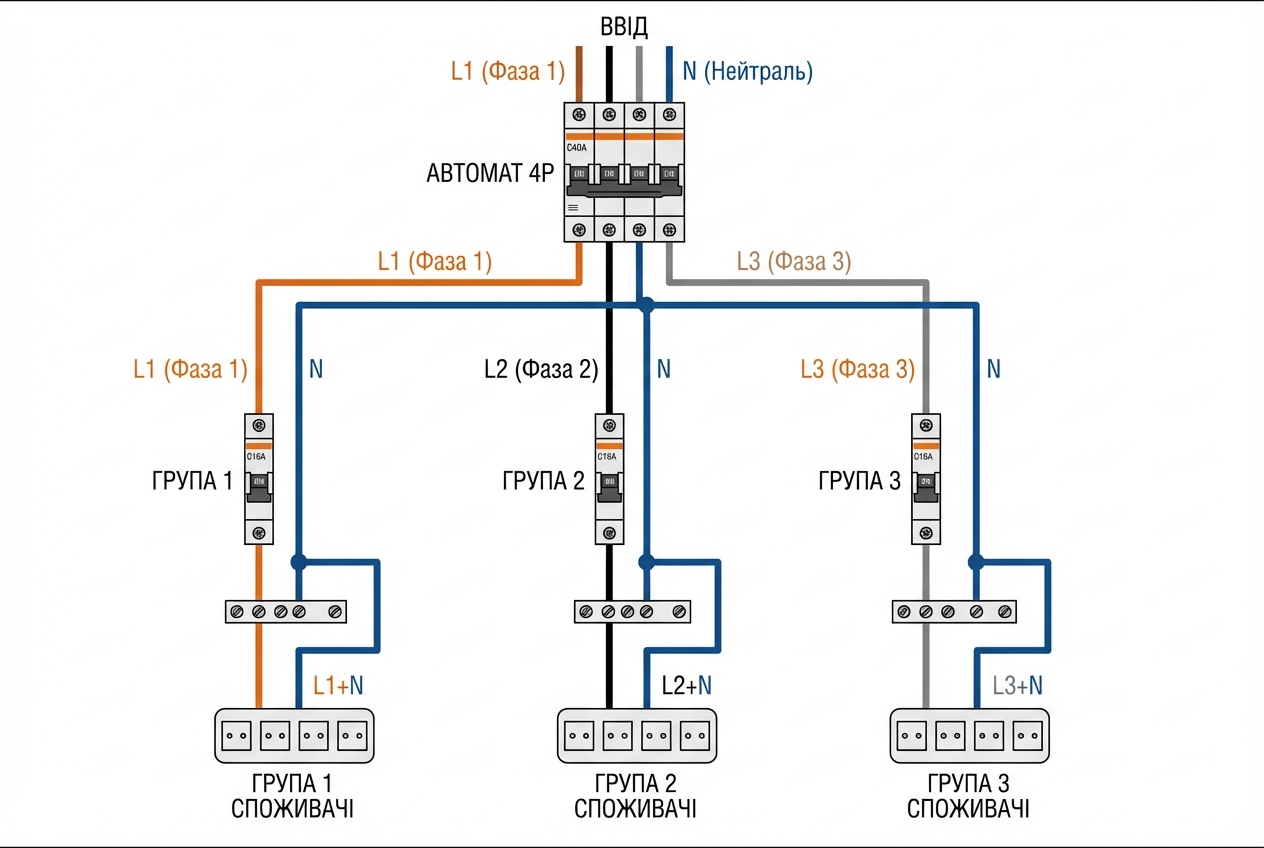
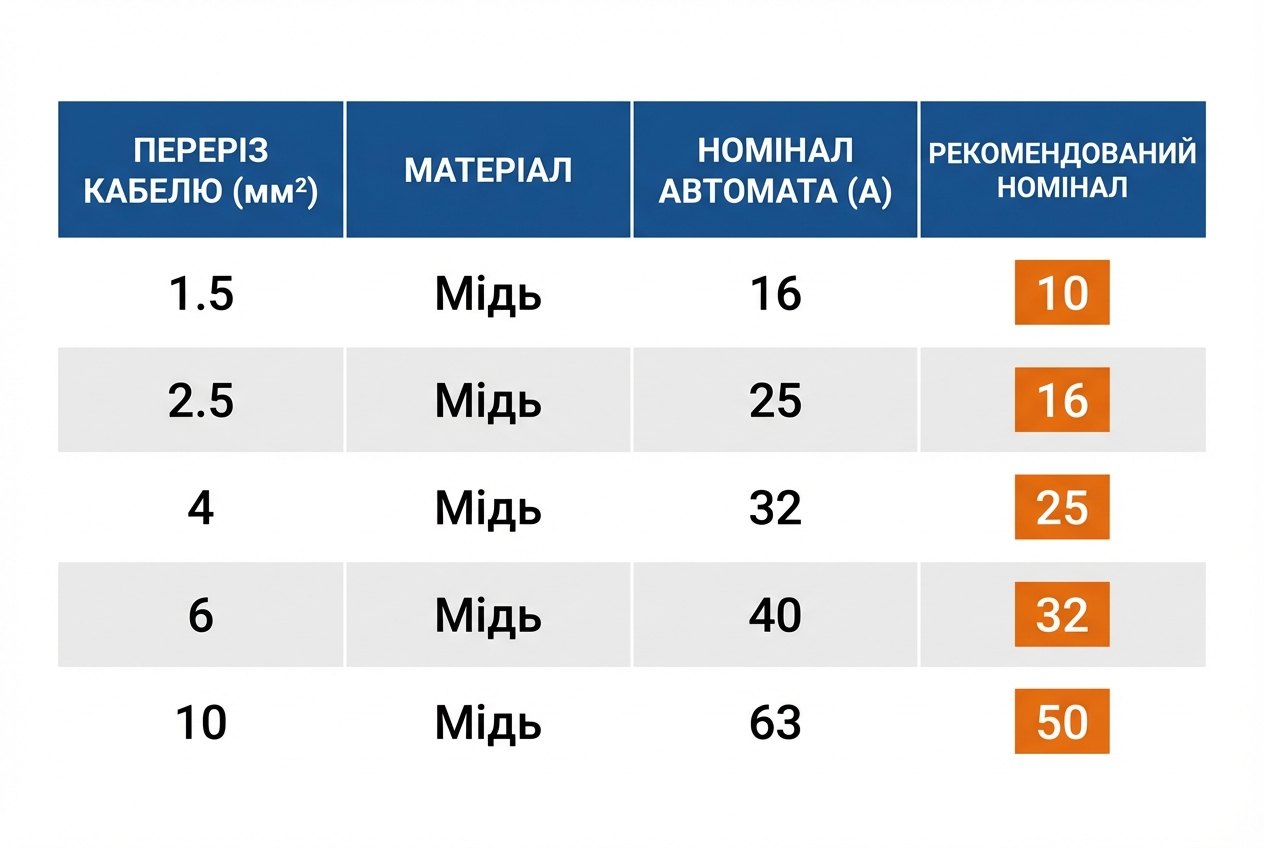
3P and 4P Wiring Diagrams (Standard and Safe)
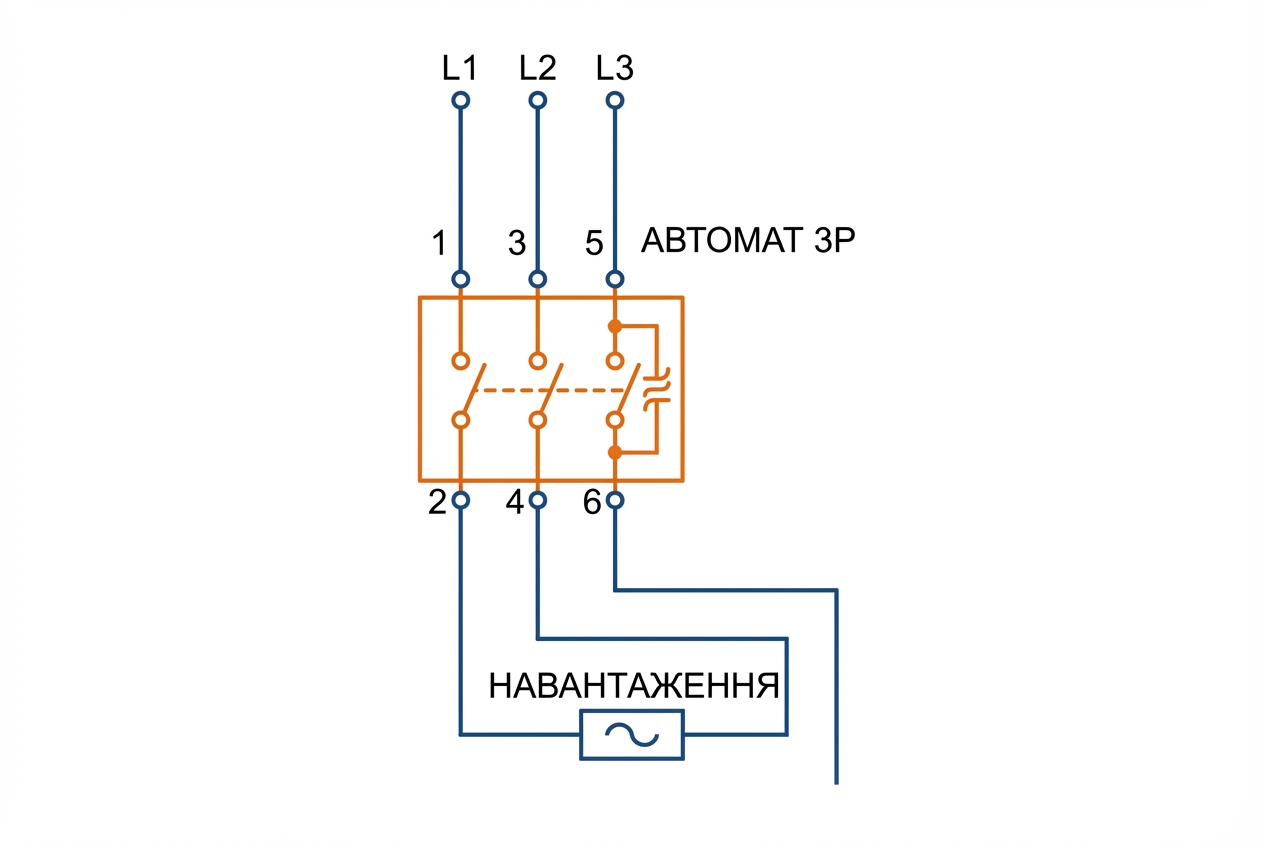
Three-Pole 3P Circuit Breaker Wiring Diagram
Power is typically supplied to the fixed contacts (top), while the load is connected at the bottom. Phases L1, L2, L3 are connected to the corresponding terminals (1, 3, 5). It is important to follow the screw tightening torque to avoid overheating.
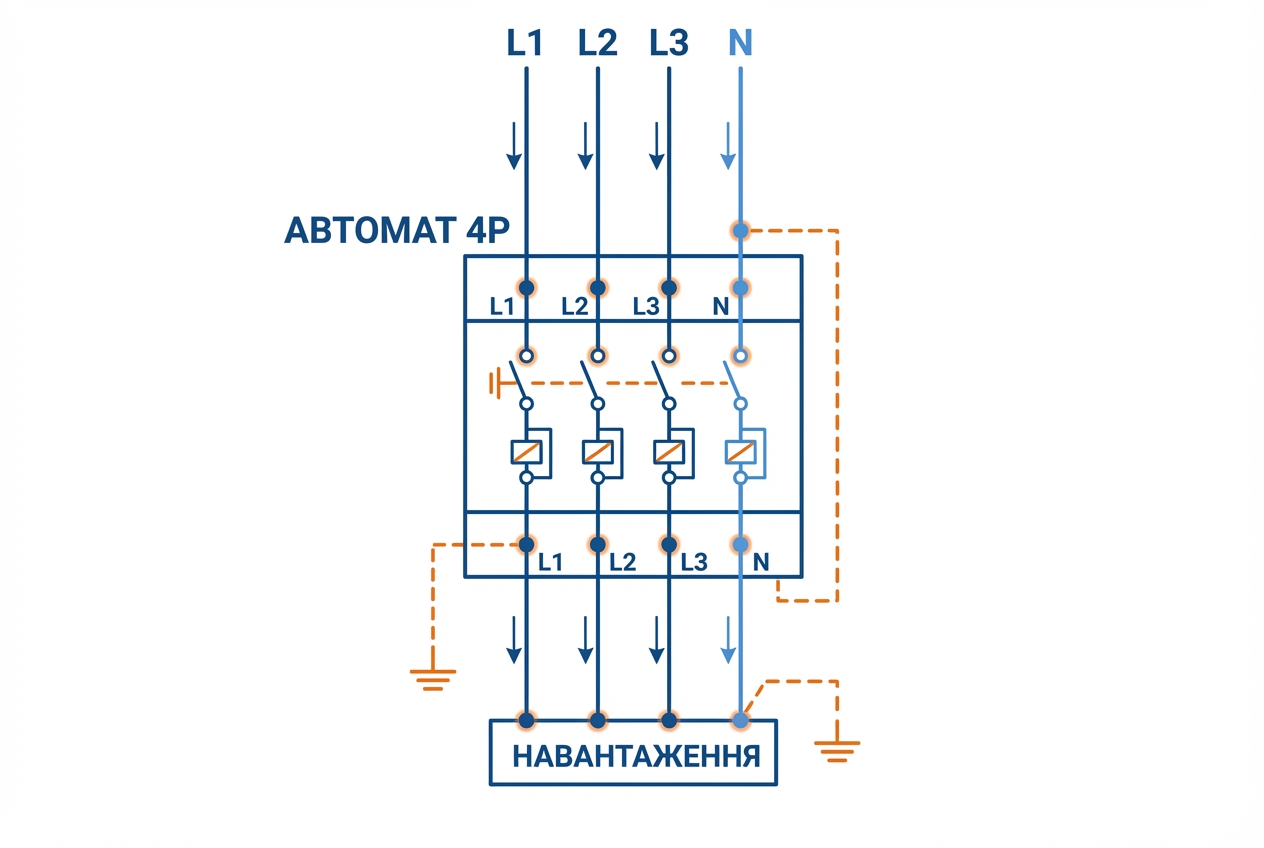
Four-Pole 4P Circuit Breaker Wiring Diagram (with neutral)
The neutral terminal on a 4P breaker is usually marked with the letter N. It is important not to confuse it with the phase terminals, as in some models the neutral contact closes earlier and opens later than the phase contacts (for safety). Make sure the N conductor is securely clamped.
Combination with RCD/RCBO: When to Use a Separate Breaker, When an RCBO
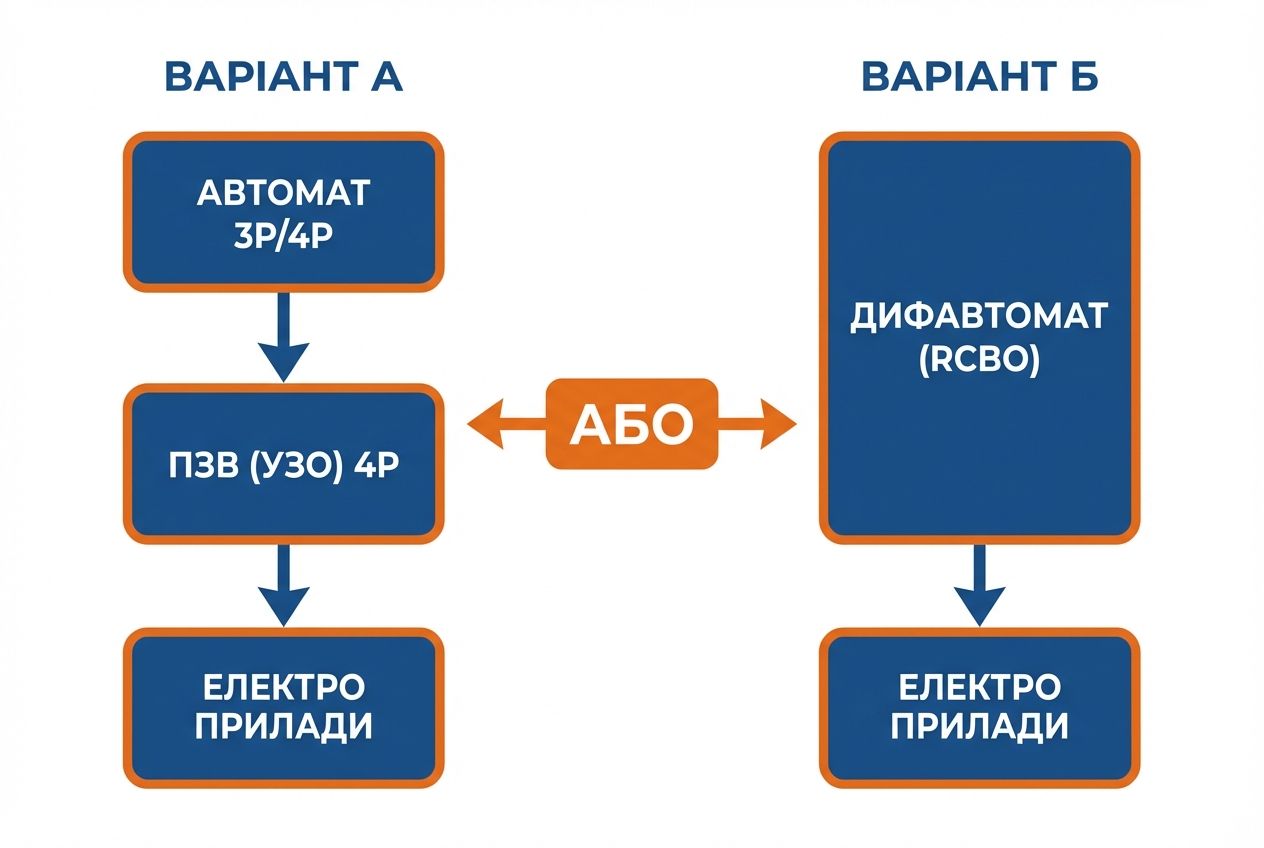
The circuit breaker protects the wiring, while the RCD protects people. For three-phase circuits, a common scheme is: Main breaker 3P/4P → RCD 4P → Group breakers. An alternative to save space is an RCBO, which combines both functions in a single housing.
Common Mistakes in Selection and Installation (and How to Avoid Them)
My experience shows that even experienced electricians sometimes make mistakes that are costly. Here are the most typical ones:
Analysis of typical installation problems
| Mistake | Consequence | Solution |
|---|---|---|
| Oversized rating | Cable overheating and fire | Strict selection by cable cross-section |
| C curve on a powerful motor | Trips at startup | Replace with D curve |
| 3P/4P confusion | Danger on neutral | Verify grounding system |
Pre-energization check:
- Check terminal tightening with a torque screwdriver.
- Verify correct phasing (L1-L2-L3).
- Test the circuit for short circuits before applying voltage.
FAQ — Quick Answers (for 3P/4P Selection)
❓ Can you replace a 4P with a 3P?
Absolutely not recommended if the project specifies neutral breaking (e.g., for backup power or in wooden buildings). Replacing with 3P will leave the neutral unbroken, which is dangerous during line faults [1].
❓ Is a 4P always required for a three-phase network?
No. If you have a purely three-phase load (motor) or a TN-C system, it is sufficient and correct to use a 3P circuit breaker [2][5].
❓ What is the difference between 3P and 3P+N?
3P has three protected poles. 3P+N has three protected poles and one N pole that simply switches (commutates) but has no thermal or magnetic protection. 4P has full protection on all four poles (or on three with a protected neutral, depending on design).
❓ What circuit breaker is needed for a three-phase motor?
For a motor without a neutral tap, a 3P circuit breaker with D curve (for heavy startup) or C curve (for light startup) is sufficient. The rating is selected based on the motor's operating current, considering the cable cross-section.
❓ How to identify which breaker is already in the panel?
Look at the markings on the front panel: pole count (3P or 4P), rating (e.g., C25), breaking capacity (e.g., 6000). Also note the number of terminals at the top and bottom.