
Article Contents
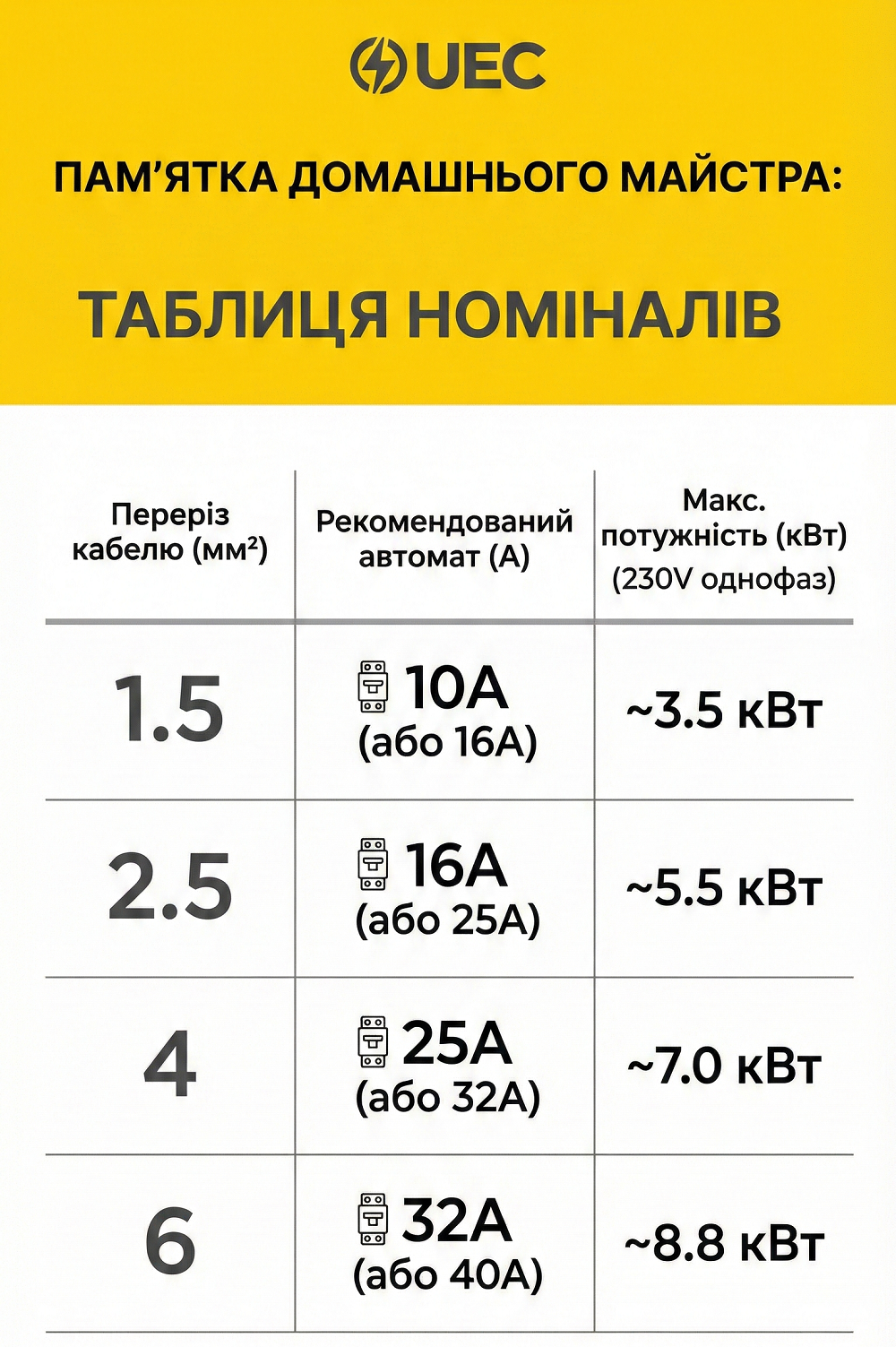
Circuit Breaker Selection Table by Cable Size and Power (Electrical Code)


Key Takeaways
A circuit breaker protects the cable, not the connected equipment. The breaker rating should be one step lower than the maximum allowable cable current — this provides margin for contact aging and temperature fluctuations.
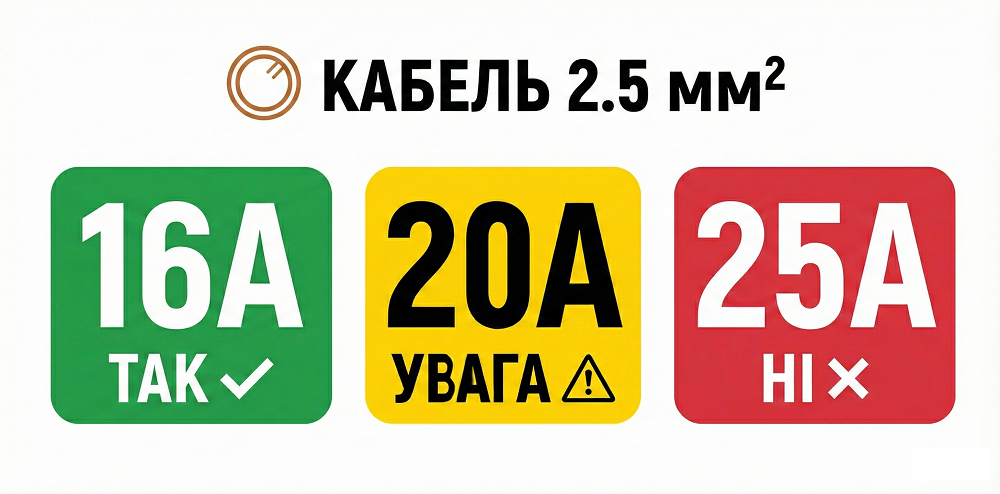
Golden standard for outlets: 2.5 mm² cable → 16A breaker. For power appliances (ovens, cooktops): 4-6 mm² → 25-32A.
Hello, I'm a design engineer at UEC. Over years of working with residential electrical panels, I've seen dozens of cases where improper breaker selection led to wiring damage.
In this article, I've prepared calculation tables based on electrical code standards and practical recommendations so you can avoid fire-hazardous mistakes when selecting protection.
Circuit Breaker Selection Table by Copper and Aluminum Cable Size (Electrical Code)
Important: Data in the table complies with Chapter 1.3 "Permissible Continuous Currents for Wires" of the Electrical Installation Code.
For this cable size and breaker table to work for your safety, follow this algorithm: first determine the conductor cross-section (mm²), then the material (copper or aluminum), and only then select the protection. The main engineering rule I use: the breaker rating should always be one step lower than the maximum allowable cable current.
Why? If the cable can handle 27A and you install a 25A breaker — you have no margin for contact "aging" and temperature fluctuations. That's why professionals reduce the rating.
Circuit Breaker Selection Table by Cable Size (220V)
| Conductor Size (mm²) | Material | Max. Allowable Cable Current (A) | Recommended Breaker Rating (A) | Max. Power 220V (kW) |
|---|---|---|---|---|
| 1.5 | Copper | 19 | 10 / 16 (with limitations) | 3.5 |
| 1.5 | Aluminum | 15 | 6 / 10 | 2.2 |
| 2.5 | Copper | 27 | 16 / 20 (rarely) | 4.4 / 5.5 |
| 2.5 | Aluminum | 20 | 16 | 3.5 |
| 4.0 | Copper | 38 | 25 | 7.0 |
| 4.0 | Aluminum | 29 | 20 | 4.6 |
| 6.0 | Copper | 46 | 32 | 8.8 |
| 6.0 | Aluminum | 36 | 25 | 5.9 |
| 10.0 | Copper | 70 | 40 / 50 | 13.2 |
| 10.0 | Aluminum | 50 | 32 / 40 | 9.9 |
For more detailed information about parameter relationships, see our extended circuit breaker selection table by cable size and power.
Which Breaker to Install on 2.5 mm² Cable?
A frequent question at my UEC seminars: which breaker for 2.5 mm² cable is safer? The direct answer: for copper 2.5 mm² cable, in 95% of cases a 16A circuit breaker is installed.
This is the "golden standard" for outlet circuits. Why not 25A, since the table seems to allow current up to 27A? Because in real conditions, the cable is inside the wall (poor cooling), connections in outlets weaken over time, and current margin is necessary to avoid insulation melting. A 20A rating is only acceptable if you're confident in cable quality (full/"honest cross-section") and the installation is open, not bundled.
It's also important to understand how to choose a breaker for outlets and lighting, as approaches for lighting circuits will differ.
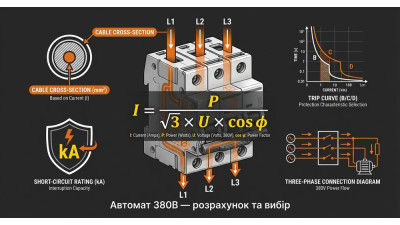
Breaker Calculation for Three-Phase Network (380V)
For private homes with three-phase supply, the rules are similar, but the physics is slightly different. With the same cable cross-section, the power that can be transmitted through 380V is √3 (1.73) times greater due to load distribution across three conductors.
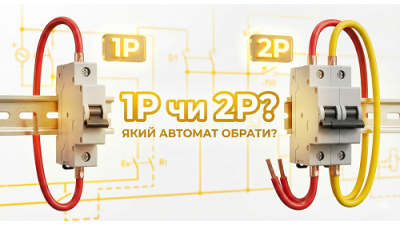
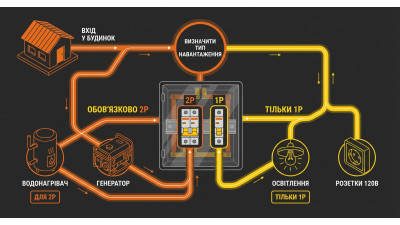
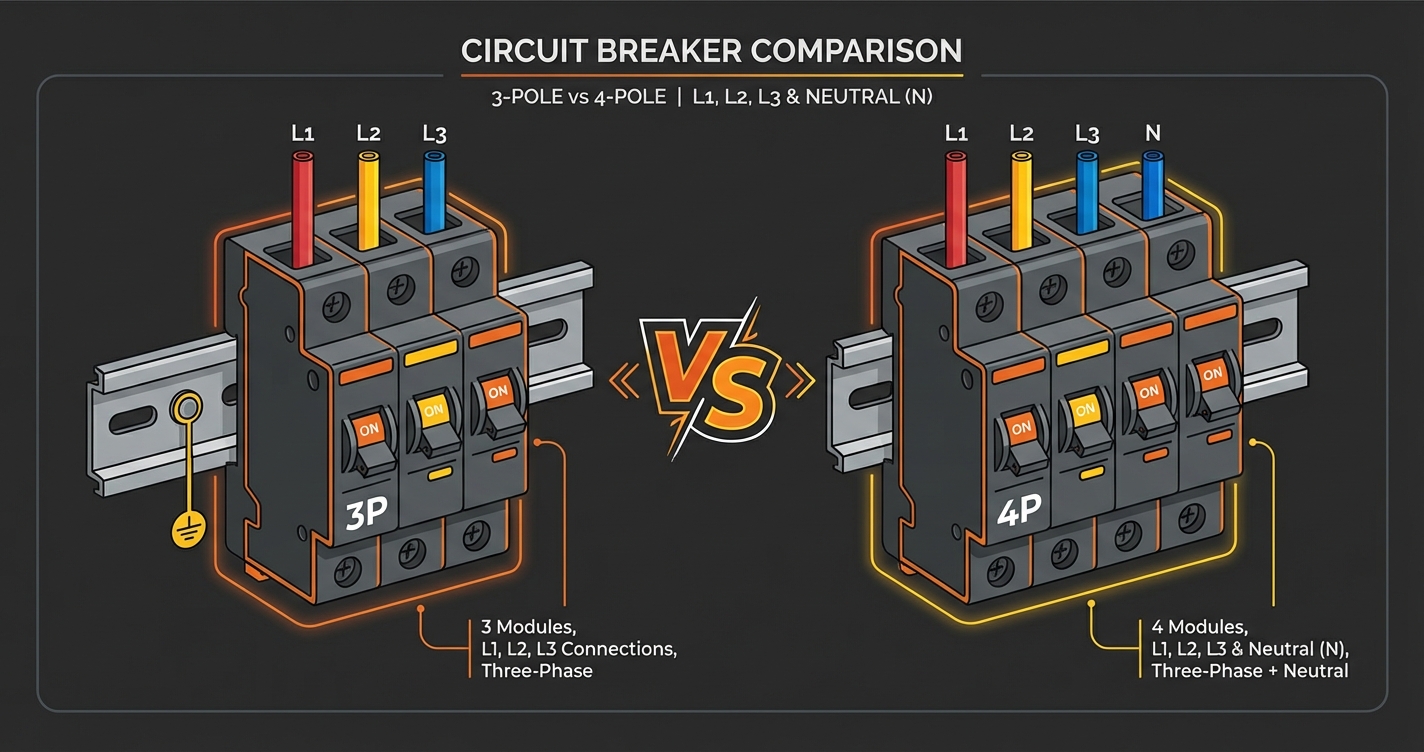
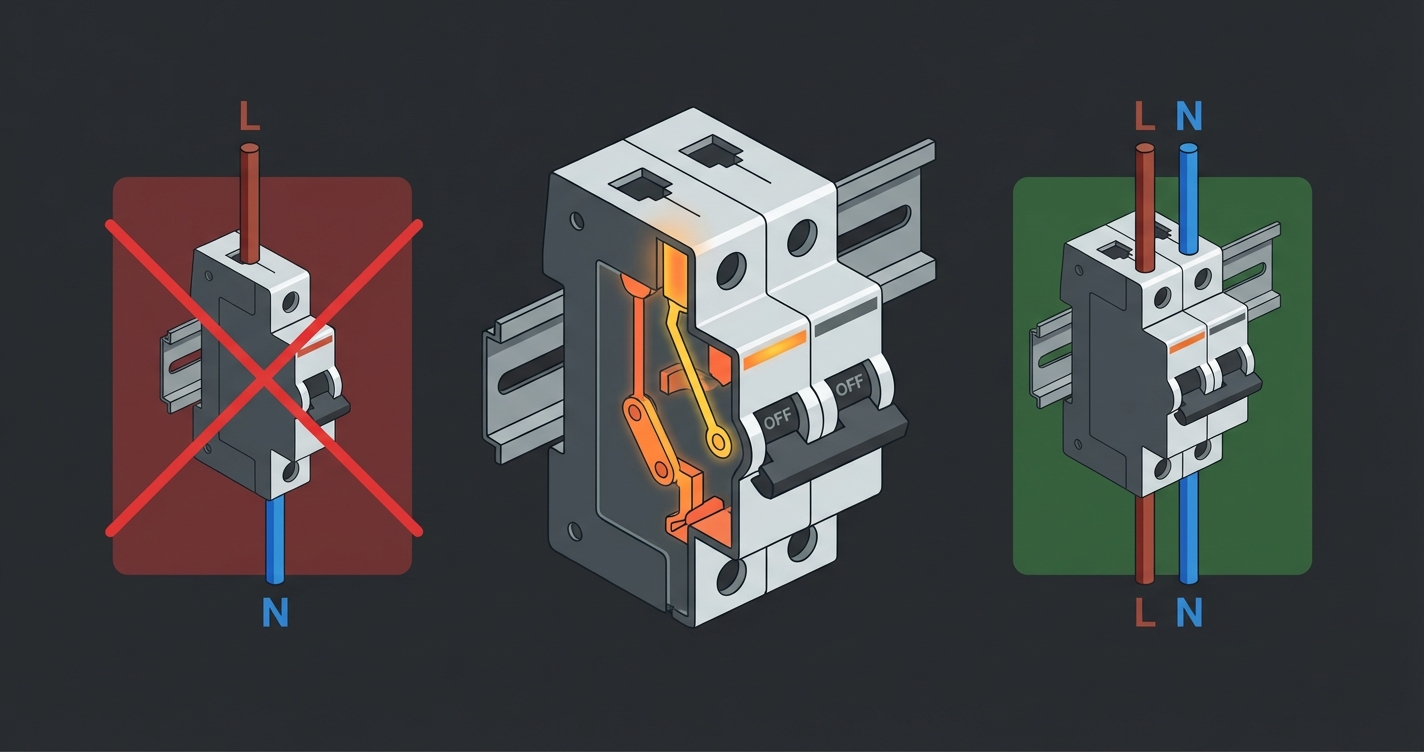
It's important not only to select the rating, but also to know how to choose the number of poles for a circuit breaker to properly disconnect phases.
Here are the basic relationships for copper cable in a 380V network:
Breaker Selection Table for 380V (Copper)
| Size (mm²) | Max. Current (A) | Power (kW) | Recommended Breaker (3P/4P) |
|---|---|---|---|
| 1.5 | 15 | ~ 9.8 | 10A / 16A |
| 2.5 | 25 | ~ 16.5 | 16A / 20A |
| 4.0 | 35 | ~ 23.0 | 25A |
| 6.0 | 45 | ~ 29.5 | 32A |
| 10.0 | 60 | ~ 39.5 | 40A / 50A |
For precise engineering calculations, I recommend reviewing our guide on breaker rating calculation for 380V networks.
125% Rule for Continuous Loads:
If equipment operates continuously (over 3 hours), the breaker rating must exceed the operating current by 25%.

Warning! Working with electrical equipment is life-threatening!
All work in the electrical panel must be performed only by qualified electricians with the power disconnected. Before starting work, be sure to de-energize the line and verify the absence of voltage with a measuring device.
Typical Cable Sizes and Breakers for Household Appliances
Customers often come to UEC not knowing kilowatts, but knowing exactly what they want to connect. I've prepared a simple list of typical solutions. These are the combinations we use on sites in 90% of cases.
- Lighting (LED, chandeliers): 1.5 mm² cable → 10A breaker (or 6A for LED circuits).
- Outlets (TV, vacuum, chargers): 2.5 mm² cable → 16A breaker.
- Power appliances (Oven, Cooktop): 4-6 mm² cable → 25A–32A breaker (always check the appliance datasheet!).
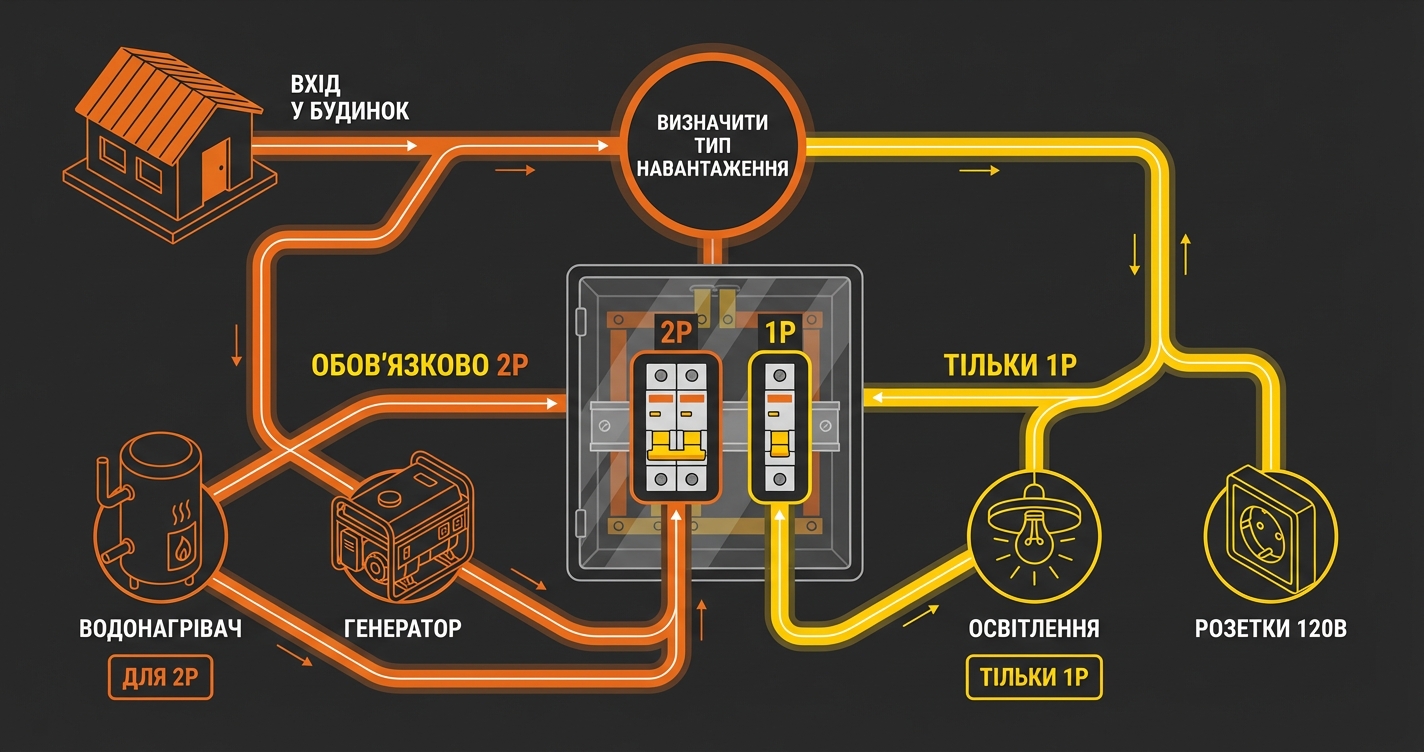
- Wet areas (Water heater / Washing machine): Dedicated 2.5 mm² line → 16A. Must be protected by RCD (residual current device)!
For specific tasks, it's better to dive deeper into modular circuit breakers for apartments and houses to account for installation nuances.
Power Calculation Example (Action Algorithm)
To avoid mistakes, use my proven algorithm. Math first, then purchase.
- Sum up the power (P): Add up watts of all appliances on the line (e.g., kettle 2000W + microwave 800W = 2800W).
- Determine the current (I): Divide power by voltage (220V). 2800 / 220 = 12.7 Amps. For this step, we have a detailed guide: how to calculate breaker by power and current.
- Select the cable: Look at the table above. For 12.7A, 1.5 mm² is suitable (holds 19A), but for outlets, it's better to take 2.5 mm² with margin.
- Select the breaker: The rating should be the nearest HIGHER value to the calculated current (12.7A → 16A), but LOWER than the allowable cable current.
Why You Can't Oversize the Breaker?
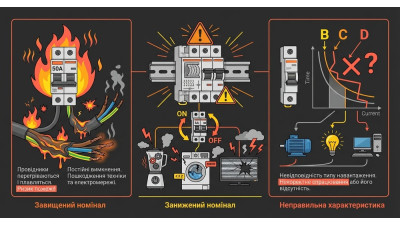
This is the most common and most dangerous mistake. "I'll put 32A on the outlet so it doesn't trip when I turn on welding" — that's a path to fire.
The physics is simple: if your outlet and wire are rated for 16A, and you install a 25A or 32A breaker, then at an overload of 22A, the wire will start heating and melting insulation, turning into a heater in the wall. The breaker will "stay silent" because for it, 22A is normal operating mode. Protection must be the weakest link in the chain to break first.
We wrote in detail about the consequences of such mistakes in our article on what happens if you choose the wrong breaker rating.
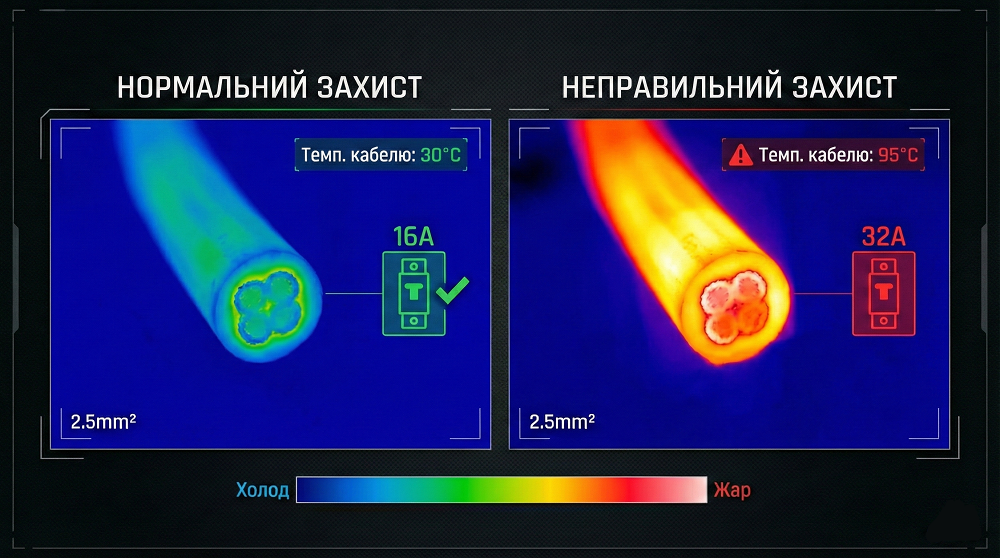
Correction Factors: What Affects the Choice?
"Standard tables are calculated for ideal conditions (ambient temperature +25°C). But in real life, everything is different."
— Expert advice
If you're laying cable in bundles (many wires in one chase or tray) or the line passes through a hot room (e.g., attic in summer where temperature reaches +40°C), the allowable cable current drops.
- Temperature: As temperature rises, conductivity decreases.
- Installation: Bundled wires heat each other.
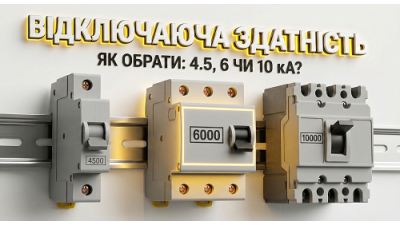
In such cases, I apply a reduction coefficient of 0.7-0.8. That means if the table says 27A, in a bundle this cable will safely carry only about 19-20A. At industrial scale, this is critical, so it's worth knowing what breaking capacity affects, as this is also part of comprehensive safety.
Manufacturer Overview: Who to Trust with Safety?
As a UEC representative, I work with various equipment and see its "internals". The market divides into two main categories, and your choice should depend on budget and object responsibility.
Premium (High Reliability)
Brands: Schneider Electric, ABB, Hager, GEWISS
This is the choice for those who do it "once and for all". Here you get honest contacts, precise thermal releases, and guaranteed specification compliance. If budget allows — take them.
Optimal/Budget
Brands: Eaton (Moeller), UEC
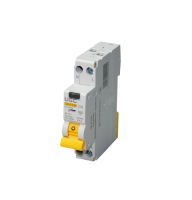
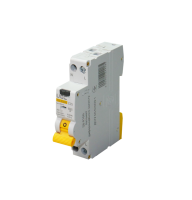
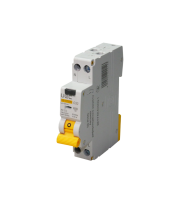
Our UEC brand equipment is developed with understanding of local realities. These are "workhorses" that pass strict quality control but cost less than promoted European brands. We at UEC guarantee that the characteristic on the housing matches reality.
Budget (With Caution)
Suitable for temporary panels or non-critical loads, but their service life is lower.
Before purchasing, it's useful to understand the nuances, for example, how B, C, and D curve breakers differ, because the brand is only half the story.
Frequently Asked Questions (FAQ)
Here are answers to questions I receive almost daily in UEC support chat. Understanding them often saves you from having to redo repairs.
❓ Can I install a 25A breaker on regular outlets?
Absolutely not, if wiring is done with 2.5 mm² wire. A standard outlet is rated for maximum 16A. A 25A breaker simply won't protect either the outlet mechanism or the cable from overheating.
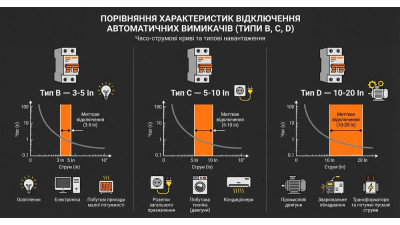
❓ What's the difference between B, C, and D curves?
This is sensitivity to inrush currents. B — most sensitive, ideal for old networks and lighting. C — universal standard for residential (vacuum cleaner, refrigerator startups). D — for powerful motors, rarely used at home. More details here: time-current characteristic of breakers: how to choose (B, C, D).
❓ Should I choose based on copper or aluminum?
According to 2024 electrical code, wiring in new residential buildings must be copper only. Aluminum is only allowed for large cross-section service entrances (from 16 mm²). Aluminum has higher resistance and requires cable 2 "steps" thicker for the same current.
Conclusion: Safety Reminder
In summary, your home's safety rests on three principles. First, calculate the load first, then buy cable and breaker. Second, remember the axiom: the breaker protects the line (wire in the wall), not your appliances. Third, when in doubt — always choose a lower breaker rating or larger cable cross-section. Better to have the breaker trip one extra time than fail to trip once during a fire.
To be sure about the type of protection, I also recommend reading about what types of circuit breakers exist.
Checklist before choosing a breaker:
Click on an item to mark it as completed: