
Article Contents
Circuit Breaker Sizing by Power and Current: Online Calculator, Tables, and Complete Expert Guide


The Importance of the Right Choice
An incorrectly selected circuit breaker is a direct path to fire due to cable overheating or damage to expensive equipment caused by overloads. Conversely, the right choice is the foundation of your home's safety, preventing emergencies.
This guide provides tools for a quick and correct decision: an online calculator for instant sizing and convenient tables for data verification.
Online Calculator for Circuit Breaker Sizing by Power and Current
This tool allows for a quick calculation of the breaker based on power, considering the load and network type. It will help you understand how to calculate the amperage for your line and suggest a recommended rating according to current standards. For a single-phase network, simply enter the total power of the appliances, and the calculator will determine the current. For a three-phase network, you need to add the power factor (cos φ), which is usually 0.9-0.95 for household needs.
In my practice, accurate calculation is key to avoiding mistakes. At one facility using GEWISS equipment, preliminary load analysis helped detect potential cable overload at the design stage, saving against significant future risks. Remember, the calculator result is a recommendation. The final choice must always account for the cross-section of the installed cable, as the breaker primarily protects the cable.
Circuit Breaker Selection Table by Power and Current (For Quick Check)
For users who prefer visual data search, the table below allows you to quickly check the circuit breaker rating based on power and current. It covers typical values for 220V and 380V household networks.
These data comply with standards used in panel design, for example, using modular circuit breakers. For a power of 5 kW in a single-phase network, the calculated current is nearly 23 A, so choosing a 25 A breaker would be justified, provided the cable is suitable.
| Total Power (kW) | Calculated Current 220V (A) | Recommended Breaker 220V (A) | Calculated Current 380V (A) | Recommended Breaker 380V (A) |
|---|---|---|---|---|
| 1 | 4.55 | 6 | 1.52 | 6 |
| 2 | 9.09 | 10 | 3.04 | 6 |
| 3 | 13.64 | 16 | 4.56 | 6 |
| 4 | 18.18 | 20 | 6.08 | 10 |
| 5 | 22.73 | 25 | 7.60 | 10 |
| 6 | 27.27 | 32 | 9.12 | 16 |
| 7 | 31.82 | 32 | 10.64 | 16 |
| 8 | 36.36 | 40 | 12.16 | 16 |
| 9 | 40.91 | 40 | 13.68 | 20 |
| 10 | 45.45 | 50 | 15.20 | 20 |
| 11 | 50.00 | 50 | 16.72 | 25 |
| 12 | 54.55 | 63 | 18.24 | 25 |
| 13 | 59.09 | 63 | 19.76 | 25 |
| 14 | 63.64 | 63 | 21.28 | 32 |
| 15 | 68.18 | 80 | 22.80 | 32 |
Critically Important Connection: The Circuit Breaker Protects the Cable, Not the Appliance
It is a common mistake to believe that a circuit breaker protects electrical appliances. Its main function is to protect the cable line from overheating and ignition. I have seen cases where cable insulation melted due to an oversized breaker rating, as the actual current exceeded the permissible norms for the conductor. That is why, when working with high-quality systems such as GEWISS products, we always start by checking the correspondence of the breaker to the cable cross-section.
The Golden Rule of an Electrician: Breaker Rating ≤ Maximum Current for the Cable
The circuit breaker rating must be less than or equal to the maximum current the cable can withstand for a long time without damage. This guarantees that the protection triggers before the insulation begins to overheat. According to research by ERP Power, this approach is fundamental for preventing fires caused by electrical grid faults.
Table of Correspondence Between Copper Cable Cross-Section and Breaker Rating
| Copper Conductor Cross-Section (mm²) | Maximum Permissible Current (A) | Maximum Breaker Rating (A) |
|---|---|---|
| 1.5 | 19 | 16 |
| 2.5 | 27 | 25 |
| 4 | 38 | 32 |
| 6 | 46 | 40 |
| 10 | 70 | 63 |
Data is provided in accordance with Table 1.3.4 of the Electrical Installation Rules (PUE). For aluminum conductors, the values will be different.

Warning! Working with electrical equipment is life-threatening!
All work within the electrical panel must be performed solely by qualified electricians with the power switched off. Before starting work, be sure to de-energize the line and verify the absence of voltage using a measuring instrument.
How to Calculate Circuit Breaker Rating Yourself: Step-by-Step Guide with Formulas
Calculating the circuit breaker rating yourself requires a clear sequence of actions. I apply these steps in all projects, particularly when working with UEC modular circuit breakers, where calculation accuracy is key to the durability and reliability of the entire system.
Step 1: Determine the Total Load Power
Sum up the rated powers of all electrical appliances that can operate on the same line simultaneously. For a realistic assessment, it is worth applying a demand (simultaneity) factor, which is 0.7–0.8 for residential premises. For example, for a kitchen with an electric stove (5 kW) and a kettle (2 kW), the total power is 7 kW, but the actual simultaneous load will rarely exceed 5 kW.
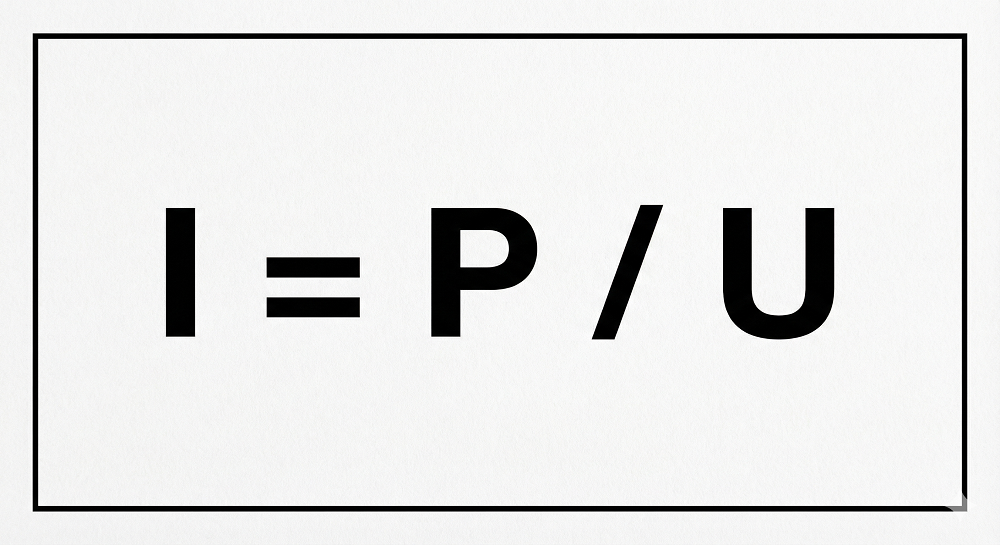
Step 2: Calculate the Current for a Single-Phase Network (220V)
Use the simple formula: I = P / U.
For example, for a kettle with a power of 2200 W, the calculated current will be:
2200 W / 220 V = 10 A.
The specialized publication Electrical Technology, in its recommendations for 2025, emphasizes the importance of adding a 20-25% margin to prevent false tripping and ensure safety.
Step 3: Calculate the Current for a Three-Phase Network (380V)
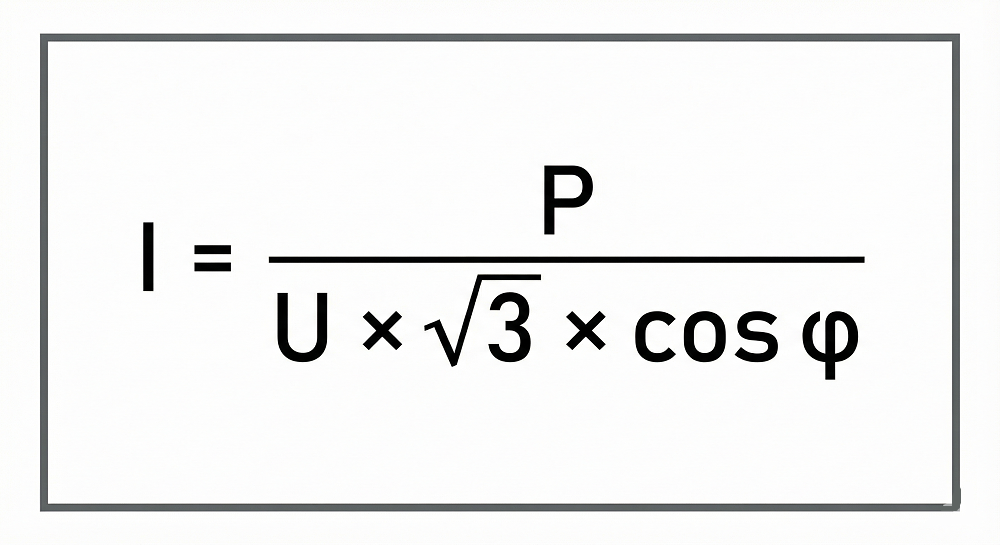
Here the formula is more complex: I = P / (U × √3 × cos φ).
The power factor cos φ reflects the share of active power and is important for motor loads. For example, for a 5 kW three-phase motor with cos φ = 0.9, the current will be:
5000 / (380 × 1.732 × 0.9) ≈ 8.4 A.
This calculation is critically important at industrial facilities.
Step 4: Select a Breaker from the Standard Range
After calculating the current, choose a circuit breaker with the nearest lower or equal standard rating. The standard range of ratings is: 6, 10, 16, 25, 32, 40 A, and so on. This approach guarantees that the cable will be reliably protected.
Key Circuit Breaker Characteristics: What Else Influences the Choice?
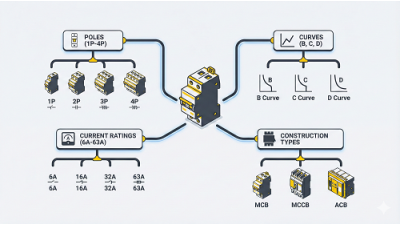
Choosing the right circuit breaker is not limited to just the current rating. The time-current characteristic, number of poles, and type of protective device are equally important.
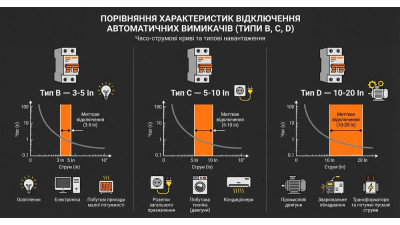
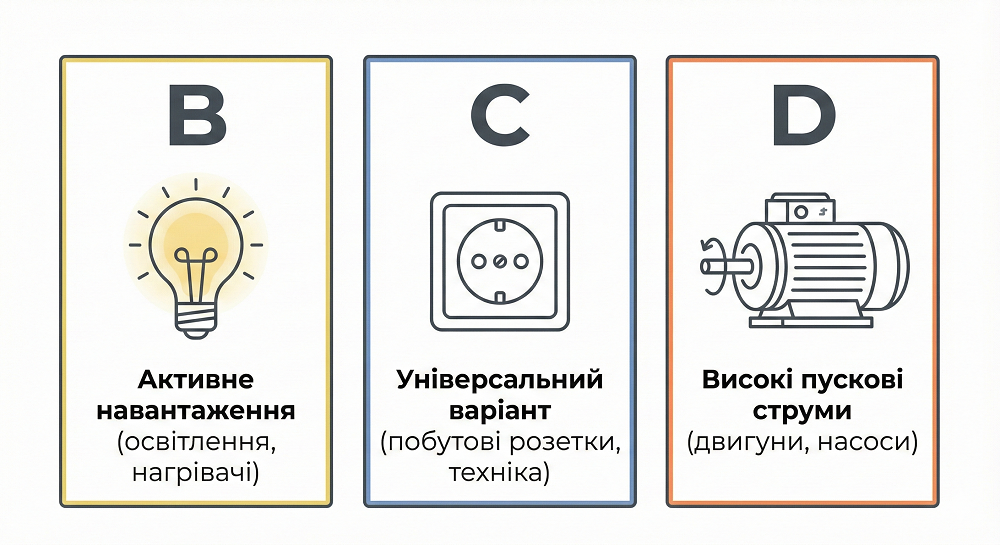
Time-Current Characteristic (B, C, D): Do Not Ignore This Parameter!
This characteristic determines how sensitive the breaker will be to short-term current surges. As highlighted in ERP Power research, choosing the correct characteristic avoids unnecessary tripping when starting equipment and ensures reliable protection.
Type B
For lines with primarily active loads without significant inrush currents (lighting, electric heaters).
Type C
Universal option for household outlets and mixed loads (computer, refrigerator, washing machine). This is the most common type in residential buildings.
Type D
For equipment with high inrush currents (electric motors, pumps, welding machines).
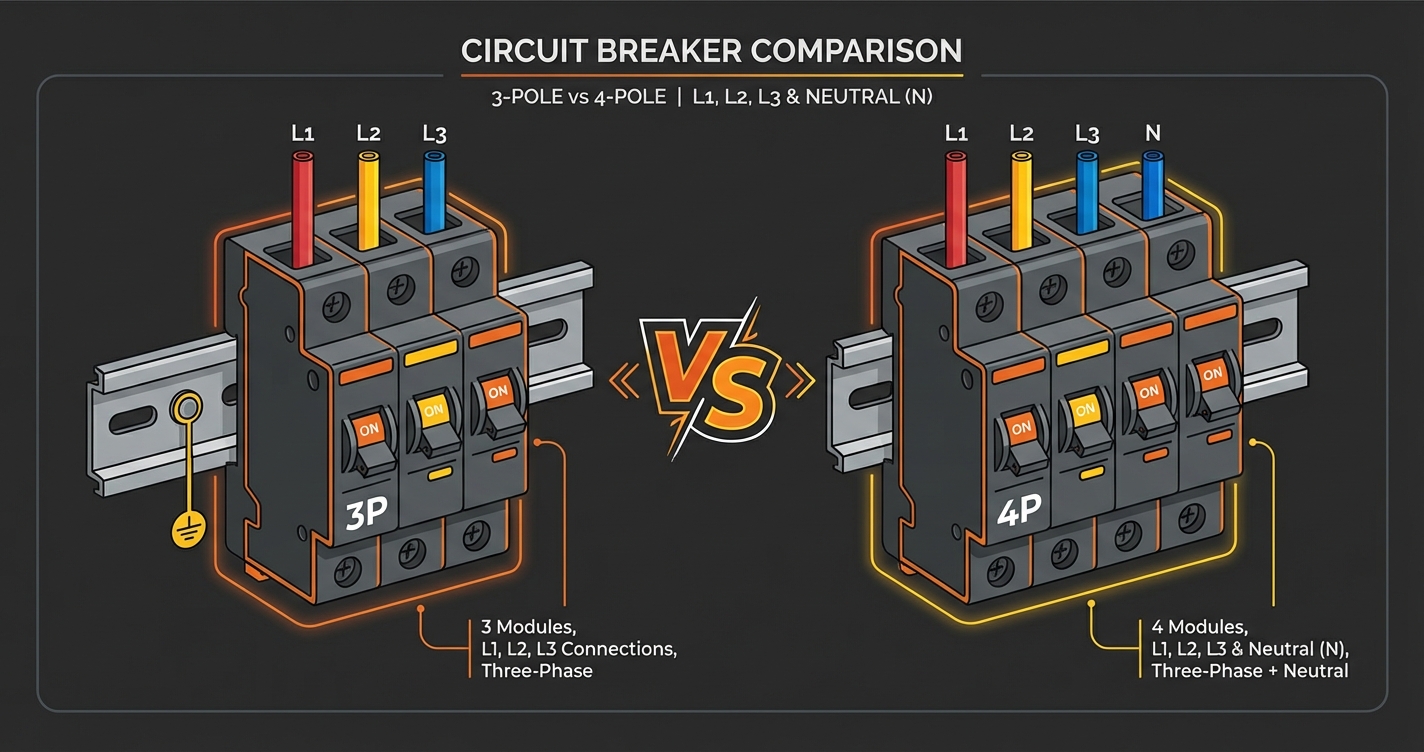
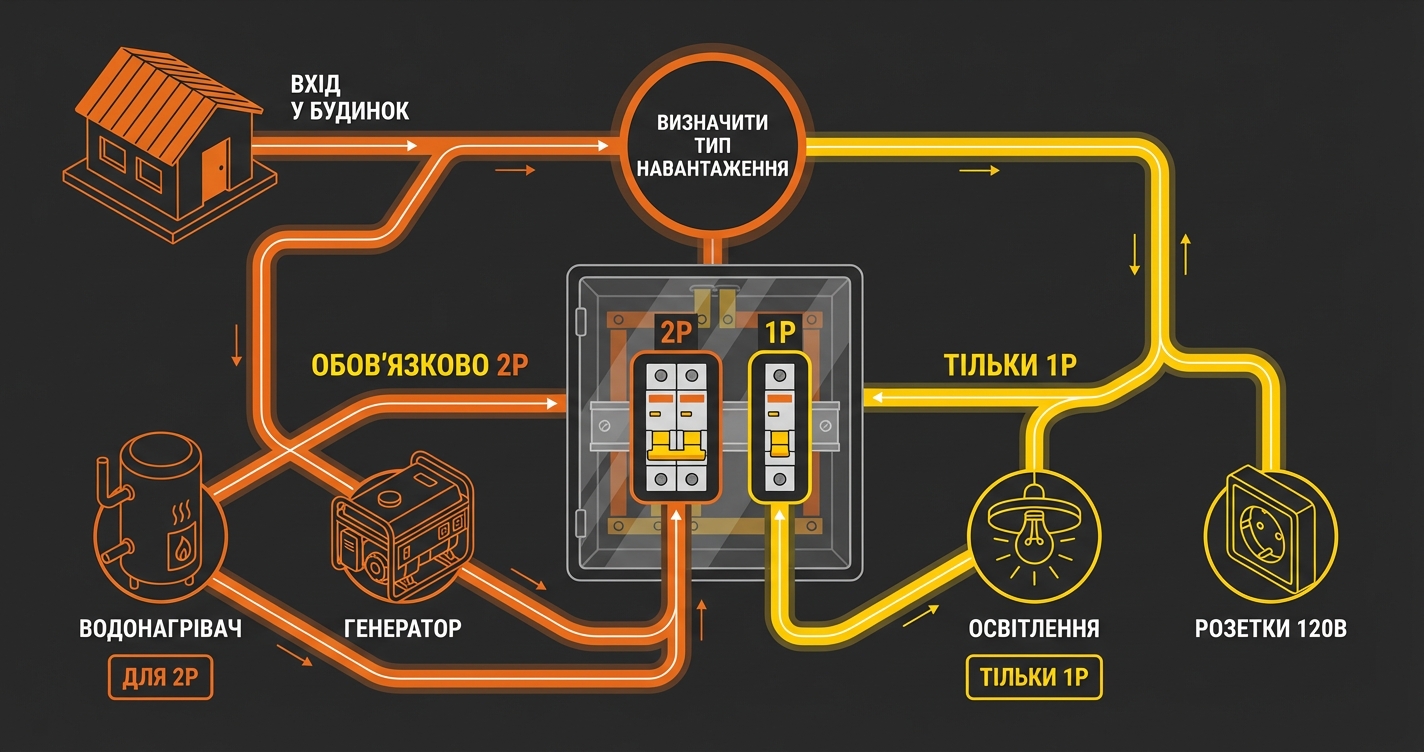
Number of Poles: 1, 2, 3, or 4?
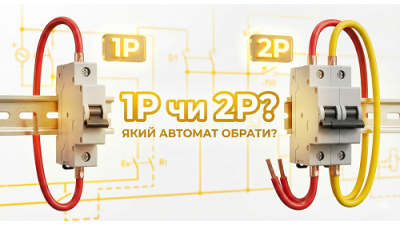
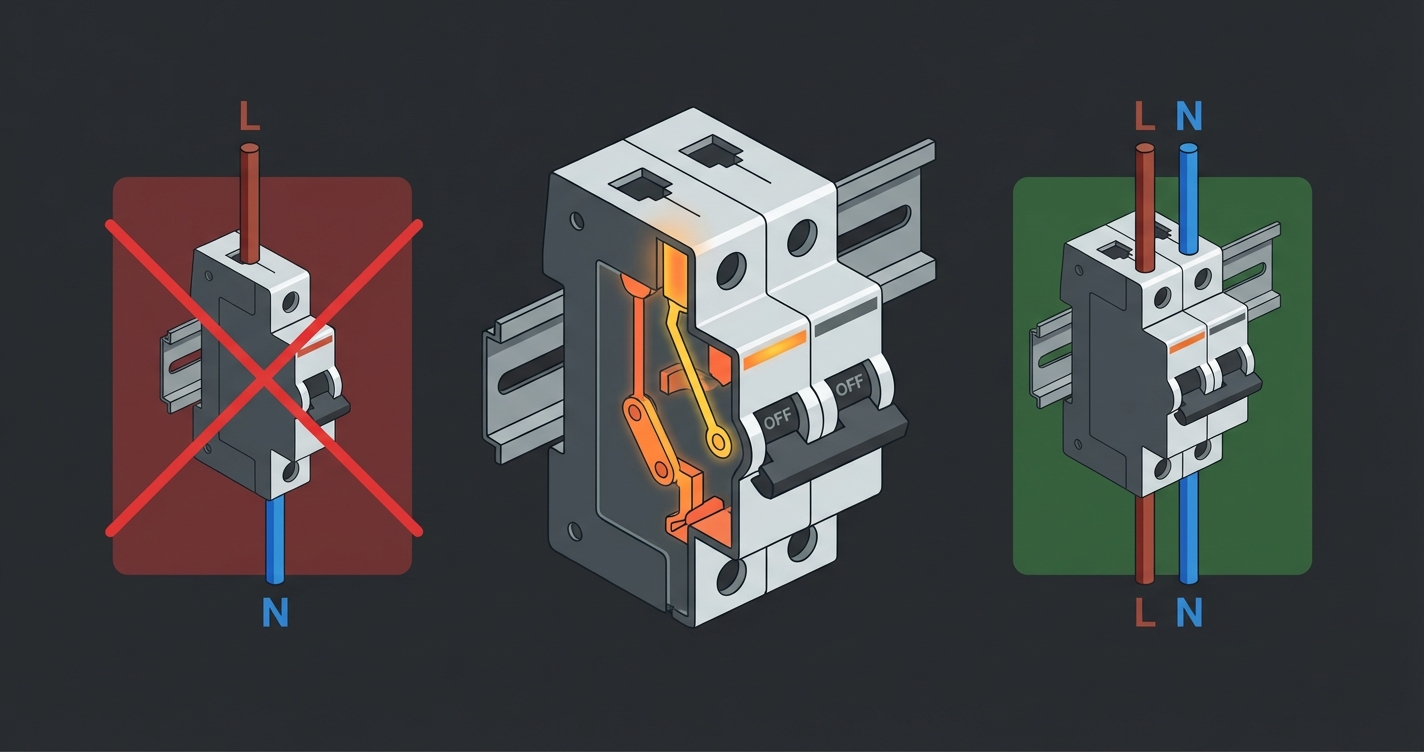
- 1P (single-pole): breaks only the phase conductor. Used to protect individual groups in a single-phase network.
- 2P (double-pole): breaks phase and neutral simultaneously. I recommend installing this as an incoming breaker in an apartment or house for complete de-energization.
- 3P (three-pole): for protecting three-phase equipment without a neutral conductor (e.g., motors).
- 4P (four-pole): for full protection of a three-phase network with a neutral conductor.
Circuit Breaker, RCD, or RCBO? What is the Difference?
These are three different devices with different functions:
- Circuit Breaker (MCB): protects the cable from overload and short circuits.
- RCD (Residual Current Device): protects a person from electric shock in case of leakage to earth. It has no overload protection and is always installed in pair with a circuit breaker.
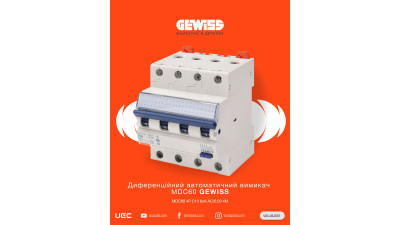
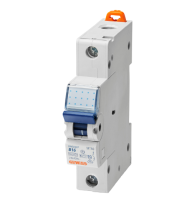
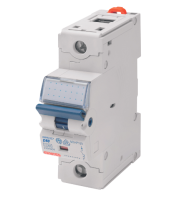
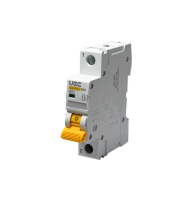
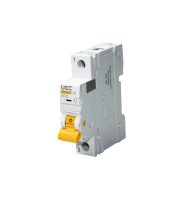
- RCBO: this is a combined device merging the functions of a circuit breaker and an RCD. It protects both the cable and the person. For example, modern RCBOs from GEWISS and UEC combine both functions in a single compact housing, which saves space in the distribution board.
FAQ: Frequently Asked Questions on Circuit Breaker Sizing
Which circuit breaker should be used for apartment outlets?
For outlet groups in a modern apartment, a 16 A circuit breaker with a C characteristic is usually used. This is sufficient for most household appliances. You can read more about the choice in the guide on how to choose a circuit breaker for home and apartment.
Which circuit breaker should be used for lighting?
For lighting lines, a 10 A breaker with a B characteristic is generally sufficient, since lighting fixtures create a stable load without large inrush currents.
Is it permissible to install a higher rated breaker "with a margin"?
Absolutely not. An oversized breaker will not trip during an overload that is dangerous for the cable. This can lead to wiring overheating and fire. As noted by experts at the Onesto EP Blog, the breaker rating should be 125% of the calculated load, but must not exceed the permissible current for the cable.
What happens if I install a circuit breaker with too low a rating?
You will encounter frequent nuisance tripping even during normal appliance operation. This is not only annoying but can also negatively affect sensitive electronics due to constant voltage fluctuations.
How to group loads by circuit breakers in the panel?
Proper grouping is the key to stability. I recommend dividing loads into separate lines: lighting (10 A), outlet groups by rooms (16 A), and for powerful consumers, such as an electric stove, boiler, or air conditioner, allocate separate lines with breakers of the appropriate rating (for example, 25 A or 32 A).
Conclusion: Safety Is Not an Area for Cost-Cutting
Correct calculation of the circuit breaker is the foundation of your electrical network's safety. Remember three key points:
"Remember, the cost of a qualified electrician's services is incomparably lower than the potential damage from a fire. Do not risk your safety and property."
— Lukianchuk Oleh, Electrical Engineer