
Article Contents
Where to Install a Double-Pole Breaker


Key takeaways
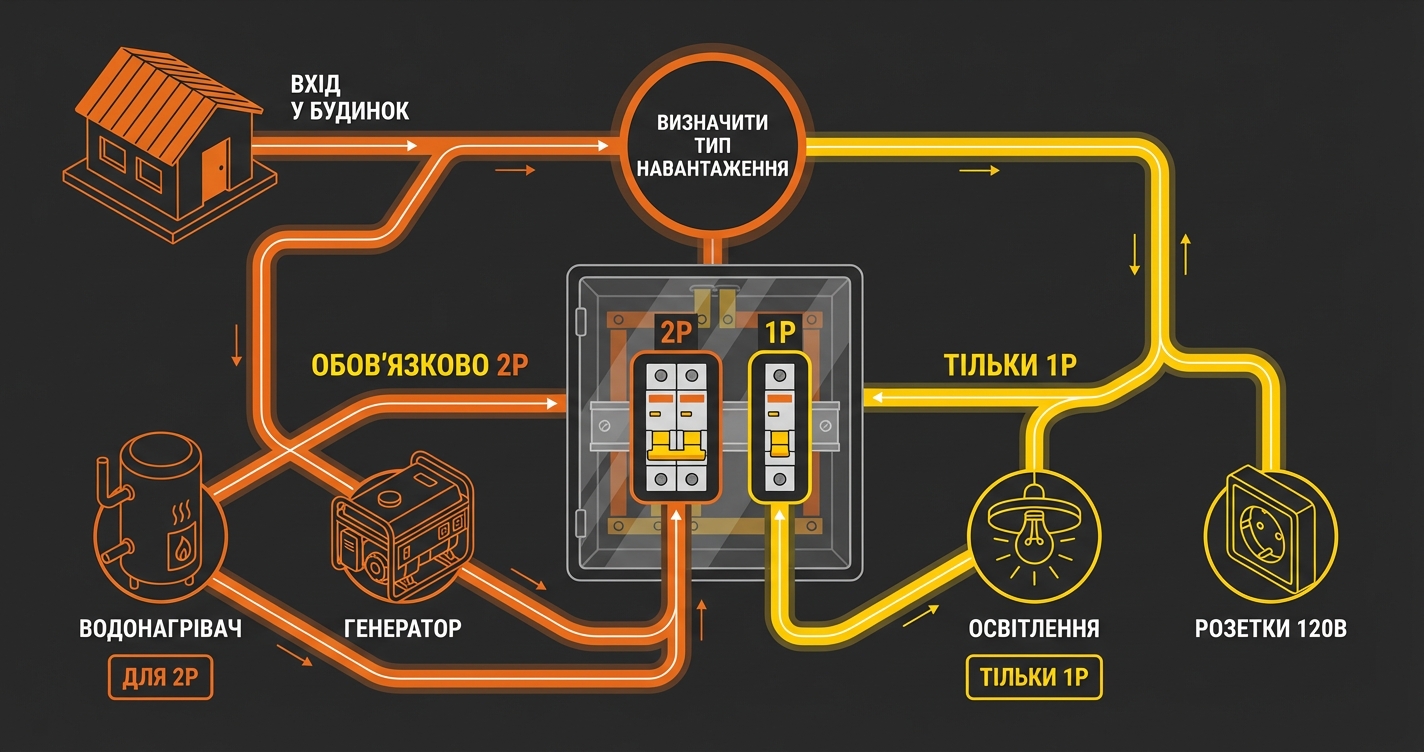
A double-pole circuit breaker (2P) is mandatory at the main panel input: it disconnects both phase and neutral in a single action. A single-pole (1P) is the standard for branch circuits (lighting, outlets) in dry areas.
The main rule: 2P at the input, 1P on branch circuits, 1P+N as a compromise where space is limited. Using two separate 1P breakers instead of one 2P is a serious violation of electrical codes.
Key point: a circuit breaker protects the cable, not the appliance. The rating must be selected strictly based on cable cross-section.
Hi, I'm Oleh Lukianchuk, Technical Training Engineer at UEC. With over 12 years of experience — from maintaining railway automation systems to implementing standards at UEC — I've become convinced that the key to real electrical safety lies not in the brand's price tag, but in the correct selection of pole configuration.
In this article, I'll explain where to install a double-pole breaker, when a single-pole is sufficient, and how to avoid common installation mistakes.

Warning! Working with electrical equipment is life-threatening!
All work in the electrical panel must be performed only by qualified electricians with the power disconnected. Before starting work, be sure to de-energize the line and verify the absence of voltage with a measuring device.
First 30 seconds: quick answer and selection rule
Quick answer: a double-pole circuit breaker (2P) is most commonly installed at the main input to the panel, allowing you to disconnect both phase and neutral in a single action for safe maintenance. Single-pole (1P) breakers are typically installed on branch circuits (lighting/outlets) when disconnecting only the phase is sufficient.
3-point selection rule:
- 2P (double-pole): Mandatory at the main input, for generator connections, or for high-power appliances (water heater, electric stove).
- 1P (single-pole): Standard for branch circuits (lighting, room outlets) in dry areas.
- 1P+N: A compact solution for complete neutral disconnection in tight spaces (e.g., for "wet zone" circuits).
For more details on PUE standards and European practices (IEC), see the "Standards and Sources" section.
Where and when is a double-pole breaker needed?
The main question is — where to install a double-pole circuit breaker? In my practice, it is the undisputed choice as the main breaker at the input to an apartment or house. This is especially true for single-phase networks, where the risk of a "burned-out neutral" in older housing can lead to dangerous voltage appearing on appliance casings. Using a 2P simplifies compliance with PUE standards and improves electrical safety in the panel, as the device is guaranteed to disconnect both phase and neutral.
A 2P is also appropriate for dedicated lines to high-power appliances such as a water heater or electric stove, as well as for backup power schemes.
- At the apartment/house input: Complete de-energization for safe maintenance and protection against neutral overvoltages.
- Water heater/electric stove line: Full isolation of a high-power consumer (240V) during repair without shutting off the entire apartment.
- Generator/UPS: Critically important for safe source switching and network neutral disconnection.
⚠ When you must involve an electrician: If your panel is in an older building, has a TN-C grounding system, aluminum wiring, signs of burned terminals, or you plan to connect a generator via an ATS.
What are 1P, 1P+N, and 2P breakers — in simple terms
To understand the selection logic, let's look at the physics involved. You can read more about the basics in our article how to choose a circuit breaker for a house or apartment.
How a circuit breaker works (brief explanation)
A circuit breaker has two types of protection:
- Thermal release: a bimetallic strip that responds to overload (prolonged high current).
- Electromagnetic release: a solenoid that instantly disconnects the line during a short circuit.
The pole configuration determines how many conductors pass through these protection mechanisms.
What actually gets disconnected: phase (L) and neutral (N)
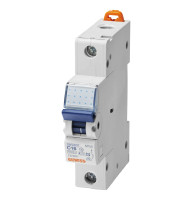
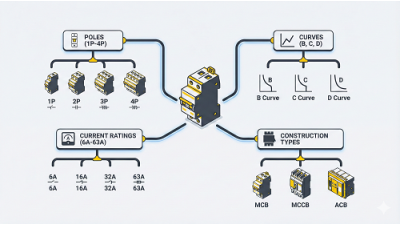
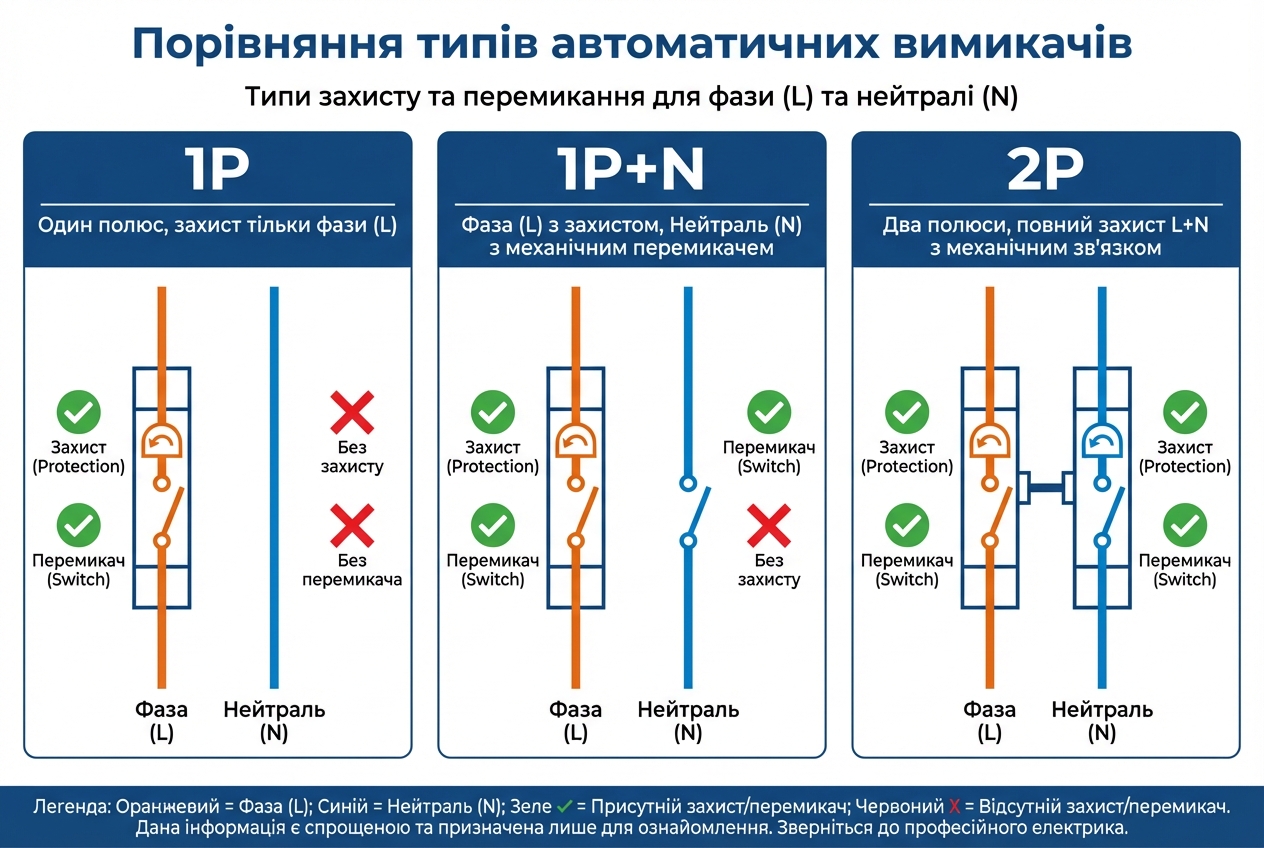
- 1P: Disconnects only the phase (L). The neutral passes the breaker to the bus bar.
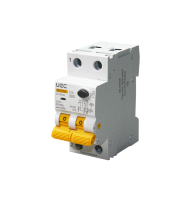
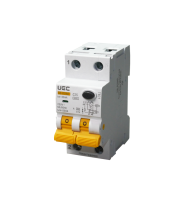
- 1P+N: The phase (L) is protected by thermal and electromagnetic releases. The neutral (N) is switched mechanically, "following" the phase, but has no protection of its own.
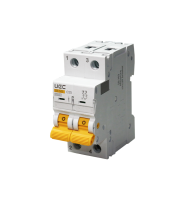
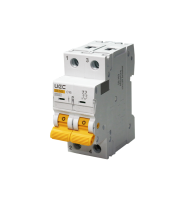
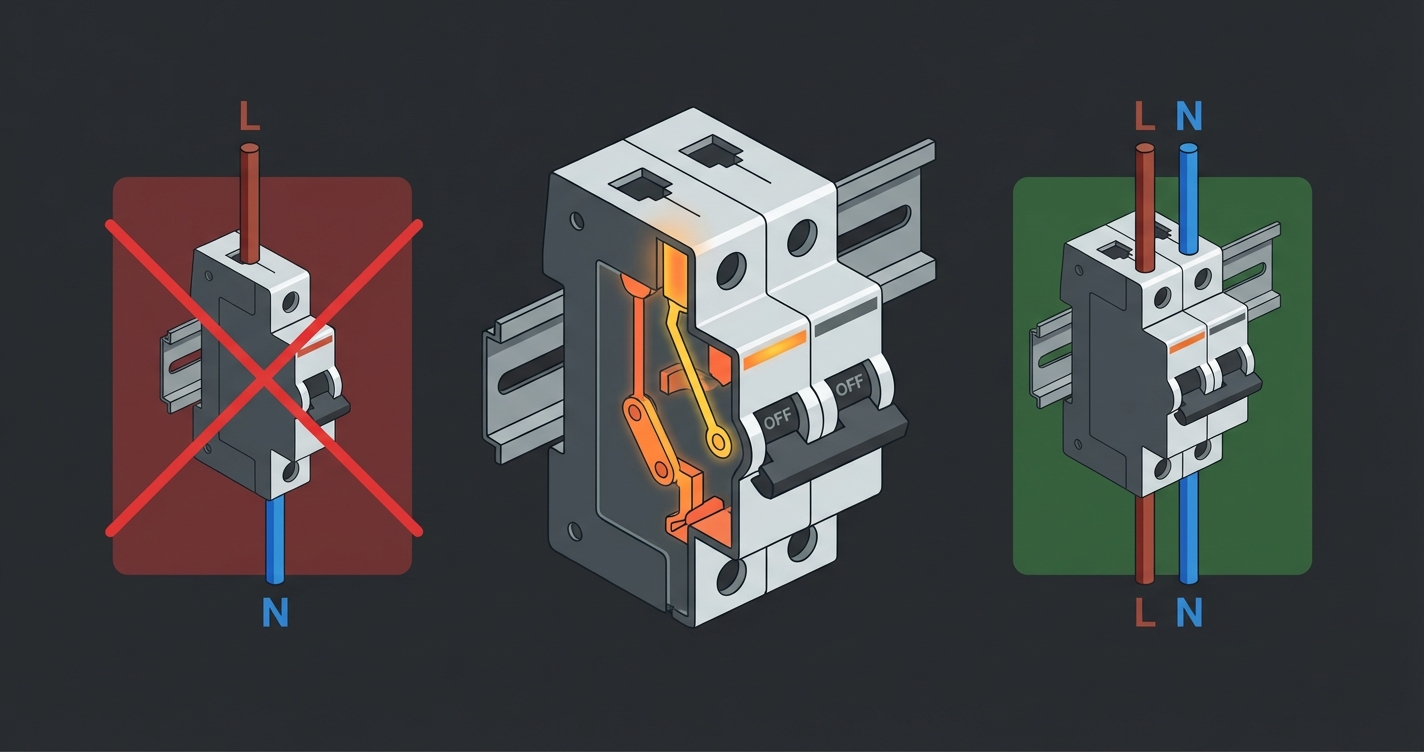
- 2P: These are two full-fledged poles in one housing, mechanically linked. Disconnection occurs on L+N simultaneously, and both poles have arc-extinguishing chambers.
Difference between 1P, 1P+N, and 2P breakers: comparison table
The choice depends on what circuit disconnection is needed: phase only or phase and neutral. Below is the key difference between 1P, 1P+N (single-pole with neutral), and 2P (double-pole): module width, applications, and advantages, so you can quickly decide what to choose.
Circuit breaker characteristics comparison
| Parameter | 1P | 1P+N | 2P (double-pole) |
|---|---|---|---|
| Circuit disconnection | L only | L (protection) + N (switching) | L+N (full protection) |
| Module count | 1 (18 mm) | 1 or 2 (depends on series) | 2 (36 mm) |
| N protection | No | No (switching only) | Yes (releases on both) |
| Maintenance/de-energization | Partial | Complete | Complete and reliable |
| Typical applications | Lighting/outlet circuits | Limited panel space | Main input, generators, high-power appliances |
| Cost/panel space | Low, compact | Medium | Higher, takes 2 slots |
"In different brands such as GEWISS or UEC, the 1P+N configuration may vary (for example, N is always on the right or left). Always check the datasheet and the diagram on the device body."
— Expert note
Main installation location for 2P: apartment/house input
Why this is about safety, not "being overly cautious"
Installing a 2P at the input is a matter of common sense and safety. This breaker allows you to de-energize all conductors entering the apartment with a single action. This 100% eliminates the situation where an electrician is working in the panel while dangerous voltage appears on the "neutral" due to mixed-up wires in the floor panel or a utility company error. For more on selecting a main breaker, read our article calculating the breaker rating for a 220V network.
What happens during neutral problems (N break) and how 2P helps
Analysis of accident cases (for example, data from sincede.com [2]) shows that when the neutral breaks (especially in a TN-C-S system before the splitting point), phase imbalance voltage (up to 380V with a three-phase building supply) can appear on the neutral conductor. If a 1P breaker is installed, it will disconnect the phase, but equipment will remain connected to a lethally dangerous "neutral." A 2P breaker physically isolates this threat from your apartment wiring.
Where to install the main breaker relative to the RCD/RCBO (selectivity logic)
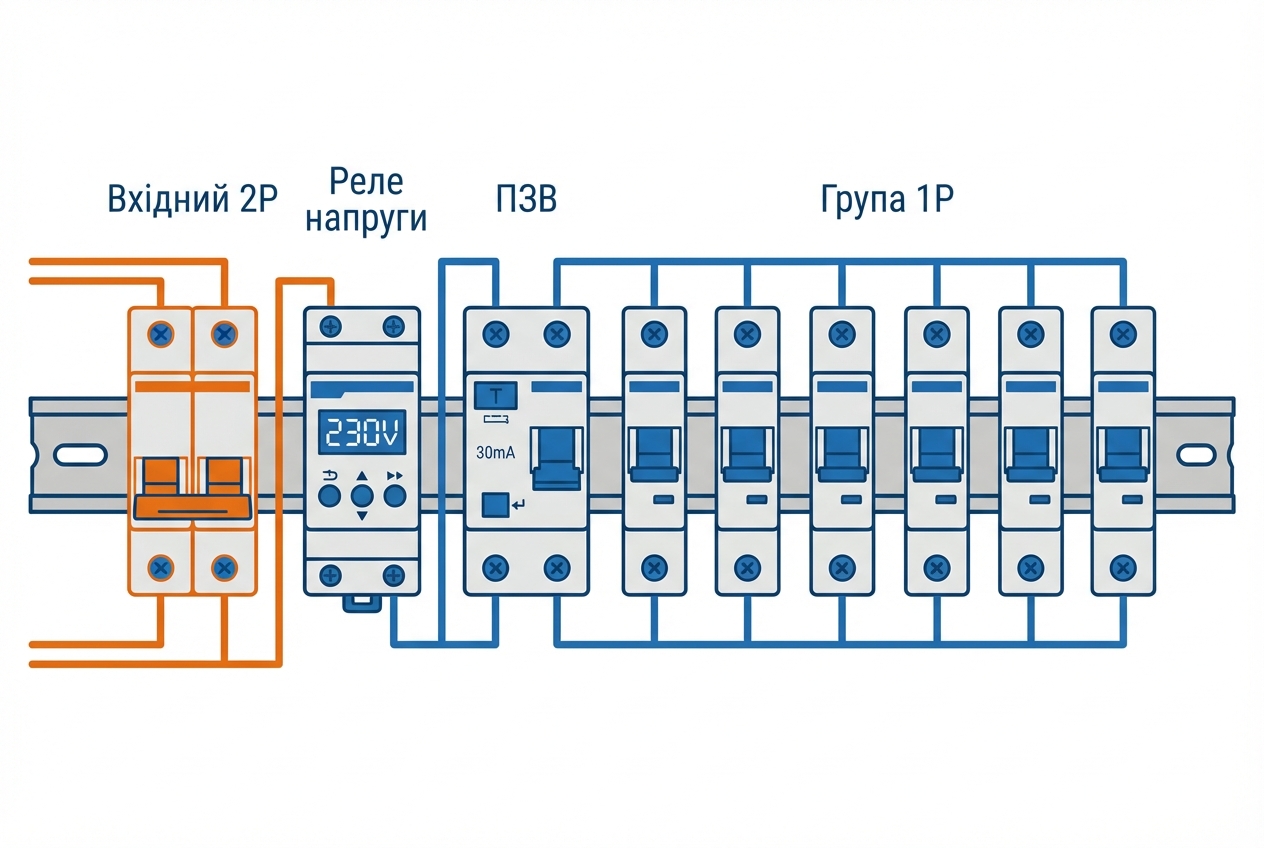
The most rational scheme that we at UEC recommend to our partners:
- Main 2P circuit breaker (protects the input cable and the entire panel).
- Voltage relay (protects against voltage surges).
- RCD or RCBOs for groups.
- Group 1P circuit breakers (distribution by rooms/consumers).
Also check out whether the neutral should be disconnected by a breaker to avoid design errors.
Other cases where 2P is appropriate (not just the main input)
Generator, inverter, UPS, backup power
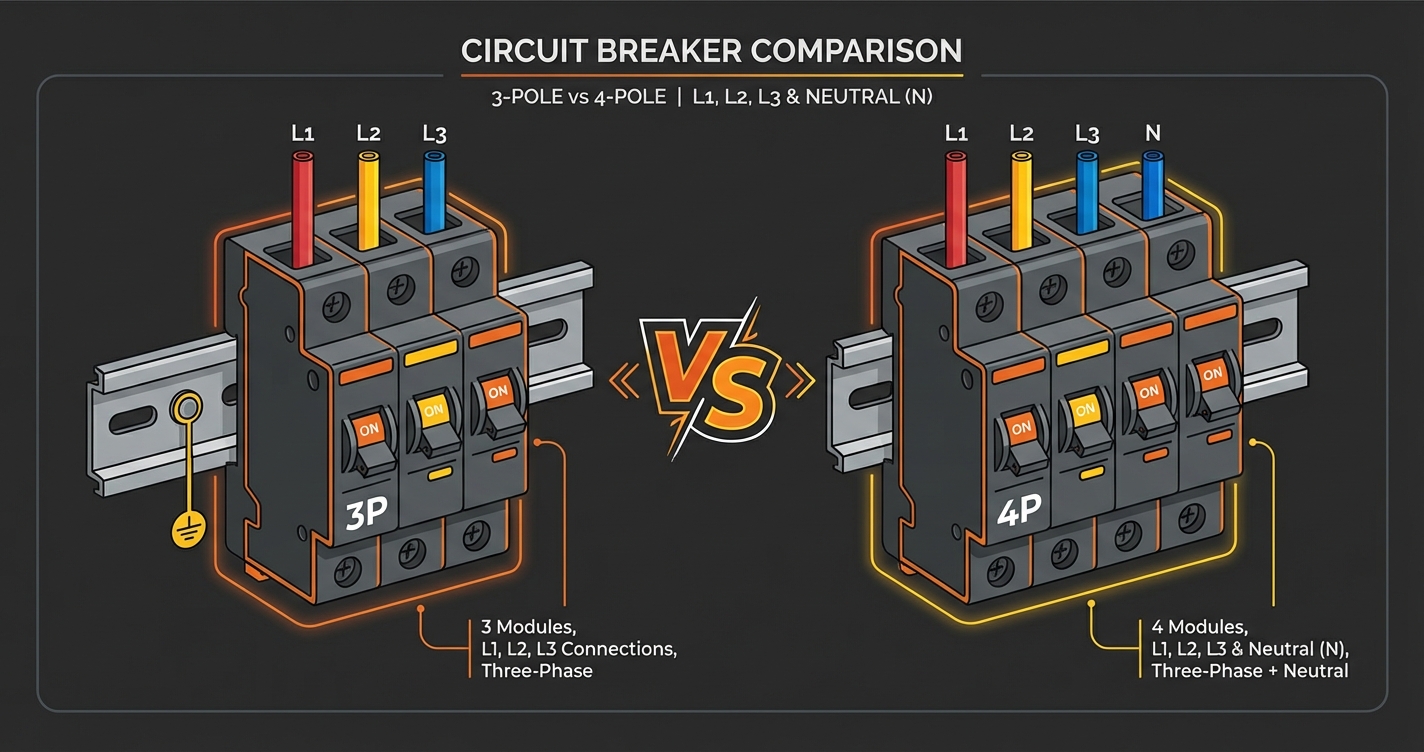
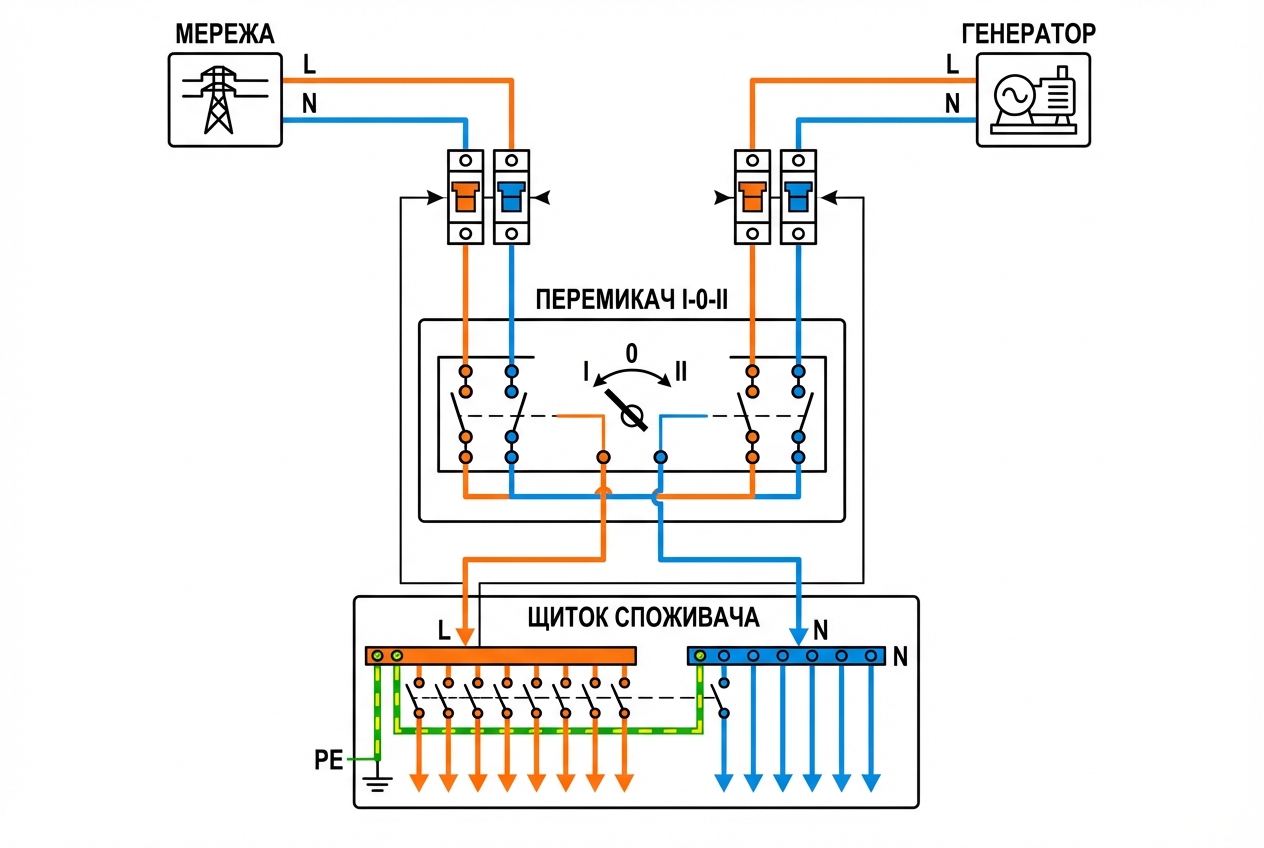
This is a critical point. If you are connecting a generator to a house, using a transfer switch (I-0-II) with L+N disconnection (2 poles or 4 for three-phase) is mandatory. Why? Because when operating from a generator, the grounding system changes (often switching to IT or TT mode), and combining the generator neutral with the utility neutral can damage the generator or electrocute utility workers repairing the line outside. Be sure to explore the topic of when a three-pole and four-pole breaker is needed if you have a three-phase generator.
⚠ Warning! DIY backup connection schemes ("plug-to-plug") are a direct path to fire. Always use certified transfer switches.
Dedicated lines for high-power single-phase consumers
For appliances such as a water heater, electric stove, or air conditioner, a dedicated line with a 2P breaker provides convenience during maintenance. If the water heater element "breaks down" to the casing, the RCD will trip. To diagnose the fault, you'll need to completely disconnect the line. A 2P breaker lets you do this without touching wires with a screwdriver.
Recommendations for high-power appliance protection
| Appliance | Line type | Recommended approach | Note |
|---|---|---|---|
| Water heater | Dedicated | 2P + RCD | Dedicated line, 2.5 mm² cable, RCD 30 mA |
| Electric stove | Dedicated | 2P or RCBO | Cable 4-6 mm², RCD mandatory |
| Washing machine | Dedicated | 1P+N or 2P | In wet zones, RCD 10 mA |
How to correctly connect a double-pole breaker in a panel (step by step)
Where to connect the supply: top/bottom, input/output (and why it matters)
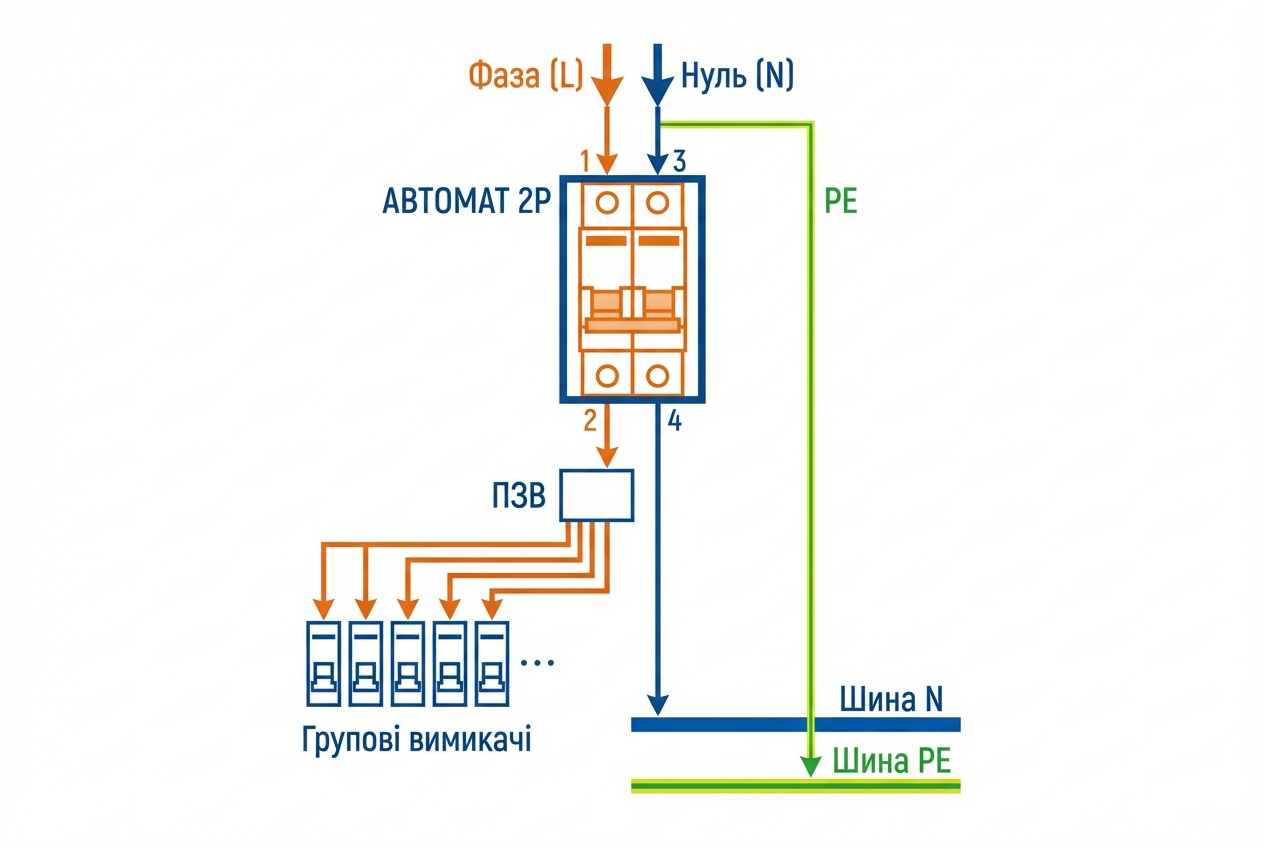
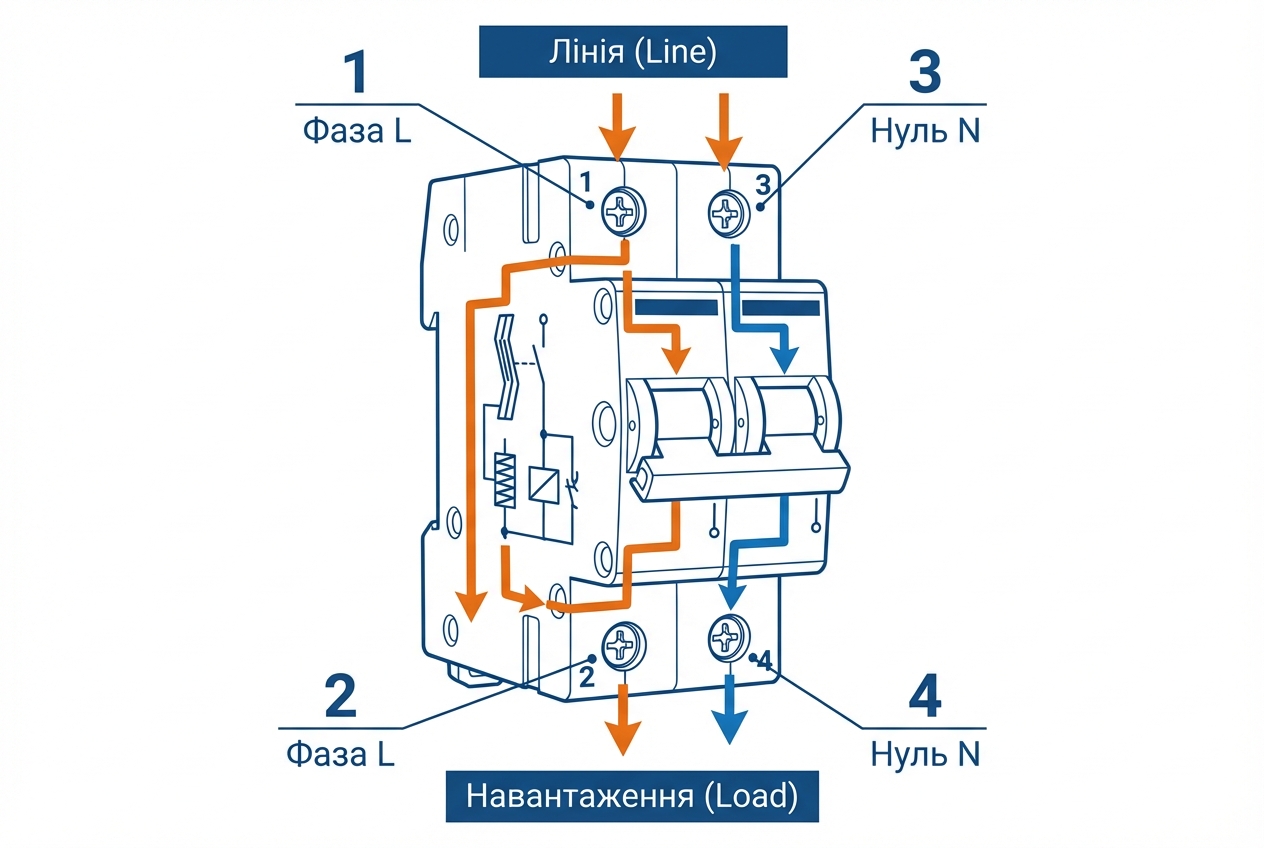
According to standards (and the habit of most electricians), the power supply (input) is connected to the fixed contacts — typically the upper terminals (marked as 1 and 3 or Line). The load is connected at the bottom (2 and 4 or Load). Although many modern breakers allow connection from either side, maintaining a consistent standard in the panel simplifies future diagnostics.
N and PE bus connection: typical rules
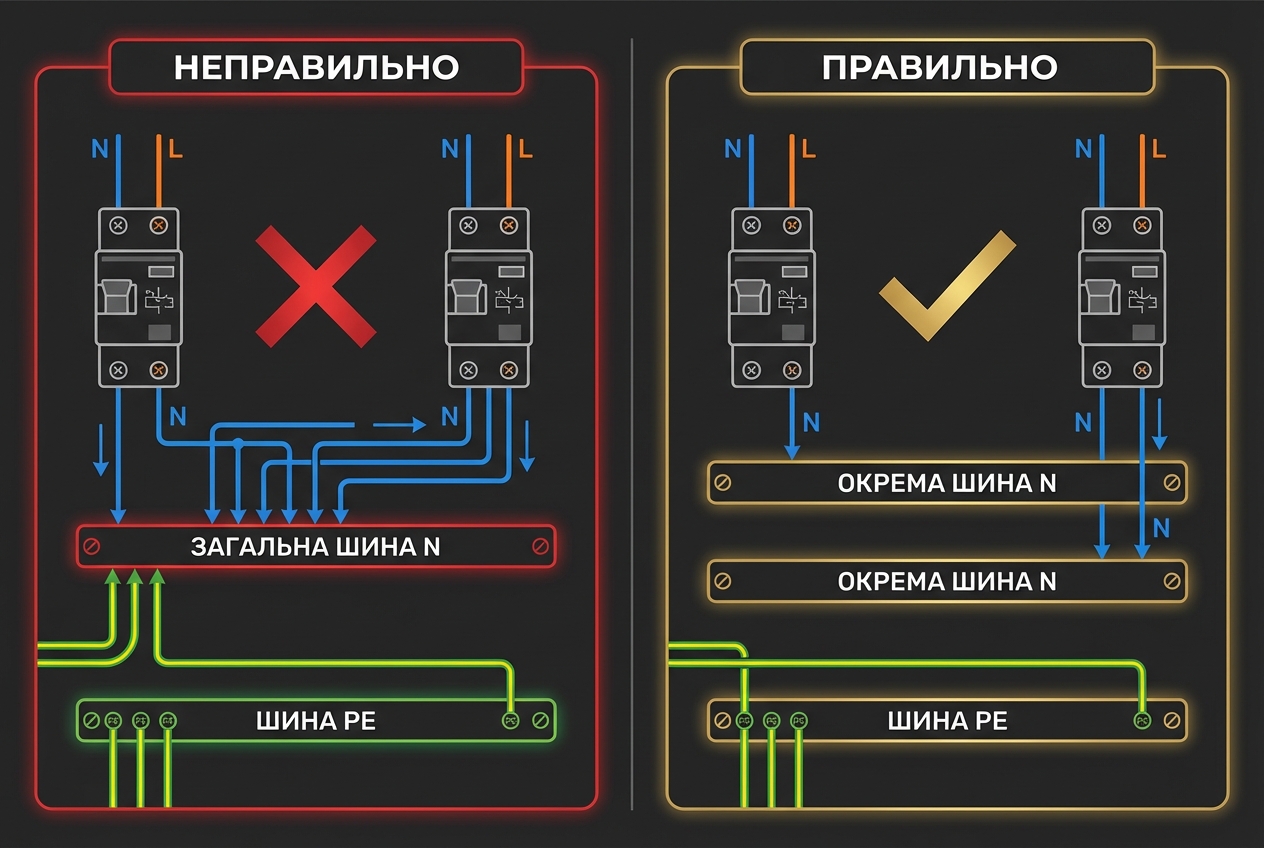
The most common beginner mistake is combining neutrals from different RCDs or mixing the working neutral (N) with protective earth (PE) after the split point.
- N after the RCD must go to its own separate bus or breaker terminal, without contacting the common neutral.
- PE (yellow-green) must never be disconnected by a breaker.
For a detailed understanding of breaking capacity when designing a panel, I recommend the article: what is the breaking capacity of a circuit breaker.
Common mistakes: what people do wrong and how it threatens them
Two single-pole breakers instead of one double-pole
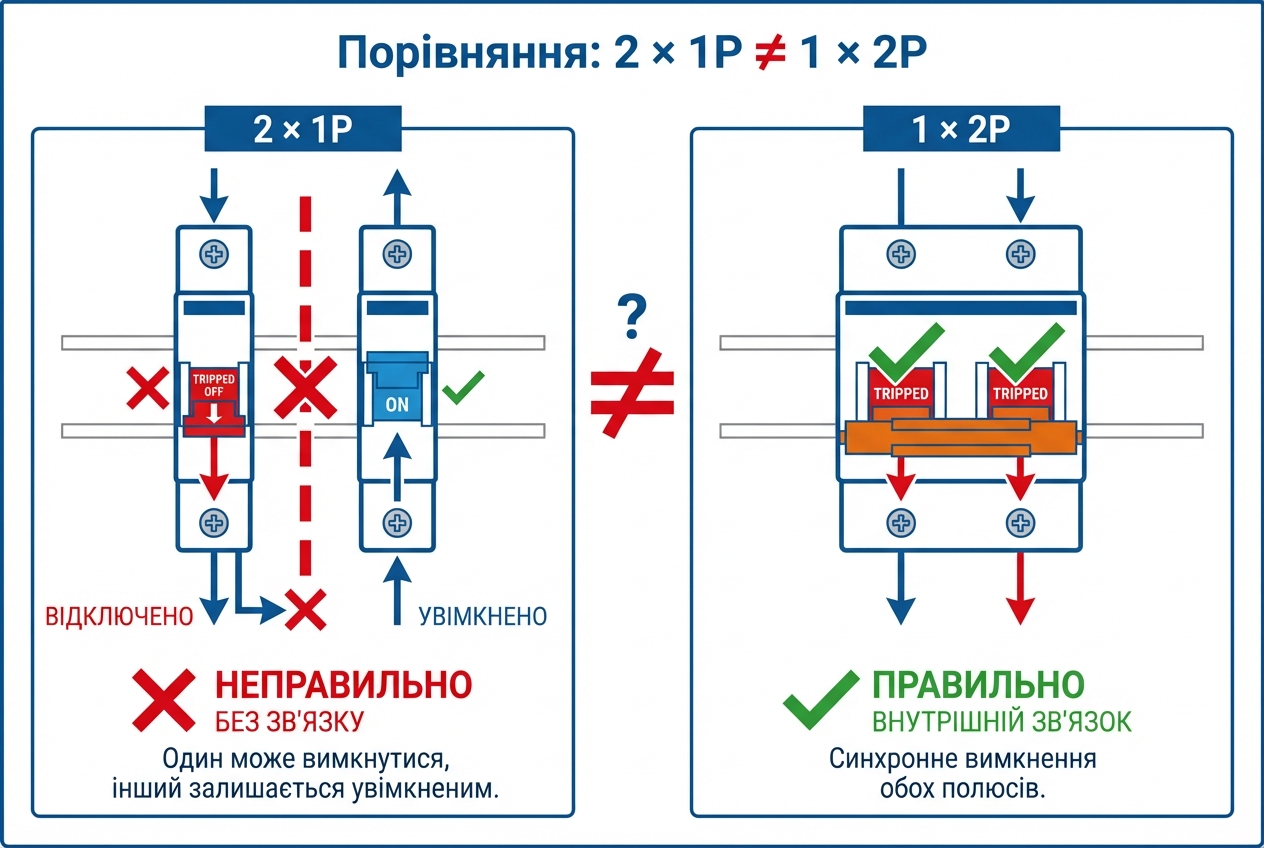
This is a serious violation of PUE (clause 3.1.18). Using two separate 1P breakers (even connected with a coupling bar) does not ensure simultaneous tripping. In the event of a fault on one pole (e.g., phase short circuit), the other (neutral) may remain energized. A true 2P breaker has an internal mechanism that forcibly disconnects both poles when protection trips on either one. Details about modular circuit breakers for residential use will help you avoid such mistakes.
Wrong rating and trip curve (B/C/D)
Installing a breaker "with margin" (e.g., C25 on an outlet circuit with 2.5 mm² cable) is a path to fire. The breaker protects the cable, not the appliance.
Trip curve B
Best for older networks and long runs (lighting, outlets).
Trip curve C
Standard for household outlets (inrush currents from vacuum cleaners/refrigerators).
Trip curve D
Only for heavy-duty electric motors (pumps, machine tools).
Read more about trip curve selection in our article: what is the difference between B, C, and D trip curves.
Confusion with the grounding system (TN-C, TN-S, TT) and the neutral
In older buildings with a TN-C system (two wires, no grounding), disconnecting the PEN conductor is strictly regulated. Installing a 1P breaker on the PEN conductor is categorically forbidden (PUE 1.7.145). A 2P is needed here, but only after the PEN-to-PE+N split point, or a complete riser replacement.
⚠ Red flags: Overheating terminals, burnt insulation smell, sparking, aluminum wiring, absence of a PE conductor in wet zones without an RCD — these are signals to call a specialist immediately.
How to choose the rating and type of breaker (for input and branch circuits)
Main breaker: what determines the rating
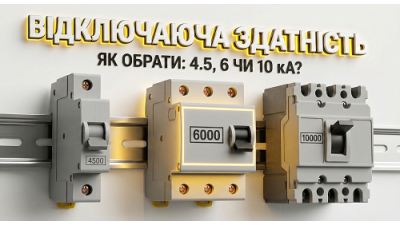
The main 2P breaker rating is limited by two factors: contractual power (utility limit) and input cable cross-section. You cannot install a 40A breaker if your contract is for 5 kW (~25A), or if the input cable is 4 mm² (it will hold, but be at the limit). Breaking capacity: 4.5 kA, 6 kA, or 10 kA is also important, especially if the substation is nearby.
Branch circuits (lighting/outlets/dedicated appliances): typical approaches
When designing, we at UEC follow the golden standard of cable protection:
The electrician's main rule:
A breaker protects the cable, not the appliance. The rating is selected strictly based on cable cross-section.
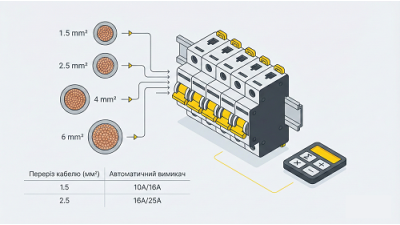
Breaker rating selection table by copper cable cross-section
| Circuit | Cable cross-section | Breaker rating | When 2P? | When RCD? |
|---|---|---|---|---|
| Lighting | 1.5 mm² | 10 A (or 6 A) | No | Not mandatory |
| Outlets | 2.5 mm² | 16 A (max 20 A) | Optional | Yes (30 mA) |
| Water heater/stove | 4.0 mm² | 25 A | Yes (maintenance) | Mandatory |
"Always verify cable cross-section with calipers, as some manufacturers understate the actual conductor thickness."
— Advice from Oleh Lukianchuk
Is a "breaker on the neutral" needed — myths and reality
When the neutral is switched and why (1P+N and 2P)
The purpose of neutral switching is maintenance safety and line isolation. Installing a breaker "on the neutral only" is prohibited.
❓ Myth: "2P will protect me from electric shock better than 1P"
Fact: No, an RCD protects against electric shock. A 2P protects the wiring and allows safe repair.
❓ Myth: "You can install two 1P breakers: one for phase, one for neutral"
Fact: Absolutely not. If the "neutral" breaker trips, appliances will stop working, but phase will remain on them. A person will try to repair and get electrocuted.
❓ Myth: "An RCD is the same as a breaker, just better"
Fact: An RCD has no overcurrent protection (unless it's an RCBO). It will burn out during a short circuit if there's no breaker upstream.
Alternatives and additions: RCD/RCBO, voltage relay
A double-pole breaker is only part of the protection system.
- RCD: Responds to leakage current (damaged insulation, human contact). Installed in series with a breaker.
- Voltage relay: Protects appliances from 380V in the outlet (neutral break on the line). Installed after the main breaker. See more about the consequences of incorrect breaker rating.
Roles of devices in the panel
| Device | Protects against | Does NOT protect against | Where installed |
|---|---|---|---|
| RCD | Electric shock, fire | Short circuit, overload | After 2P, on groups |
| Voltage relay | Voltage surges (N break) | Short circuit, leakage | Right after the input |
Practical checklist before replacing/installing a breaker
Diagnosing the existing panel
Before purchasing a 2P breaker, perform an audit:
- Photo documentation: Take photos of the panel "before" any work.
- Labeling: Mark every conductor.
- Terminal condition: Check whether insulation has melted.
- PE presence: Is there grounding?
- DIN rail space: A 2P takes 36 mm (2 modules). Is there enough room?
Sequence of actions during replacement:
- Turn off the main breaker.
- Verify absence of voltage with an indicator.
- Strip wires to 10-12 mm (or use bootlace ferrules for stranded conductors).
- Tighten terminals with 2-2.5 Nm torque (preferably with a torque screwdriver).
Minimum safety requirements when working (brief)
Never work under voltage. Always prevent accidental energization (hang a sign "Do not switch on, people working").
⚠ Disclaimer: Electricity does not forgive mistakes. If you are not confident in your actions — call a professional. All advice is informational in nature.
FAQ — short answers to popular questions
❓ Can you install a 2P on outlets/lighting?
Yes, it's safer for complete line isolation during maintenance, and standards support it. However, it takes twice the space in the panel and costs more. Usually, 1P is sufficient for dry areas.
❓ How does 1P+N differ from 2P in practice?
In a 1P+N, the neutral pole has no thermal or electromagnetic protection — it simply opens the circuit (switching only). In a full 2P, both poles are protected and have arc-extinguishing chambers. For the main input, 2P is preferred.
❓ Where should the main breaker be: before or after the meter?
According to PUE, a switching device for de-energization should be placed before the meter (so the meter can be replaced). However, sealing requirements often call for the breaker to be in a special enclosure or after the meter. Check with your local utility.
❓ Is a 2P needed if there's already an RCD/RCBO?
At the input — yes. The RCD protects against leakage, while the main 2P breaker protects the RCD itself and the wiring from overcurrents, and allows complete panel de-energization for replacing that same RCD.
❓ What breaker to install for a water heater/electric stove on a single-phase network?
We recommend a 2P breaker paired with an RCD. The rating is selected based on cable cross-section (4 mm² copper — 25A, 6 mm² — 32A). This allows safe heating element maintenance without shutting off the entire apartment.
Standards, codes, and sources (for verification)
When preparing materials, we at UEC rely on official documents. Here's what to check:
- PUE (Rules for Electrical Installation): Section 3.1 (Protection), clause 1.7.145 (PEN switching).
- IEC/EN 60898-1: International standard for household circuit breakers (defines trip curves B, C, D).
- DSTU IEC 60947-2: Standard for industrial switchgear.
- Research papers: Sincede.com (risk analysis of 1P/2P), Oohmage.com (application comparison).