
Article Contents
Understanding the differences between B, C, and D trip characteristic


Key takeaways
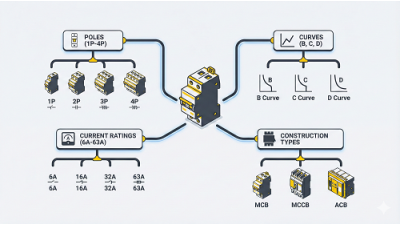
Circuit breakers with trip curves B, C, and D differ in their sensitivity to inrush currents. B (3–5 In) suits lighting and heating elements. C (5–10 In) is the universal standard for residential outlets. D (10–20 In) is for industrial motors and welding equipment.
Key point: The trip curve determines at what current multiple the magnetic release will instantly disconnect the line. The wrong choice leads to either nuisance tripping or fire risk.
Hello, I'm Oleh Lukianchuk, a technical training engineer at UEC. Over my years working with electrical protection equipment, I have assembled panels for apartments, private homes, and industrial facilities.
In this article, we will explore the key differences between circuit breakers with trip curves B, C, and D — with examples, comparison tables, and a step-by-step selection algorithm.
Quick answer: what to choose for an apartment/house — B or C (and when you need D)
- Trip curve B: The best choice for circuits where inrush currents are minimal and the wiring is "sensitive" or old. Ideally suited for lighting and long cable runs.
- Trip curve C: The "gold standard" for the residential sector. This is the universal choice for outlet circuits that handles moderate inrush currents from household appliances (vacuum cleaner, air conditioner) without nuisance tripping.
- Trip curve D: A specialized solution for equipment with very high inrush currents. Rarely used in a typical apartment; more common in workshops for lathes or pump stations.
Key differences between MCB trip curves
| Type | Best suited for | Instantaneous tripping threshold |
|---|---|---|
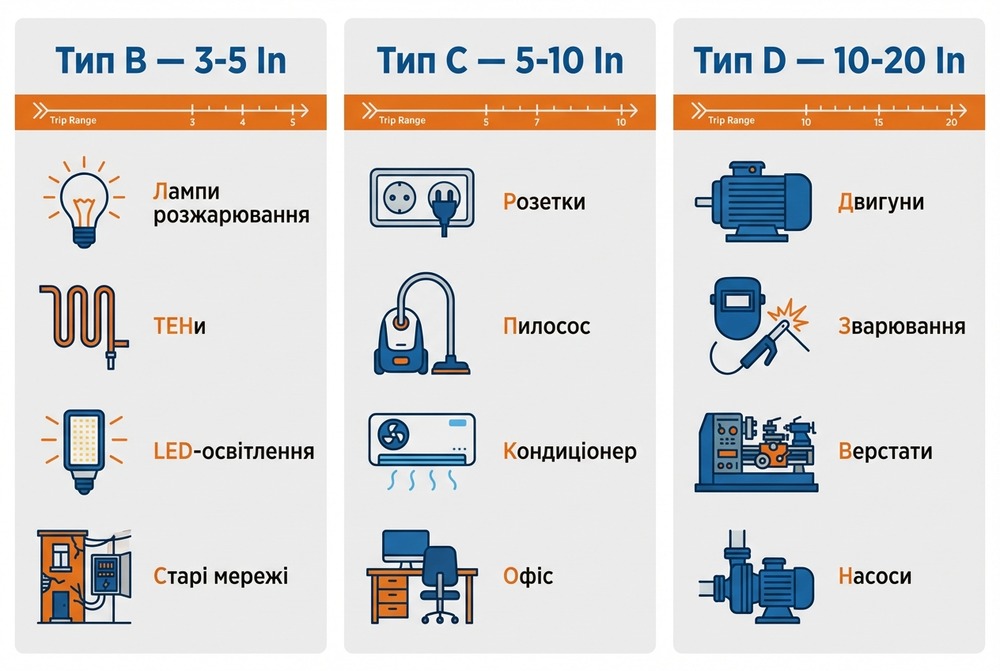
| B | Lighting, heating elements, old networks | 3–5 In |
| C | Outlets, offices, apartments | 5–10 In |
| D | Motors, transformers, mains incomers | 10–20 In |
Comparing circuit breakers: what is the difference between trip curves B and C?
The main difference between B and C circuit breakers lies in the sensitivity threshold of the magnetic release to short-duration current surges. A type B circuit breaker is set to trip instantly at lower overloads, making it ideal for protecting old cables, while type C has "immunity" to moderate peak loads from household appliances. Comparing their behavior: B will trip faster if the current exceeds the rated value by 3–5 times, while C will "wait" up to 5–10 times, allowing a vacuum cleaner motor to start.
Comparison of trip curves B and C
| Parameter | Trip curve B breaker | Trip curve C breaker |
|---|---|---|
| Tripping current multiple (cutoff) | 3–5 In (48A to 80A for a 16A breaker) | 5–10 In (80A to 160A for a 16A breaker) |
| Instantaneous trip time | Less than 0.1 s at >5 In | Less than 0.1 s at >10 In |
| Load type | Primarily resistive: incandescent lamps, heating elements | Mixed (resistive + inductive): appliance motors, switch-mode power supplies |
| Application area | Long cable runs, networks with low short-circuit current | Residential rooms, kitchens, general-purpose offices |
These parameters are governed by the international standard IEC 60898-1 (for domestic installations), which we at UEC follow when selecting equipment. For industrial protection, the IEC 60947-2 standard is often applied, where settings may differ.
For more details on selection nuances, read our guide: how circuit breaker trip curves B, C, and D differ.
The main difference between B / C / D: sensitivity to inrush currents and "instantaneous" disconnection
What is the instantaneous tripping multiple (In ×…) in simple terms
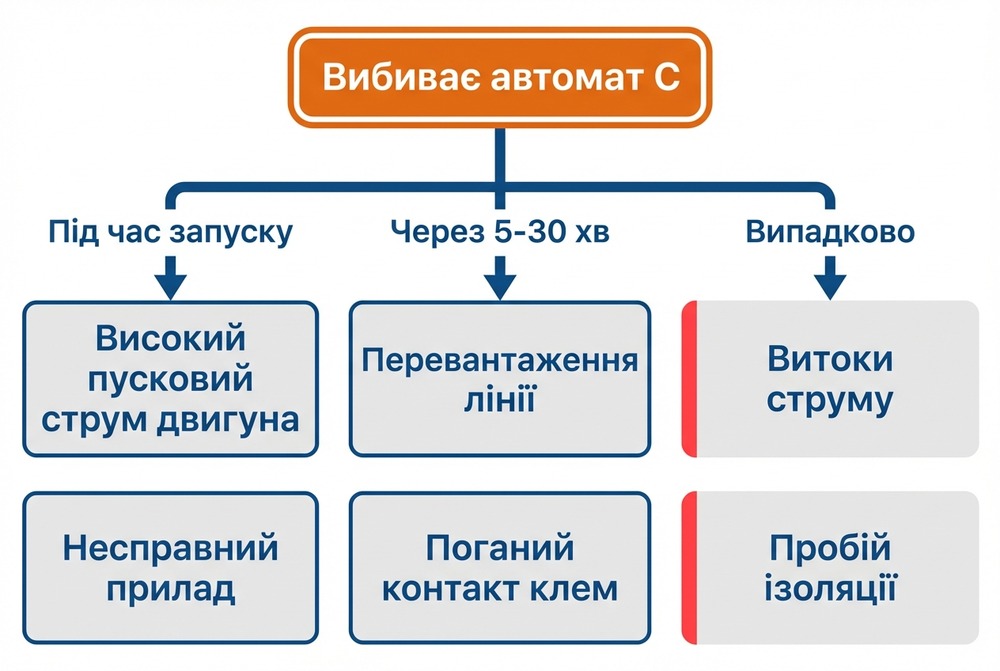
The rated current (In) is the current that a circuit breaker can carry indefinitely (for example, 16 Amps). However, when equipment starts, reactive processes occur. Inrush currents from electric motors or charging capacitors in power supplies can exceed the rated value by 5, 7, or even 15 times for fractions of a second. The magnetic release inside the breaker must "understand": is this a fault (Short Circuit) or just the refrigerator starting up?
Why circuit breakers trip: 5 typical causes (not just the trip curve)
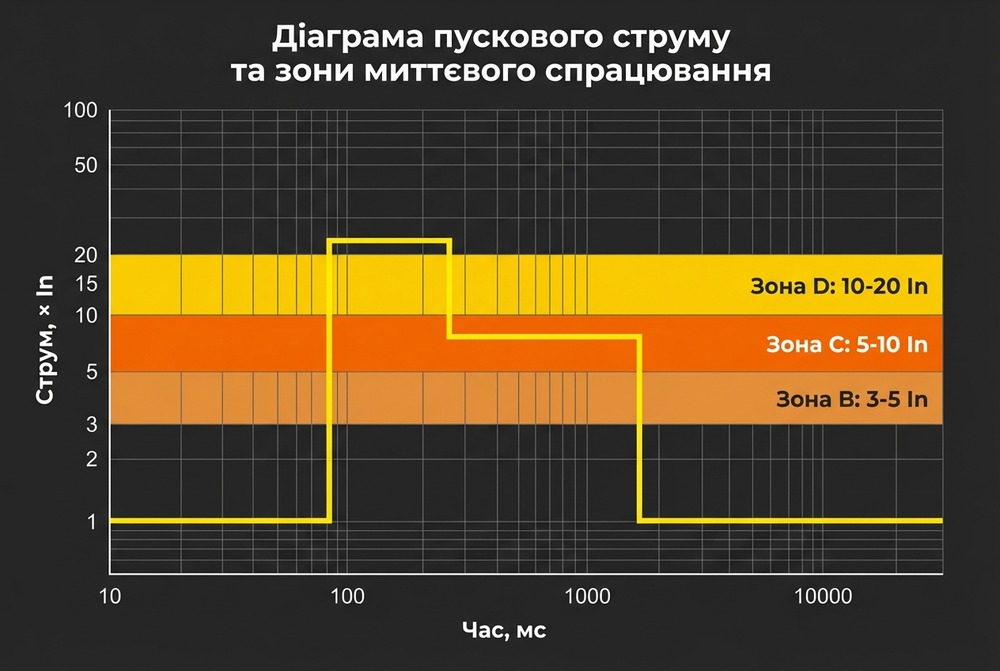
Users often blame a "too sensitive breaker" when the problem lies elsewhere. Before changing B to C, check:
- Inrush current higher than expected: A powerful tool or old motor starts too heavily.
- Poor terminal contact: A loose screw causes heating, which triggers the thermal release even when the current is normal.
- Insufficient breaking capacity (Icn): If you live near a substation, short-circuit currents may exceed 4500A, which is critical for cheap breakers.
- Incorrect rated current: A 10A breaker on a circuit with a total load of 3.5 kW (requires 16A, but only if the cable allows it).
- Leakage currents: If it is an RCBO, the cause may be insulation breakdown rather than overload.
"In my practice on the railway, I have repeatedly seen situations where electricians tried to 'cure' tripping by replacing the breaker with a higher rating or a coarser trip curve (C instead of B, D instead of C). Without measuring the phase-neutral loop impedance, this is a dangerous gamble. If the line is long, the short-circuit current at the end of the line may be insufficient for the instantaneous tripping of a type C or D breaker. The cable will burn while the breaker 'thinks' it is just a load."
— Oleh Lukianchuk, Technical Training Engineer at UEC

Warning! Working with electrical equipment is life-threatening!
All work in the electrical panel must be performed only by qualified electricians with the power disconnected. Before starting work, be sure to de-energize the line and verify the absence of voltage with a measuring device.
Trip curve B (3–5 In): when to install and what loads it suits
Which circuits type B is most commonly suited for
Circuit breakers with trip curve B are the choice for "quiet" networks. I most often recommend them for lighting circuits (especially with incandescent lamps or quality LEDs without aggressive inrush) and for protecting long cable runs (for example, powering a garage at the end of a property). The longer the line, the higher its impedance and the lower the short-circuit current, so the sensitivity of type B ensures the breaker will trip during a fault at the end of the line.
Load examples for trip curve B
| Load | Engineer's comment |
|---|---|
| Incandescent lamps / Halogen | Ideally suited, inrush currents are minimal. |
| LV LED with driver | Suitable, but if there are many cheap drivers on one circuit, their combined inrush pulse may cause tripping. |
| Electric heating (heating elements) | Purely resistive load, no inrush currents. B is an excellent choice. |
| Low-current networks | Protection of control and signaling circuits. |
When B may be a poor choice
If your outlet circuit frequently has a vacuum cleaner, powerful food processor, or pump plugged in, a type B breaker may nuisance-trip at the moment of startup.
Signs that B is not right for you:
- The breaker trips instantly when pressing the "ON" button on an appliance.
- The problem disappears if you plug the same appliance into a different outlet (where a C breaker is installed) via an extension cord.
Solution: Check the condition of the contacts, confirm there is no short circuit in the appliance, and if high inrush is confirmed — replace with type C (provided the wiring is appropriate).
If you are unsure about circuit breaker classification, read our article on types of circuit breakers and their classification to avoid mistakes.
Trip curve C (5–10 In): the standard for outlets and "residential" inrush currents
Why type C is the most common in apartments
Type C is a sensible compromise. Its magnetic release is calibrated to ignore short current surges (up to 5–10 times the rated current) that are inevitable in modern households. This allows you to comfortably use appliances with electric motors (refrigerators, washing machines, air conditioners) and computer power supplies.
- Residential room outlets: Connecting computer equipment assemblies, vacuum cleaners.
- Kitchen: Microwaves, blenders, dishwashers (containing motors and pumps).
- Air conditioners: Standard split systems.
- Office spaces: A large number of switch-mode power supplies for office equipment.
We have written a detailed guide on which circuit breaker to choose for outlets and lighting.
When C won't solve the problem
If even a type C breaker trips, this is a warning sign. Don't rush to install D. Often the cause is not inrush current but actual line overload (you turned on a kettle, iron, and water heater simultaneously) or an appliance fault (inter-turn short circuit in a motor).
Trip curve D (10–20 In): for high inrush currents and specialized loads
What is a type D circuit breaker for?
The primary purpose of circuit breakers with trip curve D is to protect circuits that supply industrial or specialized equipment with heavy starting conditions. The inrush currents of such devices can reach 10–20 times the rated value, which would cause standard residential breakers to trip instantly. Trip curve D is used where equipment at startup consumes enormous energy to spin up the shaft or magnetize the core.
Application areas and typical loads for type D:
- ⚡ Powerful asynchronous electric motors: Pump stations, ventilation systems, workshop lathes.
- ⚡ Welding machines and transformers: Significant transient magnetizing currents occur at switch-on.
- ⚡ Lifting mechanisms: Winches, elevator equipment, where load on the shaft exists from the first second.
- ⚡ High-power discharge lamps: High-pressure floodlights (though C is often sufficient).
Important condition for D: short-circuit current verification
Applying type D requires caution. Due to the coarsened sensitivity (10–20 In), during a short circuit at the end of the line, the current may not reach the instantaneous trip threshold. The breaker will disconnect only via the thermal release, which takes seconds or even minutes.
⚠ Warning! It is strongly not recommended to replace residential C breakers with D in apartments with old aluminum wiring without consulting an engineer.
Read more about the risks here: what happens if you choose the wrong trip curve.
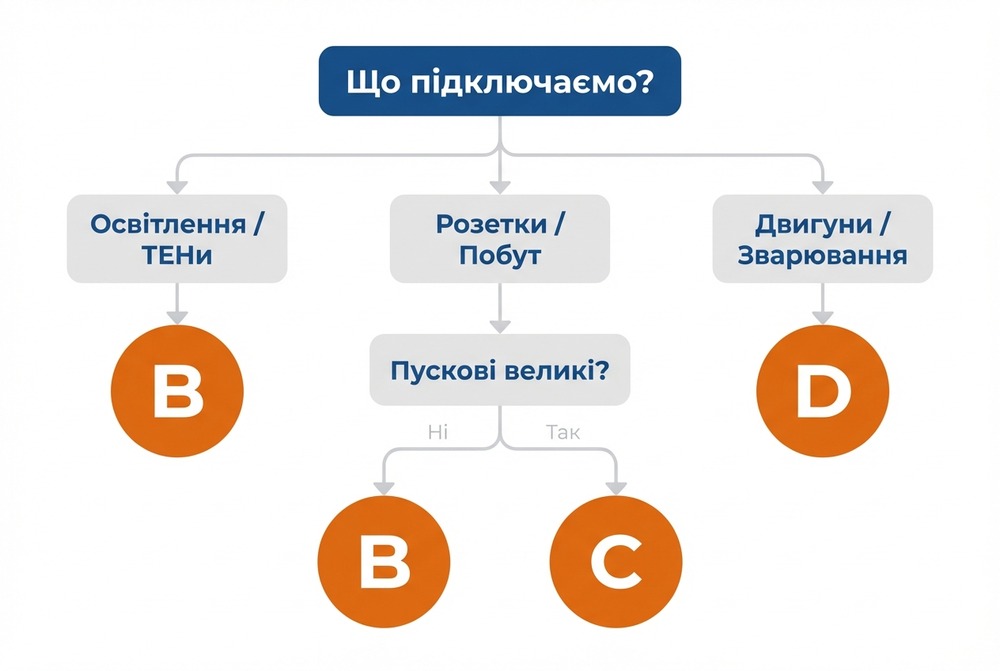
How to choose the right breaker (B/C/D): a short algorithm for real conditions
Step 1. Determine the load type
You need to clearly understand the nature of the consumers on the circuit. Is it a resistive load (iron, electric boiler) that doesn't cause surprises, or an inductive load (refrigerator, circular saw) that "asks for more" at startup?
Trip curve selection by load type
| Load type | Typical inrush | Recommendation |
|---|---|---|
| Resistive (heating elements, water heaters) | 1–1.5 In | B (or C) |
| Inductive (household motors) | 3–7 In | C (standard) |
| Heavy start (lathes, welding) | 10–15 In | D (after calculation) |
Note: If you have a large number of LED drivers, it is better to avoid B in favor of C.
Step 2. Match the rated current In to the cable (not "to the appliance")
The golden rule of electricians:
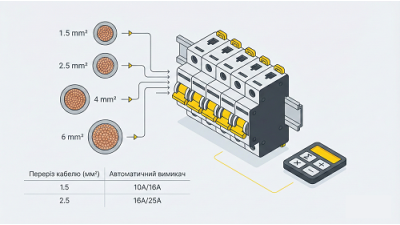
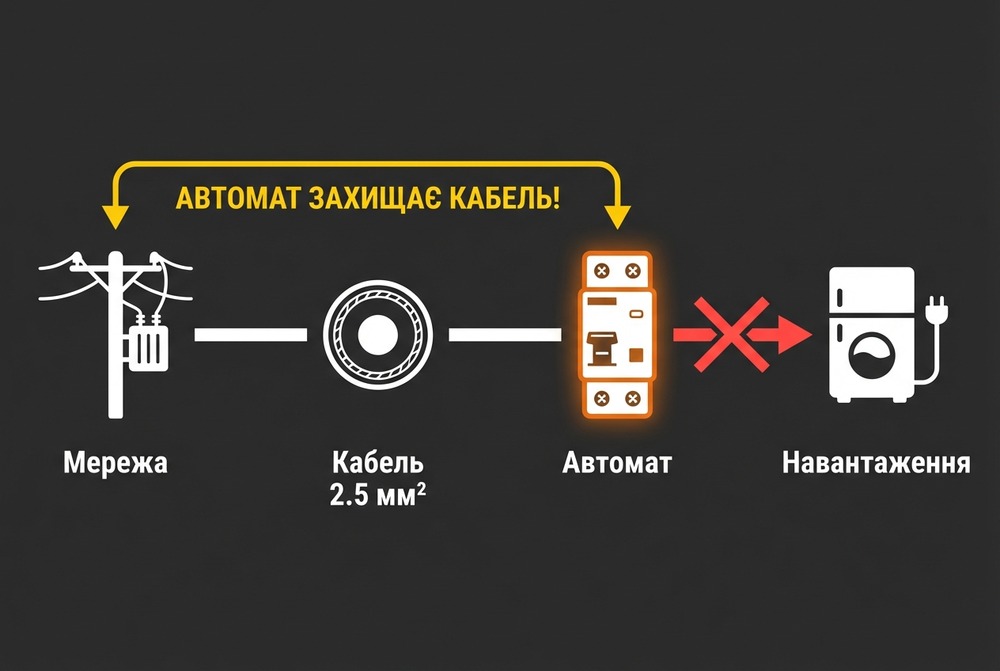
The circuit breaker protects the cable, not the appliance plugged into the outlet. You cannot install a 25A breaker on a 1.5 mm² cable, even if you are connecting a powerful heater — the wire will burn before the protection trips.
For proper selection, use our circuit breaker selection table by cable cross-section and power.
Step 3. Check the breaking capacity Icn
For apartments in multi-story buildings, the standard is 4.5 kA (older buildings, remote areas) or 6 kA (modern residential complexes). If your facility is located near a transformer substation (TS), short-circuit currents can be enormous — you need 10 kA breakers (industrial series) here, otherwise the breaker will simply melt or explode during a short circuit. More details on this parameter: which breaking capacity to choose: 4.5 kA, 6 kA, or 10 kA.
Step 4. Check compatibility with RCD/RCBO
In modern panels, a circuit breaker always works in tandem with a Residual Current Device (RCD). Remember: the breaker saves wiring from fire, while the RCD saves you from electric shock.
Differences between protective devices
| Device | What it protects | What it does NOT protect against | Where it is used |
|---|---|---|---|
| Circuit breaker (MCB) | Cable (overload, short circuit) | Person (electric shock), leakage | All circuits |
| RCD | Person, property (fire from arcing) | Cable (overload, short circuit) | Wet zones, outlets |
| RCBO | Everything combined (2 in 1) | — | Compact panels |
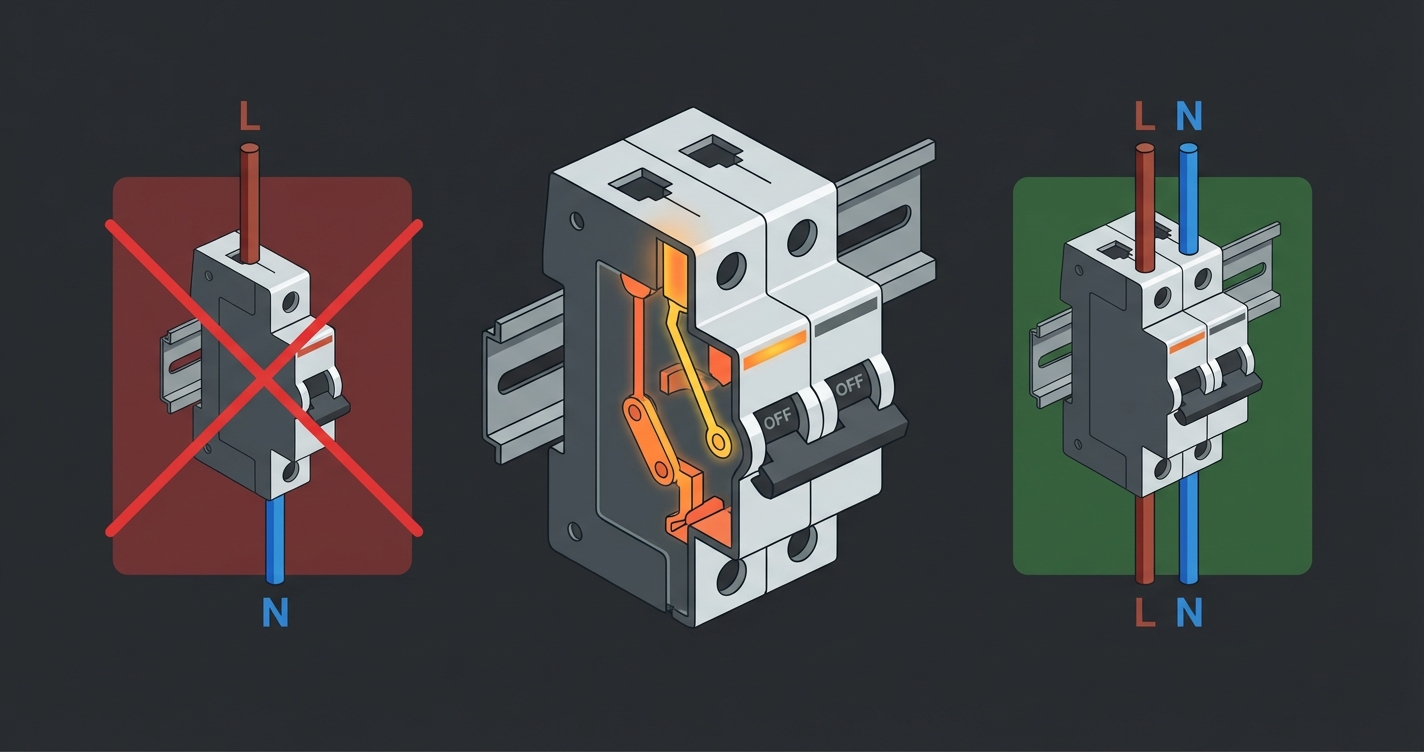
Remember that the RCD must be protected by a circuit breaker with a rated current no higher (and preferably one step lower) than the RCD's own rating. The question of neutral breaking is also relevant, which we discussed in: should you break the neutral with a circuit breaker.
Typical selection scenarios: apartment, house, workshop
Based on our experience equipping facilities at UEC, here are the basic scenarios:
- Lighting: Trip curve B (or C for large LED groups). Typically 10A (for 1.5 mm² cable).
- Outlet circuits: Trip curve C. Typically 16A (for 2.5 mm² cable).
- High-power household consumers (water heater, washing machine): Dedicated circuit, trip curve C, mandatory RCD or RCBO.
- Workshop/Garage:
- Lighting/small tools: C.
- Circular saw, compressor, welding: Trip curve D may be appropriate, but only after the line has been checked by an electrician.
Common mistakes when selecting and installing B/C/D circuit breakers
| Mistake | Consequence/Risk | What to do correctly |
|---|---|---|
| Confusing trip curve (B/C) with rated current (16A) | Incorrect protection, nuisance tripping, or overheating. | B/C is the response speed, Amps is the capacity. Choose both parameters consciously. |
| Ignoring inrush currents | Constant breaker tripping when starting a pump/lathe. | Use C or D for motors. |
| Installing D "just in case" | Fire risk! During a short circuit, the breaker may not trip instantly. | Install D only where it is technically justified by the design. |
| Oversizing the rated current In | Cable insulation melting, fire inside the wall. | Breaker rating ≤ cable's permissible current. |
For a deeper understanding of the consequences, I recommend reading: what happens if you choose the wrong rated current for a circuit breaker.
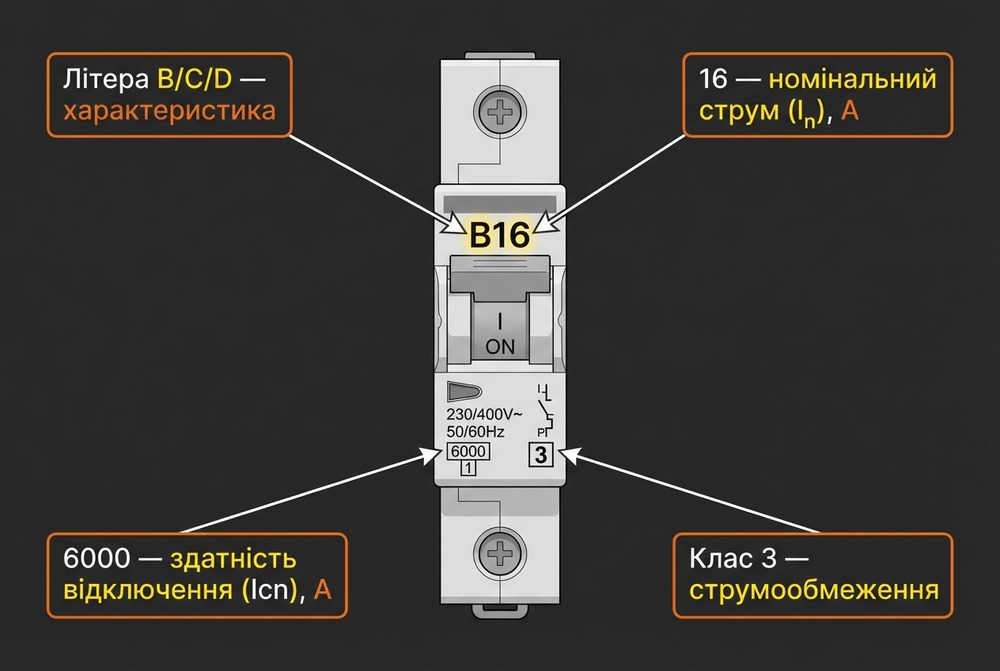
How to read circuit breaker markings: B16, C10, D20, and other parameters
The marking on the front panel is the device's passport. The most important inscription typically looks like "C16", "B10", etc.
- Letter (B, C, D): Type of time-current characteristic (sensitivity to inrush).
- Number (6, 10, 16, 25...): Rated current (In) in Amps.
- Number in a rectangle (4500, 6000, 10000): Breaking capacity (Icn) in Amps. Indicates the maximum short-circuit current the breaker can interrupt without being destroyed.
- Current limiting class (number 1, 2, 3 in a square): Arc extinguishing speed (3 is the highest, the best).
How to identify the trip curve if the marking is worn off or unclear
Where to look for data? If the inscription is worn off, check the side wall (there is often a diagram there) or the electrical panel passport (single-line diagram), which the electrician should have left after installation.
What to photograph for a consultation? The entire panel and the device itself in close-up. Send it to our UEC managers.
Why guessing is dangerous? Installing "by eye" can lead to you putting a 25A breaker on a 1.5 mm² cable. This is a direct path to fire.
Panel wiring diagram (basics) and the role of grounding/RCD
Proper panel architecture is built hierarchically. At the input, there is always a main breaker (often a selective or simply a higher-rated breaker of category C or D, if permitted by the technical specifications). Then comes the meter, voltage relay, RCD, and finally — group circuit breakers (B or C).
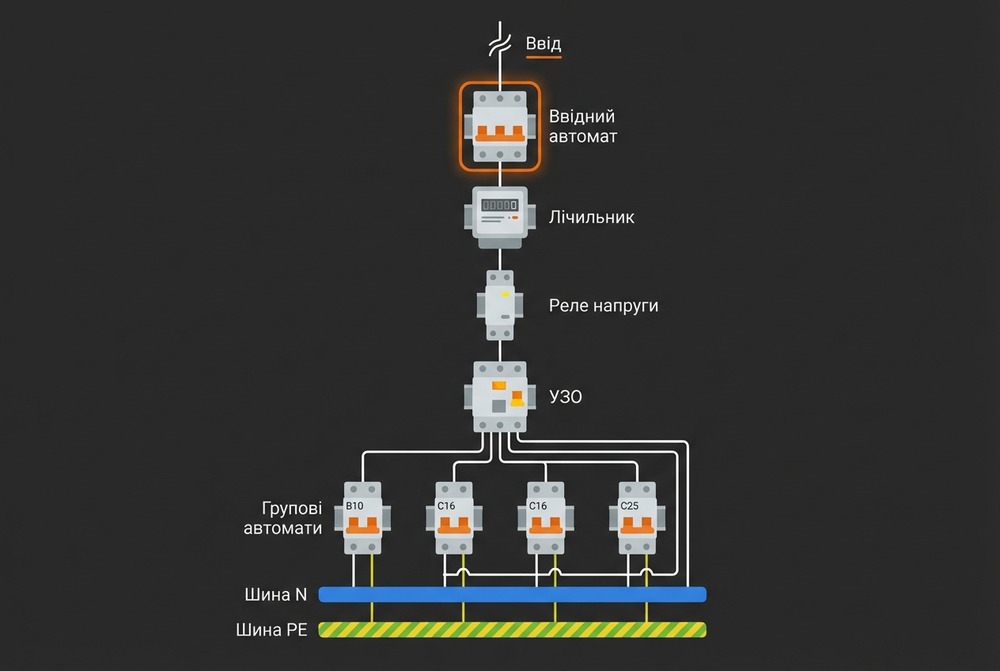
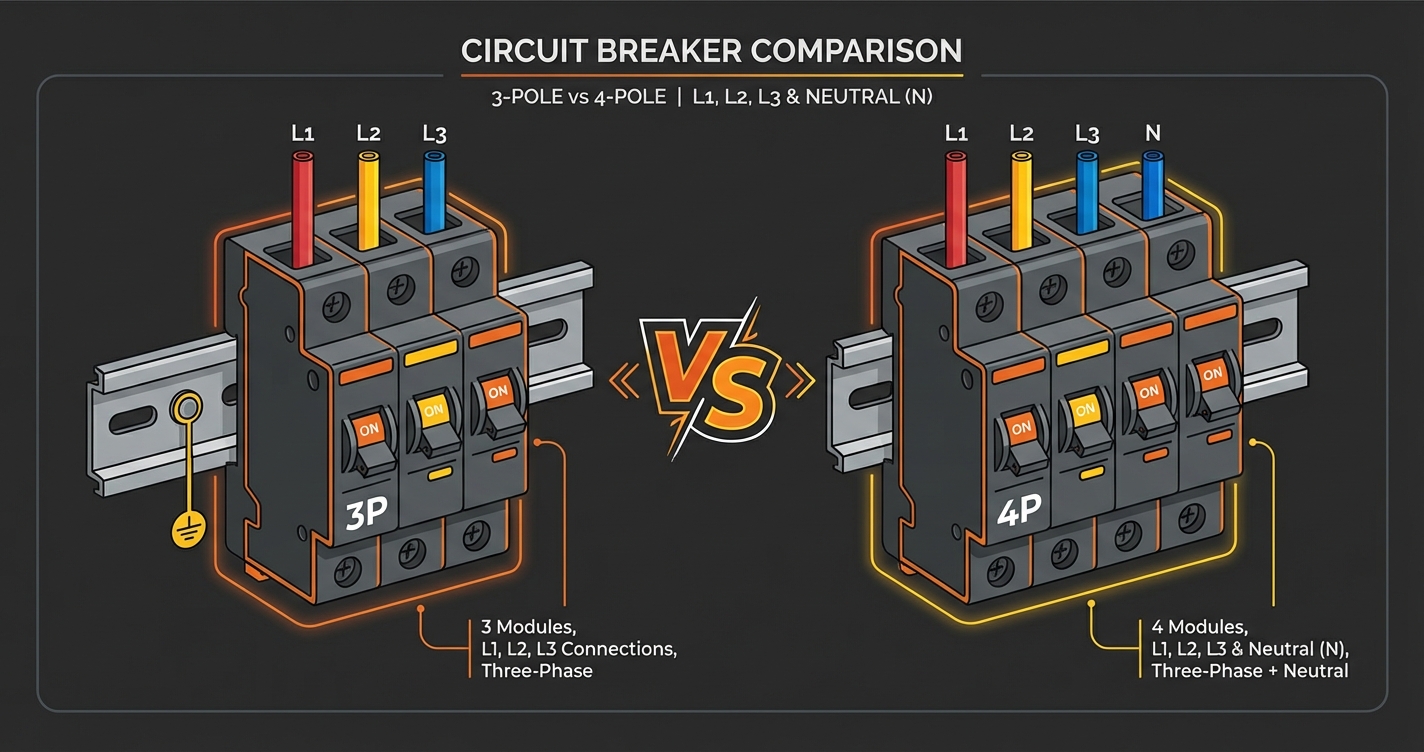
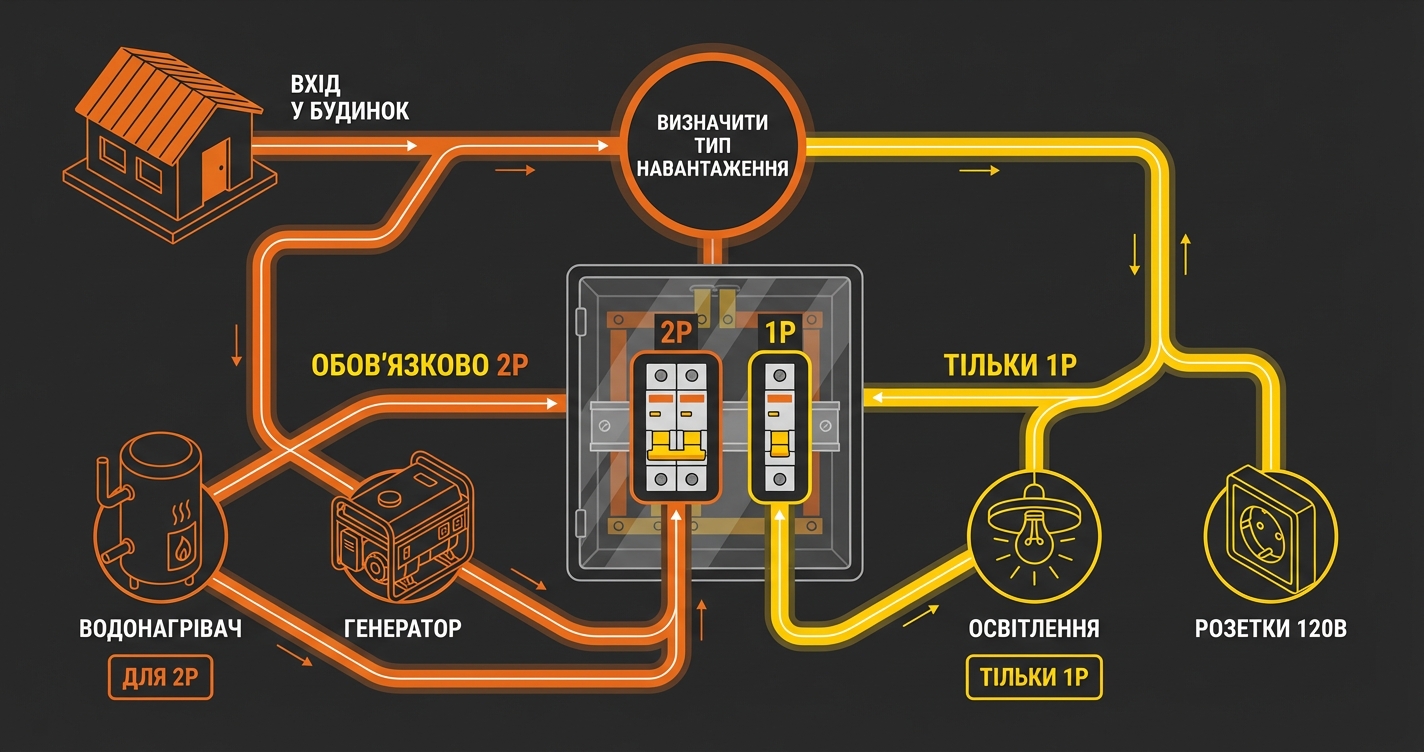
⚠ Important: Do not confuse the neutral (N) and grounding (PE). They must never be connected after the RCD. Circuit breakers with trip curves B, C, D are typically installed on the phase conductor. Read about pole count nuances: single-pole or double-pole breaker: when to install which.
Popular B/C/D circuit breakers: what people buy and how to choose a model
Our UEC catalog features solutions for both budget renovations and premium projects based on Italian GEWISS automation.
What to pay attention to when choosing:
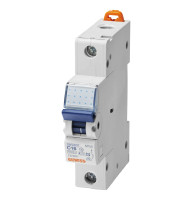
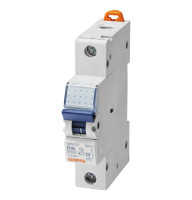
- GEWISS (MTC series): Compact, reliable, genuine Italian quality. An excellent choice if the budget allows. Available in trip curves B and C.
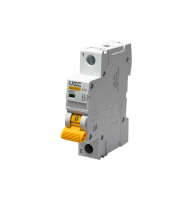
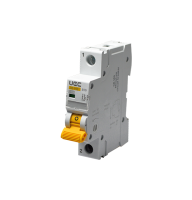
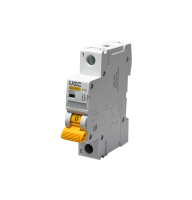
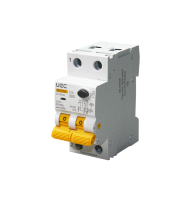
- UEC (own brand): An honest "workhorse." Complies with Ukrainian national standards (DSTU), laboratory-tested. The optimal price-to-quality ratio for most apartments.
We curate our product range based on feedback from professional installers and our own bench tests.
FAQ: frequently asked questions about B, C, D circuit breakers
❓ Can you replace a type B breaker with a type C?
Yes, technically this is possible, but only if your wiring is in good condition. Type C is less sensitive, so on old lines it may respond worse to emergency situations. Conversely, replacing C with B is generally safe and increases protection sensitivity.
❓ Which breaker is better for an apartment: B or C?
There is no universal "best" answer. For new builds with copper wiring, the de facto standard is type C (for outlets) and B (for lighting). Type C handles modern appliance startups better.
❓ When is D actually needed in a residential setting?
In a typical apartment — almost never. Trip curve D is necessary if you have a private house with a workshop containing powerful lathes, deep-well pumps, or welding equipment.
❓ Why does the breaker trip when turning on a vacuum cleaner or air conditioner?
Most likely, the magnetic release is tripping due to the high inrush current of the motor. If you have a type B breaker, replacing it with a C of the same rating (e.g., B16 to C16) usually solves the problem.
Standards and regulations (brief): what trip curves B/C/D are based on
All the parameters we discussed (3-5 In, 5-10 In) are not arbitrary. They are requirements of international and national standards:
- IEC 60898-1 (DSTU EN 60898-1): The primary standard for AC circuit breakers for domestic installations. It defines the B, C, and D curves.
- IEC 60947-2: The standard for industrial switching apparatus.
- PUE (Electrical Installation Rules): Regulate the selection of protection based on calculated circuit currents.
At UEC, we review our training materials quarterly to ensure they comply with current standard editions.