
Article Contents
Circuit Breakers with Neutral Switching (2P, 1P+N)


Key takeaways
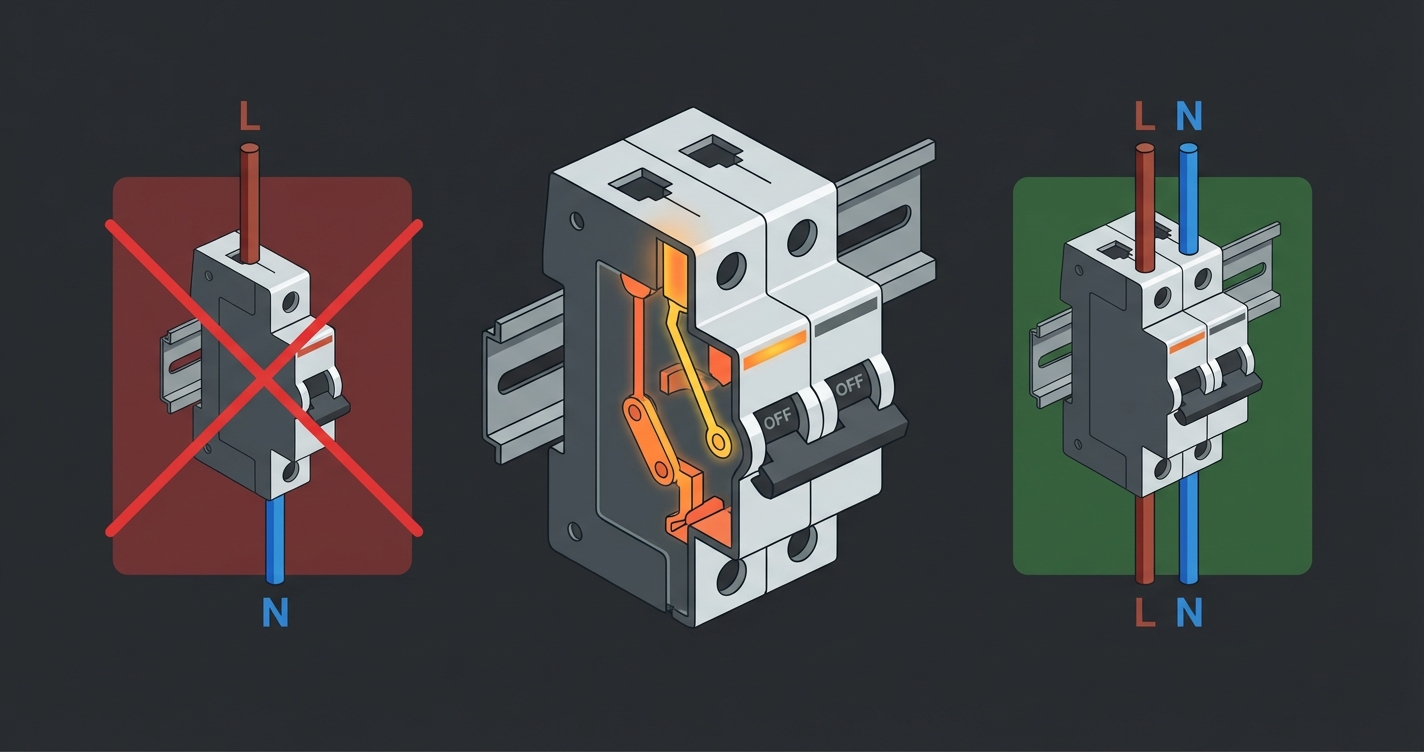
Installing a separate single-pole circuit breaker on the neutral wire is strictly prohibited under PUE and IEC 60364. Breaking the neutral without breaking the live conductor creates a lethal hazard: the appliance stops working but remains energized at 220 V.
When neutral switching is permitted: only together with the live conductor — via a double-pole breaker (2P), a compact 1P+N, an RCD, or an RCBO. This article covers the difference between 2P and 1P+N, application scenarios, and a selection guide from the UEC catalog.
Hello, I'm Oleh Lukianchuk, an electrical engineer and UEC expert with over 15 years of experience in designing switchboard equipment. I consider the handling of the neutral conductor one of the most underrated topics in residential electrical work.
In this article, we will explain why you cannot install a circuit breaker on the neutral alone, when dual-pole disconnection is mandatory, how 2P differs from 1P+N, and how to select the right breaker from the UEC and GEWISS catalog.
Can you put a circuit breaker on neutral and break the neutral conductor?
Let's set the record straight right away: can you install a circuit breaker on neutral as a standalone single-pole device? My engineering answer is — absolutely not. This is a gross violation of proper electrical installation practices and safety requirements. Using a single-pole (1P) circuit breaker exclusively to break the neutral conductor is prohibited. If you need to implement neutral switching via a circuit breaker, it is only permissible when the live conductor is disconnected simultaneously. Special double-pole devices (2P or 1P+N) exist for this purpose.
Note: See PUE, sections 3.1.4 and 7.1.21 regarding the prohibition of installing disconnecting devices in PE and PEN conductor circuits, as well as IEC 60364 requirements for neutral switching.
Why breaking neutral with a circuit breaker is dangerous: key risks
Why is breaking neutral with a circuit breaker without breaking the live wire playing with fire? Imagine the situation: the breaker on the neutral has tripped or you've switched it off manually. The appliance stopped working, lights went out. You think everything is safe and reach into the socket or up to the light fixture. But the live phase hasn't gone anywhere! It passed through the load (lamp filament, boiler heating element) and is now "waiting" at the neutral terminal you believe is de-energized.
Key consequences of this faulty decision:
- Electric shock: The user touches the "neutral" which has effectively become an extension of the live conductor.
- False sense of safety: The appliance doesn't work but remains energized at 220V.
- Equipment damage: When neutral is lost in three-phase networks (or at the building entrance), a "phase imbalance" can occur with voltage up to 380V at the socket.
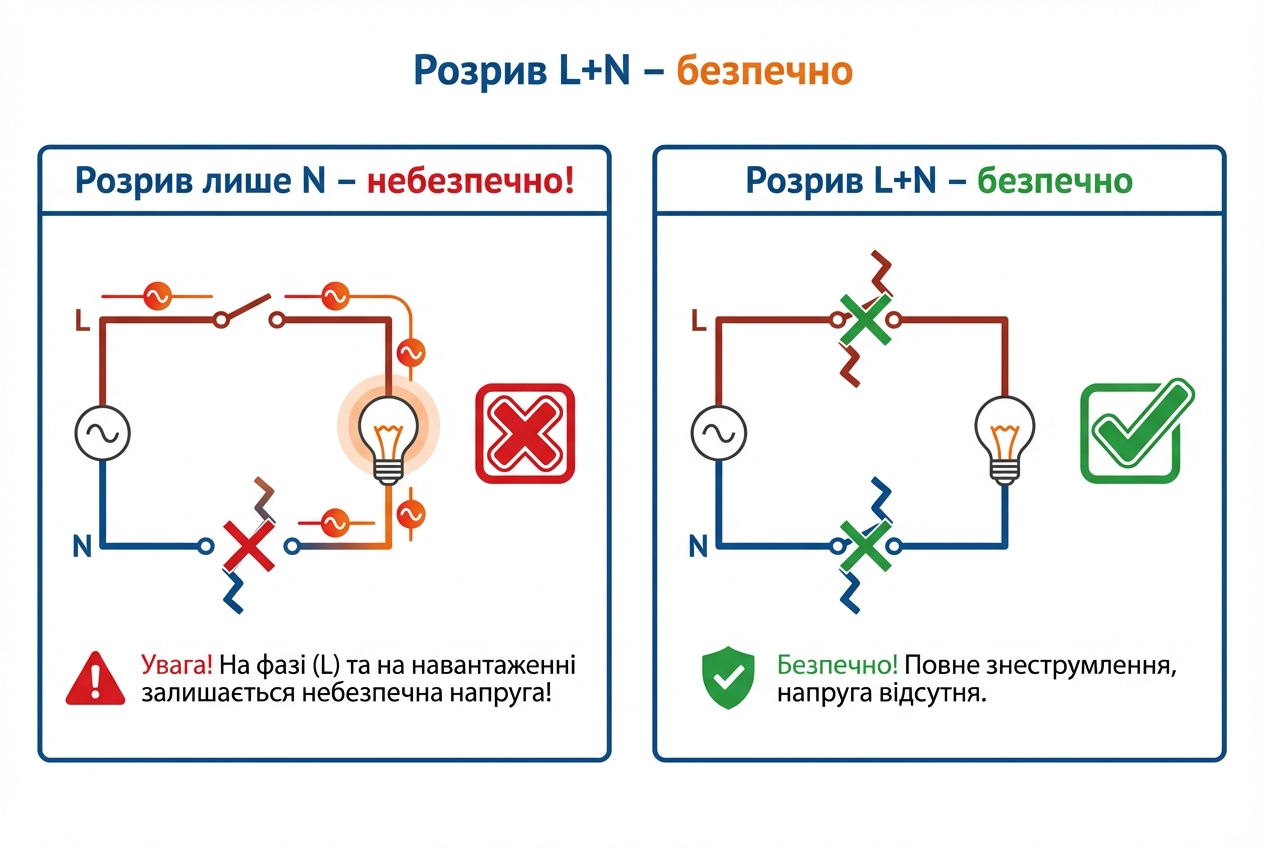
"In my railway practice, we always followed the rule: if you break a circuit — break the live wire. Neutral is the reference point. If you need to fully isolate a line, we only use dual-pole disconnection. A separate breaker on neutral — that's for your apartment"
— Oleh Lukianchuk, UEC expert
Correct wiring: where to install the circuit breaker?
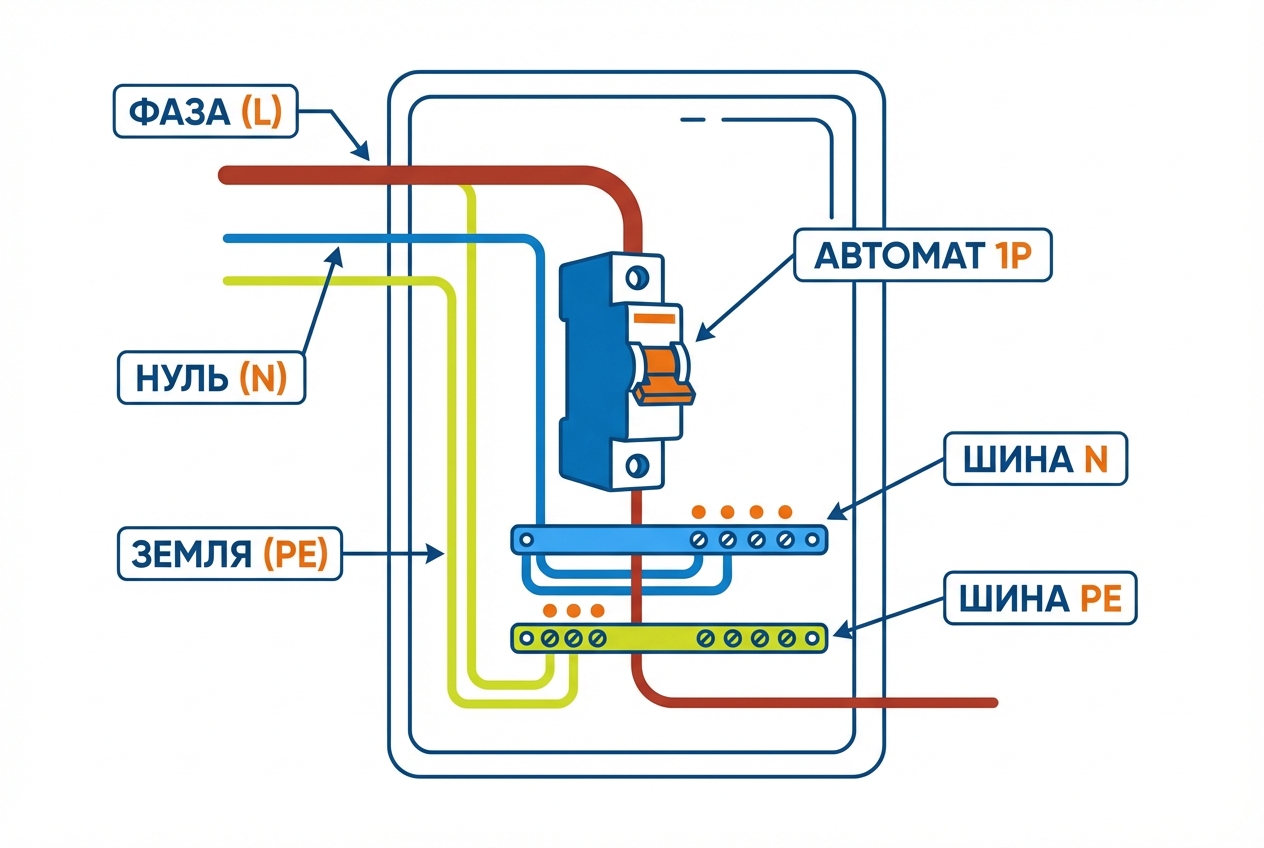
To sleep soundly, remember the principle: a single-pole circuit breaker is installed only on the live wire. The breaker's job is to protect the cable from overheating and short circuits, and it does this most effectively on the live conductor. The neutral conductor (after PEN splitting, if applicable) connects directly to the neutral bus bar. If you want to learn more about the basics, read our guide on how to choose a circuit breaker for your home and apartment, where we cover this in detail.
Key rule:
Single-pole circuit breaker — only on live wire. Neutral — directly to N bus bar. If neutral switching is needed — only via 2P or 1P+N.
When to call an electrician:
- You don't know what grounding system you have (TN-C, TN-S, or TT).
- Your panel has old "Soviet-era" wiring without color-coded conductors.
- You see signs of insulation melting or smell burning plastic.
- The panel lacks separate bus bars for "neutral" and "earth".
When neutral switching is permitted: double-pole breakers and RCDs
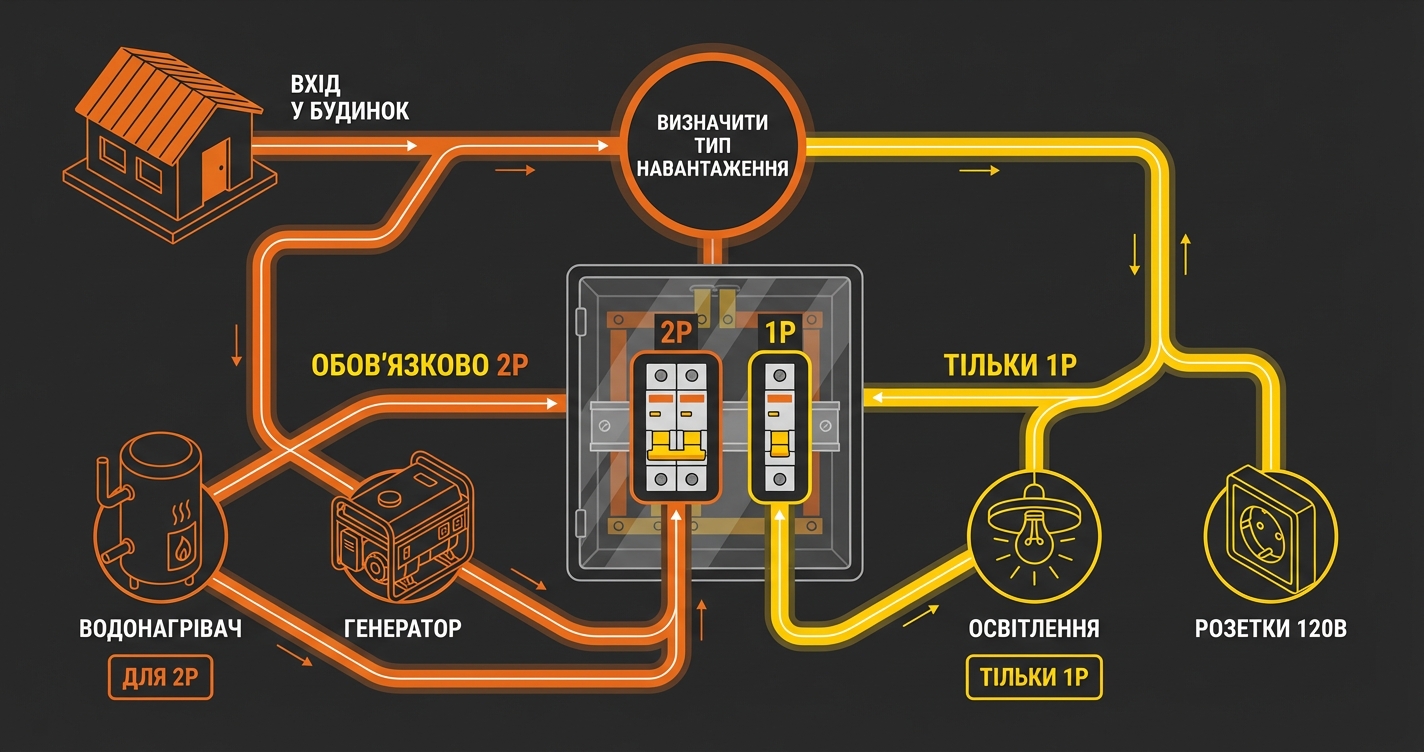
Are there situations where breaking neutral is not just allowed but necessary? Yes, but exclusively under the condition of simultaneous disconnection together with the live wire. This is where double-pole circuit breakers (2P) or compact 1P+N devices enter the picture. The purpose of such disconnection is complete galvanic isolation of the line. This is critically important for safe maintenance. The neutral is also always switched in RCDs (residual current devices) and RCBOs, so the protection can "see" leakage currents.
Comparison of switching devices
| Device | Breaks L | Breaks N | Short circuit protection | Leakage protection | Typical application |
|---|---|---|---|---|---|
| 2P circuit breaker | Yes | Yes | Yes (both poles) | No | Main input, generators |
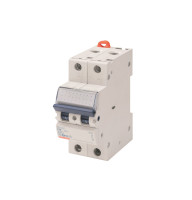
| 1P+N | Yes | Yes | Yes (live only!) | No | Compact panels, branch circuits |
| RCD | Yes | Yes | No | Yes | Personal protection, wet areas |
| RCBO | Yes | Yes | Yes | Yes | Combined protection ("all-in-one") |
Terminology: N — working neutral (Neutral), PE — protective earth (Protective Earth), PEN — combined conductor. Learn more about design nuances in UEC and GEWISS documentation.
When you need a circuit breaker on both neutral and live (dual-pole disconnection)
- Main circuit breaker in the panel
- Generator or charging station connection
- Lines to separate buildings (bathhouse, garage)
- IT and TT systems (specific grounding schemes)
In engineering practice, there is a golden rule: if you cannot guarantee that "neutral" will always remain "neutral" (for example, during a substation failure), it's better to break it. For more details on when to install a single-pole vs double-pole breaker, we have a dedicated article, but here are the key scenarios.
Main panel: main switch, meter, incoming circuit breaker
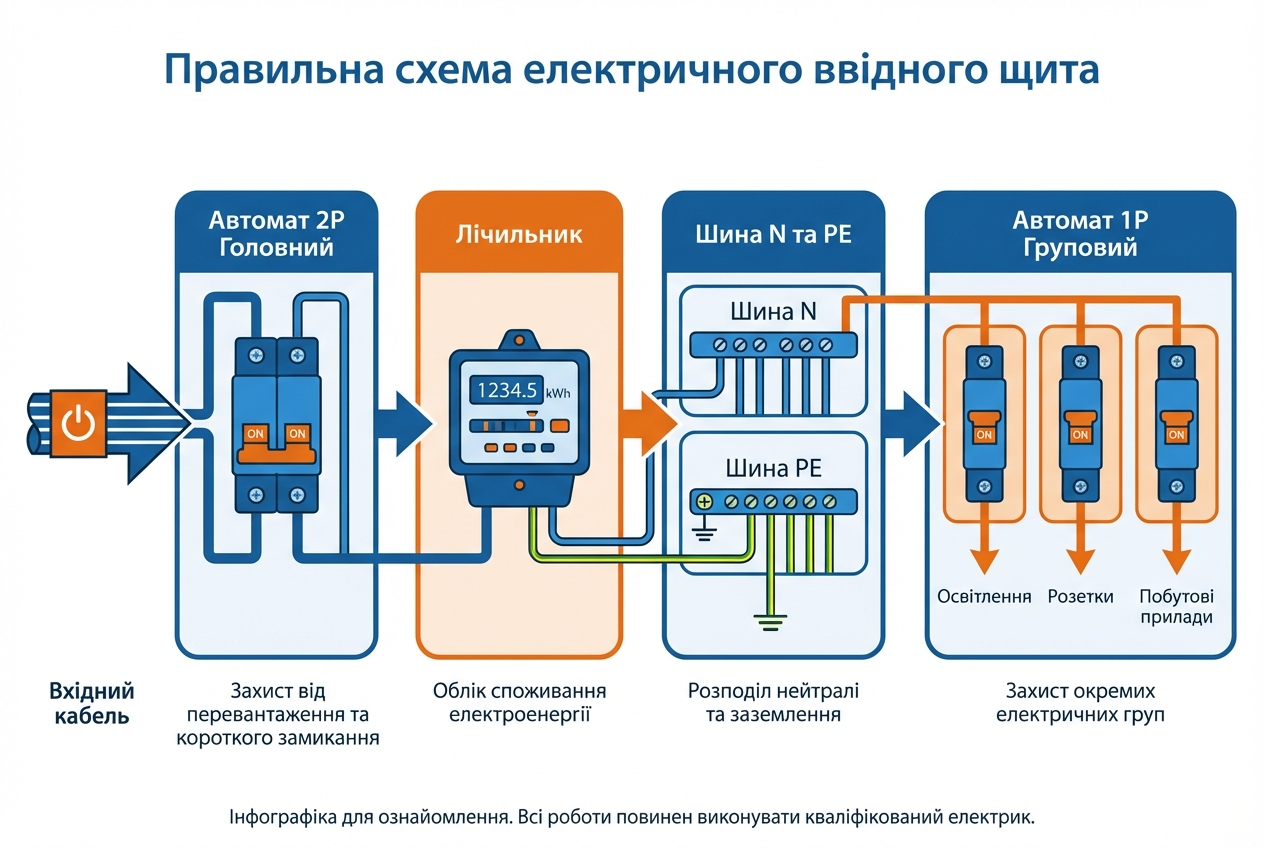
At the entrance to an apartment or private house, we at UEC recommend installing a 2P circuit breaker (for 220V) or 4P (for 380V). This allows you to fully de-energize the premises in one motion for meter replacement, panel servicing, or emergency disconnection. Important: if you have old housing stock with a TN-C system (two-wire wiring), it is prohibited to break the PEN conductor before it is split into N and PE. First, perform the splitting, then install the double-pole breaker that switches the "clean" L and N.
⚠ Warning! Always check the technical conditions (TU) from your distribution system operator (DTEK, Oblenergo) before installing the main input assembly.
Inverters, UPS, generators: back-feed risk and "floating" neutral
Today, many Ukrainian homes have acquired inverters and generators. Here, correct neutral switching is essential. Many modern boilers are phase-dependent — they need a "clean neutral" for flame ionization. When running on a generator, "earth" and "neutral" can be "floating." Therefore, for proper operation of the backup power system, it is necessary to use changeover switches (I-0-II) or 2P/4P breakers that completely isolate the mains, including neutral. This eliminates the risk of current from your generator flowing into the utility grid and electrocuting a lineman. For more on three-pole and four-pole circuit breakers, read our dedicated review.
Diagnosing leakage currents: what an RCD/RCBO can and cannot do
Users often confuse leakage currents with short circuits. An RCD disconnects the line when current has "leaked" past the neutral conductor (for example, through your body to earth). In doing so, the RCD breaks both live and neutral. If your panel keeps "tripping," checking what happens if you choose the wrong rated breaker is the first step, but often the cause runs deeper.
Quick diagnostics
| Symptom | Probable causes | What to do |
|---|---|---|
| RCD trips immediately | Earth leakage (N connected to PE, moisture in socket) | Unplug everything, call an electrician |
| Breaker trips with a "click" | Short circuit (SC) | Look for the damaged appliance or cable |
| Breaker trips after some time | Line overload | Reduce the number of connected appliances |
Safe minimum for homeowners: check whether the breaker is hot (carefully with the back of your hand), and whether the contacts are tightened (only with the main breaker switched off!).

Warning! Working with electrical equipment is life-threatening!
All work in the electrical panel must be performed only by qualified electricians with the power disconnected. Before starting work, be sure to de-energize the line and verify the absence of voltage with a measuring device.
Differences between 1P+N and 2P circuit breakers (table)
UEC customers often ask: "Why pay more for a 2P when there are compact 1P+N options?" The difference lies in reliability and design.
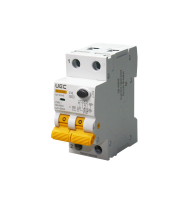
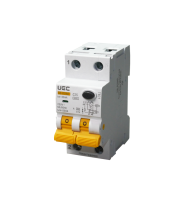
1P+N is essentially a single-pole breaker with an additional contact for neutral switching. The protection (thermal and electromagnetic trip unit) is installed on the live conductor only.
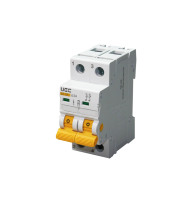
2P consists of two full-fledged protection mechanisms in one housing, linked by a common toggle. Both live and neutral are protected here.
Circuit breaker design comparison
| Parameter | 1P (Single-pole) | 1P+N (Compact) | 2P (Double-pole) |
|---|---|---|---|
| What it breaks | L only | L and N | L and N |
| Where protection exists | On L | On L only (N is just a switch) | On both poles (L + N) |
| Width (modules) | 1 (18 mm) | 1 (18 mm) or 2 | 2 (36 mm) |
| Ideal for | Simple lighting/socket groups | Panels with limited space | Main input, critical circuits |
| Price | $ | $$ | $$$ |
If you're looking for a solution for an apartment, 1P+N can save space in the panel, but for the main input, it's better not to cut corners and install a proper 2P.
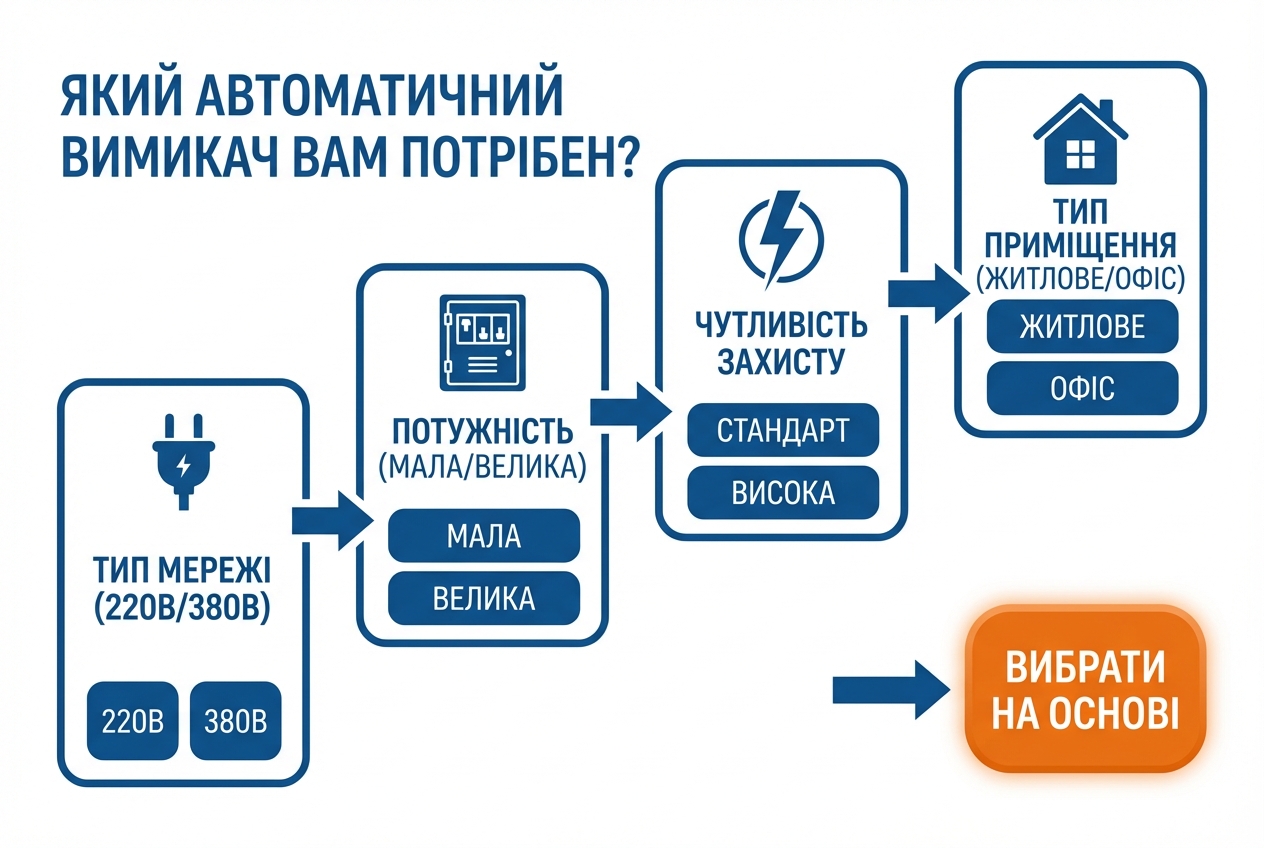
How to choose a 2P / 1P+N breaker from the catalog (quick guide)
Choosing switchgear is not a lottery. You need to consider several parameters to avoid running to the panel every evening.
Before purchasing, check compatibility: whether the breakers fit your DIN rail, whether you can use a busbar comb (this greatly simplifies installation). In the UEC catalog, we always indicate the series for easy accessory matching.
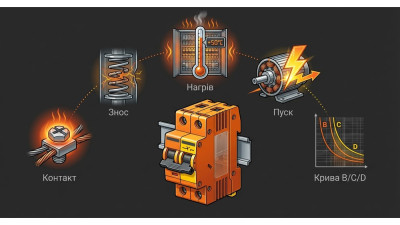
Selection parameters: current (A), characteristic (B/C/D), breaking capacity (kA)
These are the three pillars of protection. An error here is costly.
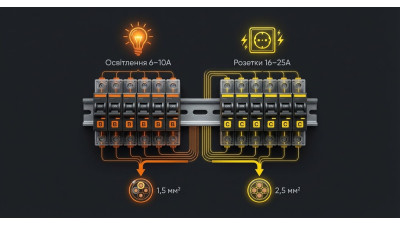
- Rated current (In): Selected exclusively based on cable cross-section, not appliance power. For example, for a 2.5 mm² cable (sockets) the maximum is 16A, not 25A! For more details on calculating the breaker rating for a 220V network, read our guide.
- Characteristic (B, C, D): Indicates sensitivity to inrush currents. For apartments, the standard is "C". If you live in an older building with weak wiring — "B" is better. For details on the difference between B, C, and D characteristic breakers, we have a dedicated article.
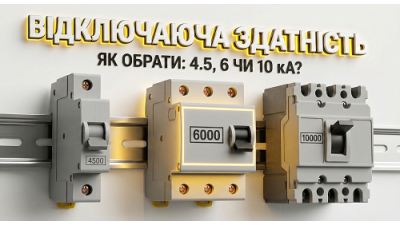
- Breaking capacity (Icn): The breaker's ability to survive a short circuit. For apartments, 4.5 kA is sufficient, but at UEC we recommend 6 kA (European standard). For more on why this matters, see our article: which breaking capacity to choose.
Quick reference for trip characteristics
| Characteristic | Description |
|---|---|
| B | Sensitive. Older networks, long lines, lighting. |
| C | Universal. Apartments, offices, standard sockets. |
| D | "Heavy-duty". Motors, pumps, machinery with high inrush. |
Official datasheets and trip curves are always available on GEWISS and UEC product pages on our website.
Mounting type and accessories: busbar comb, terminals, N/PE bus bars, labeling
What separates a professional from an amateur is the quality of assembly. We recommend using busbar combs instead of wire "jumpers" — it's more reliable and looks cleaner. Always use NSVI ferrule terminals for stranded cable.
You may need:
- Modular circuit breakers for homes and apartments
- Distribution boards (surface-mounted or flush-mounted)
- Busbar combs and blanking plates
Common mistakes and "myths" about neutral: how not to make things worse
Top mistakes that can cost dearly:
❌ "I switched off neutral, so I can't get shocked"
A fatal mistake. Without neutral, current doesn't flow, but 220V potential awaits your touch.
❌ "I'll connect neutral and earth in the socket"
This is called "bootleg grounding" in the socket — it's prohibited! If neutral burns out, live voltage will appear on the case of your washing machine.
❌ "I'll install two 1P breakers instead of one 2P"
Strictly prohibited (PUE clause 3.1.18). You can never switch them off perfectly simultaneously, and in an emergency one will trip while the other leaves the line energized.
❌ "Breaking the PEN conductor"
Breaking the PEN conductor is prohibited. It can only be split.
The price of such mistakes ranges from a burnt-out computer power supply to a fire. What happens if you choose the wrong breaker characteristic or wire it incorrectly is not theoretical "scare stories" but real statistics from emergency call-outs.
FAQ: neutral switching, 2P and 1P+N — quick answers
❓ Can you install a single-pole breaker on neutral?
No, this is prohibited by PUE 7.1.21. It creates a lethal hazard: live voltage remains on appliances even with the "neutral" breaker switched off.
❓ How does 1P+N differ from 2P?
In a 1P+N breaker, overload and short circuit protection exists only on the live pole, while the neutral pole is simply disconnected mechanically. In a 2P, both poles are protected — both L and N.
❓ Does an RCD break neutral?
Yes, any RCD or RCBO necessarily breaks both live and neutral simultaneously. This is required for correct operation of differential protection.
❓ When is a 4P breaker needed?
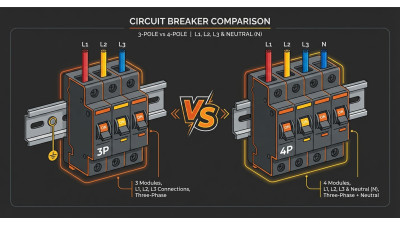
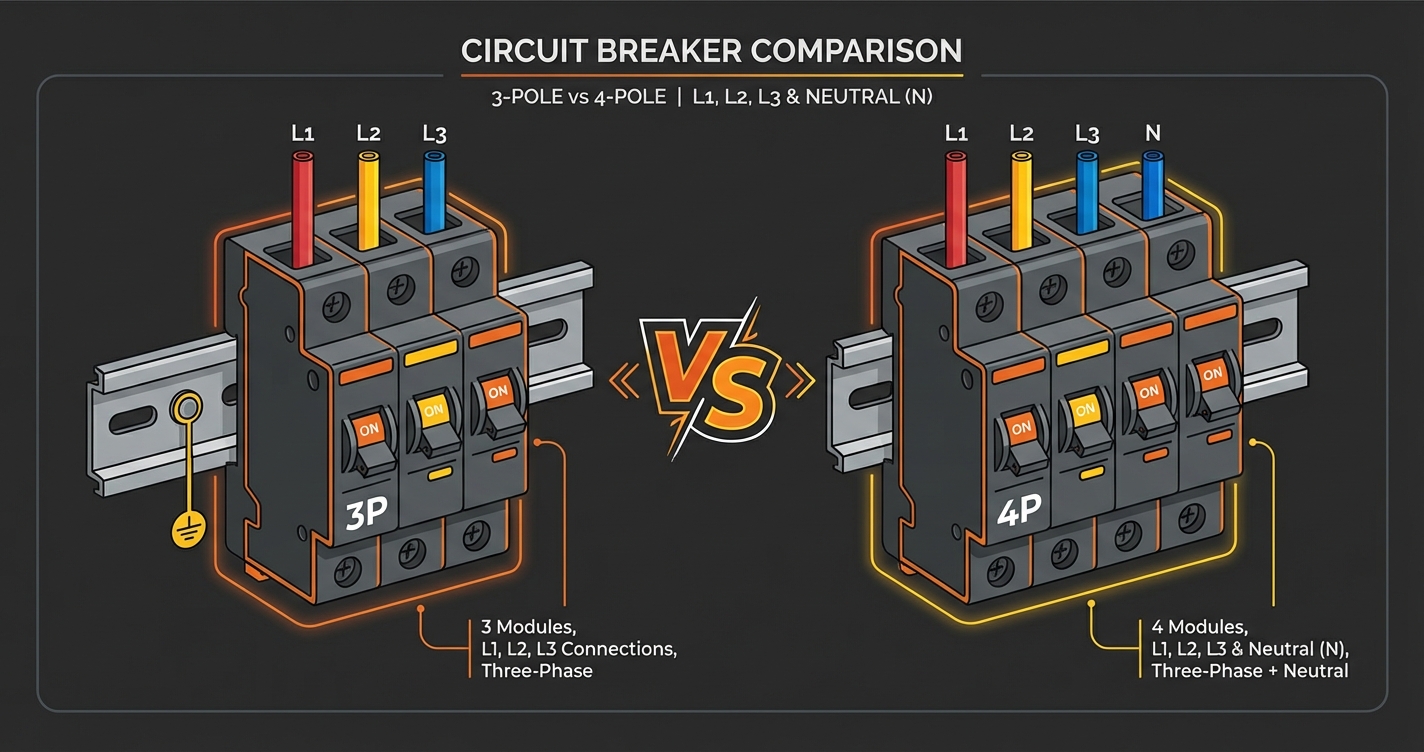
A 4P (four-pole) circuit breaker is used in three-phase networks (380V) for the main input, connecting powerful machinery or generators, where all three phases and neutral must be disconnected simultaneously.
❓ Is it necessary to break neutral with a circuit breaker?
We covered this in detail in our article on whether you need to break neutral with a circuit breaker. In short: for regular branch circuits — no; for main input and generators — yes, but only together with the live conductor.
❓ What's better for the main input: a 2P breaker or a switch disconnector?
A 2P circuit breaker is better because it protects the incoming cable from short circuits. A switch disconnector (load switch) only switches the line but doesn't protect it.